
Overview
Madison Air has agreed to acquire ebm-papst from its owner families at a €5.1bn enterprise value. The buyer presents the effective purchase price at 14.6× forecast 2026 adjusted EBITDA, falling to 10.0× with its planned $160m annual run-rate cost synergies. The commercial logic is direct: pair European airflow engineering and a global installed base with Madison Air’s North American application reach, then turn a cross-border component platform into a larger systems, service and cooling franchise. [[S1]](https://investors.madisonair.com/2026-08-17-Madison-Air-to-Acquire-ebm-papst,-Expanding-Return-on-Air-TM-Capabilities-and-Accelerating-Durable-Growth-in-Air-Quality-Solutions) [[S2]](https://www.sec.gov/Archives/edgar/data/2098430/000162828026057213/mair-20260815.htm) [[S4]](https://www.ebmpapst.com/de/en/newsroom/news/2026/ebm-papstxmadisonair.html)
A financial and industrial transaction framed around the economics of air
€5.1bn enterprise value. Madison Air acquires ebm-papst from the German owner families.
Madison Air is buying an engineering business with a material installed base, deep European roots and a role in systems where airflow drives energy, uptime and reliability. The transaction has clear financial markers, from a €5.1bn enterprise value to under-4.0x closing leverage, while its strategic value rests on how the combined group serves customers across cooling, HVAC/R, industrial processing and data-centre infrastructure. [[S1]](https://investors.madisonair.com/2026-08-17-Madison-Air-to-Acquire-ebm-papst,-Expanding-Return-on-Air-TM-Capabilities-and-Accelerating-Durable-Growth-in-Air-Quality-Solutions) [[S2]](https://www.sec.gov/Archives/edgar/data/2098430/000162828026057213/mair-20260815.htm) [[S4]](https://www.ebmpapst.com/de/en/newsroom/news/2026/ebm-papstxmadisonair.html)
For Madison Air, the prize is a larger technology and channel platform. For ebm-papst, the promise is a long-term owner with North American reach, operating scale and access to public capital. The deal brings those propositions together through a cash, debt and equity financed acquisition, with terms that set year-end 2026 as the working close date and August 2027 as the contractual outside boundary. [[S1]](https://investors.madisonair.com/2026-08-17-Madison-Air-to-Acquire-ebm-papst,-Expanding-Return-on-Air-TM-Capabilities-and-Accelerating-Durable-Growth-in-Air-Quality-Solutions) [[S2]](https://www.sec.gov/Archives/edgar/data/2098430/000162828026057213/mair-20260815.htm) [[S4]](https://www.ebmpapst.com/de/en/newsroom/news/2026/ebm-papstxmadisonair.html)
| Enterprise value | €5.100bn | Seller-announced enterprise value. |
| Enterprise purchase price | €4.775bn | After stated liabilities and working-capital adjustments. |
| Effective enterprise purchase price | €4.404bn | After stated present-value tax savings. |
| 2026 net sales | $2.772bn | Madison Air forecast, unaudited HGB basis. |
| 2026 adjusted EBITDA | $343m | Madison Air forecast, unaudited HGB basis. |
| Adjusted EBITDA margin | 12% | Based on Madison Air’s reconciliation. |
| Annual cost synergy target | $160m | Expected run rate by end of year three. |
| Effective EV / EBITDA | 14.6x | Company presentation, pre-synergy. |
| Effective EV / EBITDA incl. synergies | 10.0x | Company presentation, based on $503m. |
| Closing leverage | <4.0x | Company expectation. |
| Two-year leverage target | ~2.5x | Trailing-12-month target. |
| Global employees | 13,000+ | Seller announcement. |
| Employees in Germany | ~5,800 | Seller announcement. |
| Geographic footprint | ~40 countries | Buyer announcement. |
| Fans installed worldwide | 250m+ | Air Technology business. |
| Technology patents | 1,200+ | Buyer announcement. |
A €5.1bn enterprise-value bridge into industrial airflow
Announced 17 August 2026. A cross-border industrial platform combination with year-end close expected.
Madison Air has agreed to buy ebm-papst from the German group’s owner families, paying an enterprise purchase price of €4.775bn, which the company presents as $5.4bn at the announced foreign-exchange assumption. The headline transaction has the contour of a major industrial platform acquisition rather than a bolt-on: a U.S.-weighted air-quality company is acquiring a European engineered-airflow specialist whose products enter a design process early and whose installed base sits across HVAC/R, industrial, refrigeration and data-centre applications. [[S1]](https://investors.madisonair.com/2026-08-17-Madison-Air-to-Acquire-ebm-papst,-Expanding-Return-on-Air-TM-Capabilities-and-Accelerating-Durable-Growth-in-Air-Quality-Solutions) [[S2]](https://www.sec.gov/Archives/edgar/data/2098430/000162828026057213/mair-20260815.htm) [[S4]](https://www.ebmpapst.com/de/en/newsroom/news/2026/ebm-papstxmadisonair.html)
The attention point is commercial adjacency. Madison Air says it has long bought from ebm-papst; ebm-papst says the combination brings access to Madison’s North American position and public-market financing capacity. That customer-supplier history helps explain why a €5.1bn enterprise value has been accepted for a business expected to report $2.772bn of 2026 net sales. It also means the integration starts with product familiarity, then moves quickly to the more difficult work of commercial coverage, procurement discipline, operating cadence and capital allocation. [[S1]](https://investors.madisonair.com/2026-08-17-Madison-Air-to-Acquire-ebm-papst,-Expanding-Return-on-Air-TM-Capabilities-and-Accelerating-Durable-Growth-in-Air-Quality-Solutions) [[S2]](https://www.sec.gov/Archives/edgar/data/2098430/000162828026057213/mair-20260815.htm) [[S4]](https://www.ebmpapst.com/de/en/newsroom/news/2026/ebm-papstxmadisonair.html)
Jill Wyant, Madison Air’s president and chief executive, described the target as a longstanding supplier relationship with “integrated airflow technology, custom engineering expertise and talented team”. The seller’s leadership offered a matching signal: Klaus Geißdörfer said Madison had demonstrated a long-term commitment to entrepreneurial businesses. Those statements frame the deal as a shift in ownership that protects an engineering franchise while seeking a larger commercial canvas. [[S1]](https://investors.madisonair.com/2026-08-17-Madison-Air-to-Acquire-ebm-papst,-Expanding-Return-on-Air-TM-Capabilities-and-Accelerating-Durable-Growth-in-Air-Quality-Solutions) [[S4]](https://www.ebmpapst.com/de/en/newsroom/news/2026/ebm-papstxmadisonair.html)
The company’s price bridge separates value, assumed obligations and tax benefit
Three price measures separate headline value, purchase price and tax-adjusted effective EV.
Madison Air’s filings draw a useful distinction between three price measures. The business has a stated €5.1bn enterprise value, or $5.814bn at €1.00 to $1.14. After pension provisions, lease liabilities, income-tax balances, other non-debt liabilities and the working-capital adjustment, the disclosed enterprise purchase price is €4.775bn, or $5.444bn. The company then deducts the present value of expected tax savings from intangible amortisation over 15 years to arrive at a €4.404bn effective enterprise purchase price, or approximately $5.021bn. [[S2]](https://www.sec.gov/Archives/edgar/data/2098430/000162828026057213/mair-20260815.htm) [[S3]](https://www.sec.gov/Archives/edgar/data/2098430/000162828026057213/confidential8kpressrelease.htm)
This distinction matters because the 14.6x headline multiple uses the effective enterprise purchase price rather than the €5.1bn enterprise-value headline. Madison Air also gives a synergy-inclusive multiple of 10.0x, based on projected $343m of 2026 adjusted EBITDA plus $160m of annual run-rate cost synergies expected by the end of year three. These are management-framed valuation lenses, not interchangeable measures. The €5.1bn headline expresses business value; the effective figure reflects transaction liabilities and the company’s stated tax benefit. [[S1]](https://investors.madisonair.com/2026-08-17-Madison-Air-to-Acquire-ebm-papst,-Expanding-Return-on-Air-TM-Capabilities-and-Accelerating-Durable-Growth-in-Air-Quality-Solutions) [[S3]](https://www.sec.gov/Archives/edgar/data/2098430/000162828026057213/confidential8kpressrelease.htm)
The economic logic is more comprehensible when read in sequence. The buyer is acquiring a technology-led manufacturer with a global installed base, taking on the terms specified in the locked-box structure, and seeking a tax shield from the post-close accounting outcome. The price paid in cash at closing remains a separate number. Assuming a 31 December 2026 closing, Madison Air estimates a €4.412bn cash purchase price, before the final financing mix is known. [[S2]](https://www.sec.gov/Archives/edgar/data/2098430/000162828026057213/mair-20260815.htm)
A global fan and motor platform with design-in relevance
Founded 1963. More than 250m fans installed and operations in roughly 40 countries.
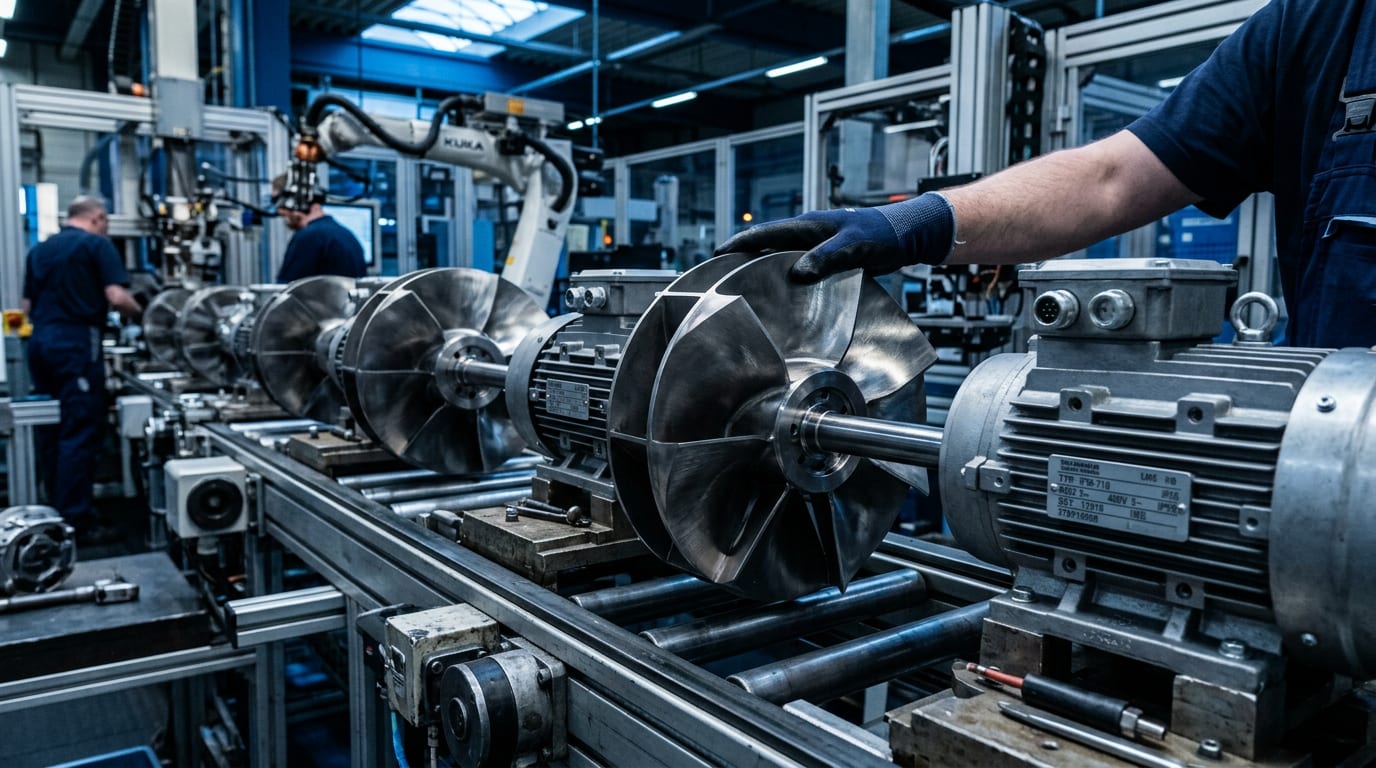
ebm-papst was founded in 1963 and is headquartered in Mulfingen, Germany. Madison Air describes the business as a supplier of high-performance airflow technology and a pioneer in electronically commutated fan and motor systems. More than 250m fans are installed worldwide within the target’s Air Technology business, while the group operates in roughly 40 countries. The industrial relevance is in the specification point: these products are built into HVAC/R, cooling and industrial-process systems before the later aftermarket relationship begins. [[S1]](https://investors.madisonair.com/2026-08-17-Madison-Air-to-Acquire-ebm-papst,-Expanding-Return-on-Air-TM-Capabilities-and-Accelerating-Durable-Growth-in-Air-Quality-Solutions) [[S3]](https://www.sec.gov/Archives/edgar/data/2098430/000162828026057213/confidential8kpressrelease.htm)
The target’s public announcement adds a geographic frame. ebm-papst presents a strong position in Europe and an attractive business in Asia, while Madison Air brings a North American operating base and a portfolio spanning commercial, residential and mission-critical environments. That map should enhance cross-border distribution and application coverage if retained customers see a wider engineering and service proposition, rather than a change in ownership alone. [[S4]](https://www.ebmpapst.com/de/en/newsroom/news/2026/ebm-papstxmadisonair.html)
The seller places equal weight on continuity. It says Madison Air intends to strengthen ebm-papst and its more than 13,000 employees, including around 5,800 in Germany. Mulfingen is expected to remain the group headquarters and a relevant R&D and manufacturing site, and existing employment, collective bargaining and shop agreements are expected to remain in force. These are seller-side commitments at announcement. They establish the integration baseline against which post-close execution will be judged. [[S4]](https://www.ebmpapst.com/de/en/newsroom/news/2026/ebm-papstxmadisonair.html)
A $2.8bn revenue base with a disclosed 12% adjusted EBITDA margin
Forecast 2026 net sales of $2.772bn and adjusted EBITDA of $343m on preliminary HGB basis.
Madison Air expects ebm-papst to generate approximately $2.772bn of net sales and $343m of adjusted EBITDA for the 12 months ending 31 December 2026. The resulting adjusted EBITDA margin is 12%. In the reconciliation filed with the SEC, forecast EBITDA is $286m before $57m of adjustments, comprising one-time IT costs, transformation costs, restructuring and severance, and other items. [[S3]](https://www.sec.gov/Archives/edgar/data/2098430/000162828026057213/confidential8kpressrelease.htm)
The financial disclosure carries an important accounting boundary. ebm-papst’s figures have been prepared under German HGB, are preliminary and unaudited, and have not been prepared under U.S. GAAP. Madison Air explicitly notes that the financial information may not be directly comparable with its GAAP reporting and expects purchase-price accounting, policy alignment and reconciliations to alter the consolidated view. The page therefore treats the $343m as Madison Air’s forecast adjusted EBITDA disclosure, with its stated accounting basis attached. [[S1]](https://investors.madisonair.com/2026-08-17-Madison-Air-to-Acquire-ebm-papst,-Expanding-Return-on-Air-TM-Capabilities-and-Accelerating-Durable-Growth-in-Air-Quality-Solutions) [[S3]](https://www.sec.gov/Archives/edgar/data/2098430/000162828026057213/confidential8kpressrelease.htm)
The margin offers a starting point for the integration story, rather than an end point. The $160m annual run-rate cost synergy target represents close to 47% of pre-synergy adjusted EBITDA and would lift the stated adjusted EBITDA figure to $503m. Madison Air attributes the run-rate plan to its 80/20 operating model, scale, procurement savings and operational efficiencies. The company also identifies cross-selling and collaborative innovation as commercial opportunities, though it has not quantified revenue synergies. [[S1]](https://investors.madisonair.com/2026-08-17-Madison-Air-to-Acquire-ebm-papst,-Expanding-Return-on-Air-TM-Capabilities-and-Accelerating-Durable-Growth-in-Air-Quality-Solutions) [[S3]](https://www.sec.gov/Archives/edgar/data/2098430/000162828026057213/confidential8kpressrelease.htm)
A 14.6x pre-synergy multiple that moves to 10.0x on the company’s run-rate plan
14.6× pre-synergy and 10.0× synergy-inclusive on management forecasts.
At the effective enterprise purchase price of $5.021bn, Madison Air describes the acquisition as 14.6x forecast 2026 adjusted EBITDA. That arithmetic follows the company’s own reported $343m adjusted EBITDA forecast. Including the $160m annual run-rate cost synergy target, it describes the same effective figure as 10.0x. Neither measure represents a reported historical EBITDA multiple, and both rely on 2026 forecasts prepared around the transaction. [[S1]](https://investors.madisonair.com/2026-08-17-Madison-Air-to-Acquire-ebm-papst,-Expanding-Return-on-Air-TM-Capabilities-and-Accelerating-Durable-Growth-in-Air-Quality-Solutions) [[S3]](https://www.sec.gov/Archives/edgar/data/2098430/000162828026057213/confidential8kpressrelease.htm)
The two measures locate the negotiation in a familiar industrial logic. The pre-synergy multiple values the existing operating platform and its engineering, supply-chain, installed-base and geographic attributes. The synergy-inclusive view allocates material credit to the buyer’s ability to transfer its operating model into a large German industrial business while protecting product performance, customer service and technical talent. The announced terms offer no detailed synergy bridge by category, country or facility. [[S1]](https://investors.madisonair.com/2026-08-17-Madison-Air-to-Acquire-ebm-papst,-Expanding-Return-on-Air-TM-Capabilities-and-Accelerating-Durable-Growth-in-Air-Quality-Solutions) [[S2]](https://www.sec.gov/Archives/edgar/data/2098430/000162828026057213/mair-20260815.htm)
Acquiry inference: the valuation places a premium on a hard-to-replicate engineering and distribution asset with global application relevance. The threshold for value creation is therefore less about proving demand for airflow components, which already exists across multiple end-markets, and more about turning an installed base and manufacturing scale into a faster, more coordinated commercial and aftermarket machine. The company’s two-year deleveraging target gives that operating work a timetable. [[S1]](https://investors.madisonair.com/2026-08-17-Madison-Air-to-Acquire-ebm-papst,-Expanding-Return-on-Air-TM-Capabilities-and-Accelerating-Durable-Growth-in-Air-Quality-Solutions) [[S4]](https://www.ebmpapst.com/de/en/newsroom/news/2026/ebm-papstxmadisonair.html)
Cash, debt and equity financing with a stated path from under 4.0x to 2.5x leverage
Cash, debt and equity financing with underwritten commitments from UniCredit and Wells Fargo.
Madison Air intends to fund the acquisition through cash on hand plus debt and equity financing. UniCredit and Wells Fargo have provided fully underwritten financing commitments for the debt portion, and the SPA has no financing condition. The funding package therefore secures contractual certainty for the sellers while leaving Madison Air’s final cash, debt and equity mix to the pre-close financing process. [[S1]](https://investors.madisonair.com/2026-08-17-Madison-Air-to-Acquire-ebm-papst,-Expanding-Return-on-Air-TM-Capabilities-and-Accelerating-Durable-Growth-in-Air-Quality-Solutions) [[S2]](https://www.sec.gov/Archives/edgar/data/2098430/000162828026057213/mair-20260815.htm)
The filing also identifies an equity commitment letter from Madison Solutions LLC. The commitment is up to €1.3bn and functions as an affiliate backstop, subject to its terms and reduced euro-for-euro by other funding sources. Madison Air’s Form 8-K says the sellers have agreed to cooperate with the financing and SEC-filing process during the pre-closing period. This is consistent with an acquisition financing that requires execution across debt markets, equity markets and the target’s financial disclosure workstream. [[S2]](https://www.sec.gov/Archives/edgar/data/2098430/000162828026057213/mair-20260815.htm)
The leverage markers are specific: pro forma net leverage below 4.0x at closing, then roughly 2.5x on a trailing-12-month basis within two years. The debt capacity and the deleveraging timetable elevate free cash flow, working capital and savings delivery from supporting considerations to central value drivers. For an acquirer that listed only months before the announcement, the ability to meet those milestones will be part of the market’s first test of the transaction. [[S1]](https://investors.madisonair.com/2026-08-17-Madison-Air-to-Acquire-ebm-papst,-Expanding-Return-on-Air-TM-Capabilities-and-Accelerating-Durable-Growth-in-Air-Quality-Solutions) [[S2]](https://www.sec.gov/Archives/edgar/data/2098430/000162828026057213/mair-20260815.htm)
A locked-box transaction with an August 2027 long-stop and a defined buyer break fee
Locked-box SPA with 31 March 2026 economic reference and August 2027 long-stop.
The SPA uses a locked-box mechanism, fixing purchase-price economics by reference to the group’s audited balance sheet at 24:00 CET on 31 March 2026. The base purchase price is €4.367bn. Interest accrues at 2.00% a year from 1 July through 31 December 2026 and 2.50% thereafter until closing. Leakage from the group to sellers and related parties after the economic reference date reduces the base purchase price euro for euro, except for defined permitted payments. [[S2]](https://www.sec.gov/Archives/edgar/data/2098430/000162828026057213/mair-20260815.htm)
This structure allocates an important portion of pre-close value protection to contractual covenant compliance, rather than to an open-ended completion account. The seller group is required to operate in the ordinary course during the pre-closing period and is restricted from actions such as transfers or encumbrances of acquired interests, capital changes and restructuring transactions without the purchaser’s written consent. The agreement also includes standard representations, warranties, covenants and termination rights. [[S2]](https://www.sec.gov/Archives/edgar/data/2098430/000162828026057213/mair-20260815.htm)
The agreement’s long-stop date is 31 August 2027. It contemplates a buyer break fee of €250m if the sellers terminate in certain stipulated circumstances connected with an unsatisfied condition or the long-stop process. The disclosed amount is meaningful relative to the €4.775bn enterprise purchase price, yet the contract also specifies that it is the sellers’ sole and exclusive remedy in the relevant circumstances. This is an execution mechanism, not an operating forecast. [[S2]](https://www.sec.gov/Archives/edgar/data/2098430/000162828026057213/mair-20260815.htm)
Merger control, foreign investment and EU foreign-subsidies clearance shape the timetable
Merger control, foreign investment and EU foreign-subsidies clearance required.
Closing is subject to required merger-control clearances, foreign-investment-control clearances and European Commission clearance under the EU Foreign Subsidies Regulation, as stated in Madison Air’s filing. The parties expect closing around year-end 2026, while the purchase agreement has a long-stop date in August 2027. The interval between the management timetable and the contractual outside date gives the deal a clear regulatory execution runway. [[S1]](https://investors.madisonair.com/2026-08-17-Madison-Air-to-Acquire-ebm-papst,-Expanding-Return-on-Air-TM-Capabilities-and-Accelerating-Durable-Growth-in-Air-Quality-Solutions) [[S2]](https://www.sec.gov/Archives/edgar/data/2098430/000162828026057213/mair-20260815.htm)
The transaction’s footprint explains the range of conditions. Madison Air is a U.S.-listed buyer with a North American operating portfolio. ebm-papst is a German engineering group with European and Asian reach, major German employment and industrial assets, and a product set relevant to cooling, infrastructure and manufacturing. The filing names the regulatory categories, while individual filing jurisdictions, review stages and clearance milestones have yet to be published. [[S2]](https://www.sec.gov/Archives/edgar/data/2098430/000162828026057213/mair-20260815.htm) [[S4]](https://www.ebmpapst.com/de/en/newsroom/news/2026/ebm-papstxmadisonair.html)
Acquiry inference: the regulatory work is likely to focus on a nuanced vertical relationship and industrial-market definitions, rather than a simple horizontal overlap. The commercial narrative involves component technology, systems integration, commercial reach and aftermarket expansion. That makes the parties’ future product-boundary explanations, customers’ views and country-specific market framing important evidence as the process develops. [[S1]](https://investors.madisonair.com/2026-08-17-Madison-Air-to-Acquire-ebm-papst,-Expanding-Return-on-Air-TM-Capabilities-and-Accelerating-Durable-Growth-in-Air-Quality-Solutions) [[S4]](https://www.ebmpapst.com/de/en/newsroom/news/2026/ebm-papstxmadisonair.html)
Vertical integration turns an air-quality portfolio into a broader airflow platform
Madison Air says the deal nearly doubles addressable market and deepens Return on Air.
Madison Air frames the acquisition as a move deeper into the air-technology value chain. ebm-papst brings integrated airflow technology, over 1,200 patents and electronically commutated fan and motor systems. Madison Air brings brands including Addison, AprilAire, Big Ass Fans, Broan-NuTone, Nortek Air Solutions, Nortek Data Center Cooling and Reznor. The intended outcome is a broader set of solutions for customers focused on uptime, efficiency, compliance and productivity in mission-critical environments. [[S1]](https://investors.madisonair.com/2026-08-17-Madison-Air-to-Acquire-ebm-papst,-Expanding-Return-on-Air-TM-Capabilities-and-Accelerating-Durable-Growth-in-Air-Quality-Solutions) [[S3]](https://www.sec.gov/Archives/edgar/data/2098430/000162828026057213/confidential8kpressrelease.htm)
The strategic case reaches beyond catalogue breadth. The buyer says the transaction nearly doubles its addressable market and adds approximately $30bn of TAM. It also identifies commercial, aftermarket and services expansion through a larger installed base, broader customer relationships and expanded channels. ebm-papst’s owner-family announcement adds the inverse proposition: Madison’s North American reach can support the target’s access to U.S. markets, while ebm-papst expands Madison’s European and Asian technology and commercial reach. [[S1]](https://investors.madisonair.com/2026-08-17-Madison-Air-to-Acquire-ebm-papst,-Expanding-Return-on-Air-TM-Capabilities-and-Accelerating-Durable-Growth-in-Air-Quality-Solutions) [[S4]](https://www.ebmpapst.com/de/en/newsroom/news/2026/ebm-papstxmadisonair.html)
The buyer’s CEO places application expertise next to the target’s engineering. That matters in airflow technologies, where component performance is tested in system-level outcomes such as thermal stability, energy use, reliability and maintenance. Product integration will be commercially valuable only where the combined group can help customers specify, deploy and maintain a stronger overall system. The deal thesis therefore stretches from product design through sales channels to installed-base support. [[S1]](https://investors.madisonair.com/2026-08-17-Madison-Air-to-Acquire-ebm-papst,-Expanding-Return-on-Air-TM-Capabilities-and-Accelerating-Durable-Growth-in-Air-Quality-Solutions)
Data centres, cleanrooms, manufacturing and cooling offer multiple routes to demand
Cooling, HVAC/R, industrial processing and data-centre airflow end-markets.
The companies have named end-markets rather than individual customers. Madison Air describes its portfolio as serving priority commercial and residential markets, including healthcare, advanced manufacturing, cleanrooms, data centres and residential applications. ebm-papst identifies ventilation, refrigeration and climate technology, and highlights data-centre growth alongside its core Air Technology business. The common thread is air performance in environments where temperature, efficiency, reliability and compliance have direct operating value. [[S1]](https://investors.madisonair.com/2026-08-17-Madison-Air-to-Acquire-ebm-papst,-Expanding-Return-on-Air-TM-Capabilities-and-Accelerating-Durable-Growth-in-Air-Quality-Solutions) [[S4]](https://www.ebmpapst.com/de/en/newsroom/news/2026/ebm-papstxmadisonair.html)
The immediate opportunity may be clearest in mission-critical cooling. ebm-papst says global digital-infrastructure expansion and advances in AI are increasing demand for efficient, scalable cooling solutions. It also points to its NEXAIRA platform for demand-driven control and predictive maintenance in data centres. Madison Air already owns Nortek Data Center Cooling, giving the combined group a defined application area where systems engineering, airflow hardware and operations can be sold as a joined-up proposition. [[S1]](https://investors.madisonair.com/2026-08-17-Madison-Air-to-Acquire-ebm-papst,-Expanding-Return-on-Air-TM-Capabilities-and-Accelerating-Durable-Growth-in-Air-Quality-Solutions) [[S4]](https://www.ebmpapst.com/de/en/newsroom/news/2026/ebm-papstxmadisonair.html)
Individual customer concentration, contract structures, backlog and regional revenue mix have not been disclosed in the reviewed materials. The public record supports the end-market framing, installed-base scale and geographic reach. It does not yet disclose which customer cohorts produce the most recurring service opportunity or how revenues are distributed between components, systems, digital platforms and aftermarket activity. These are future diligence and reporting points. [[S1]](https://investors.madisonair.com/2026-08-17-Madison-Air-to-Acquire-ebm-papst,-Expanding-Return-on-Air-TM-Capabilities-and-Accelerating-Durable-Growth-in-Air-Quality-Solutions) [[S3]](https://www.sec.gov/Archives/edgar/data/2098430/000162828026057213/confidential8kpressrelease.htm) [[S4]](https://www.ebmpapst.com/de/en/newsroom/news/2026/ebm-papstxmadisonair.html)
Procurement and operating discipline sit at the centre of the $160m target
$160m annual run-rate cost synergies expected by end of year three.
Madison Air expects $160m of annual run-rate cost synergies by the end of year three. It identifies its 80/20 operating model, combined scale, procurement savings and operational efficiencies as the main sources. The statement is notable for what it prioritises: the value plan rests first on how the new owner manages a large technical manufacturing business, rather than on a quantified revenue cross-sell target. [[S1]](https://investors.madisonair.com/2026-08-17-Madison-Air-to-Acquire-ebm-papst,-Expanding-Return-on-Air-TM-Capabilities-and-Accelerating-Durable-Growth-in-Air-Quality-Solutions) [[S3]](https://www.sec.gov/Archives/edgar/data/2098430/000162828026057213/confidential8kpressrelease.htm)
The company’s release pairs cost synergies with commercial opportunity. It references cross-selling solutions, collaborative innovation and deeper customer relationships, but it assigns no public dollar amount, run-rate margin contribution or timing to those items. The absence of a quantified revenue synergy figure leaves the $160m cost objective as the core disclosed operating benchmark. The page therefore treats that target as the most visible measure of value-capture progress. [[S1]](https://investors.madisonair.com/2026-08-17-Madison-Air-to-Acquire-ebm-papst,-Expanding-Return-on-Air-TM-Capabilities-and-Accelerating-Durable-Growth-in-Air-Quality-Solutions)
Acquiry inference: the synergy programme will need to balance standardisation and local engineering autonomy. Procurement scale, operating efficiency and product-line focus can improve the financial profile, while ebm-papst’s brand equity is closely connected to engineering depth, manufacturing expertise and customer trust. The seller’s commitments on Mulfingen, R&D and employees make that balance a central integration consideration rather than a secondary cultural matter. [[S2]](https://www.sec.gov/Archives/edgar/data/2098430/000162828026057213/mair-20260815.htm) [[S4]](https://www.ebmpapst.com/de/en/newsroom/news/2026/ebm-papstxmadisonair.html)
European industrial depth meets a U.S.-weighted commercial platform
European industrial depth combined with Madison Air’s North American commercial platform.
ebm-papst’s owner families describe Europe and Asia as core regional strengths, particularly alongside a European technology and engineering reputation. Madison Air says it has a strong North American position and makes most of its business in its home market. The resulting transaction gives each side a route into the other’s core commercial geography, with ebm-papst retaining Mulfingen as its headquarters. [[S4]](https://www.ebmpapst.com/de/en/newsroom/news/2026/ebm-papstxmadisonair.html)
This is more consequential than incremental international sales coverage. Airflow components are specified through equipment manufacturers, contractors, consulting engineers, integrators and end users, with application standards and service expectations varying across markets. Bringing a German engineering platform inside a U.S.-listed owner creates opportunities for commercial coordination, yet it also requires careful treatment of technical selling processes and local relationships. [[S1]](https://investors.madisonair.com/2026-08-17-Madison-Air-to-Acquire-ebm-papst,-Expanding-Return-on-Air-TM-Capabilities-and-Accelerating-Durable-Growth-in-Air-Quality-Solutions) [[S4]](https://www.ebmpapst.com/de/en/newsroom/news/2026/ebm-papstxmadisonair.html)
The seller announcement also points to additional investment capacity and long-term ownership. Those themes matter in capital-intensive manufacturing markets, where customer confidence can depend on continuing product development, service support and supply-chain reliability. Management will need to translate the ownership transition into evidence that the target can deploy capital and talent at least as effectively within Madison Air’s wider portfolio. [[S4]](https://www.ebmpapst.com/de/en/newsroom/news/2026/ebm-papstxmadisonair.html)
Electronically commutated systems and predictive-control software broaden the platform
Electronically commutated fan and motor systems plus predictive-control software.
ebm-papst’s technology description has two relevant layers. The core is physical: fans, motors, ventilation and airflow systems designed for efficiency, reliability and lifecycle performance. The second is digital: its NEXAIRA platform applies demand-driven control and predictive maintenance in data-centre environments. The combination connects a mature industrial product base with software-led operational optimisation, both focused on the energy and uptime economics of moving air. [[S1]](https://investors.madisonair.com/2026-08-17-Madison-Air-to-Acquire-ebm-papst,-Expanding-Return-on-Air-TM-Capabilities-and-Accelerating-Durable-Growth-in-Air-Quality-Solutions) [[S4]](https://www.ebmpapst.com/de/en/newsroom/news/2026/ebm-papstxmadisonair.html)
Madison Air reports more than 1,200 patents connected to the target’s integrated airflow technology. Patent counts are an imperfect measure of competitive strength, yet they reinforce the buyer’s claim that the deal reaches into differentiated engineering rather than commodity distribution. The larger question is how intellectual property, product-roadmap processes and customer application data can move across a broader group without losing velocity in specialist markets. [[S1]](https://investors.madisonair.com/2026-08-17-Madison-Air-to-Acquire-ebm-papst,-Expanding-Return-on-Air-TM-Capabilities-and-Accelerating-Durable-Growth-in-Air-Quality-Solutions)
Acquiry inference: the strongest strategic upside is likely to emerge when component intelligence informs system-level service, design and maintenance decisions. That route is commercially richer than selling more fans into an existing channel, but it demands clean product architecture, data governance and a sales model capable of translating technical benefits into a customer’s cost, energy and uptime metrics. [[S1]](https://investors.madisonair.com/2026-08-17-Madison-Air-to-Acquire-ebm-papst,-Expanding-Return-on-Air-TM-Capabilities-and-Accelerating-Durable-Growth-in-Air-Quality-Solutions) [[S4]](https://www.ebmpapst.com/de/en/newsroom/news/2026/ebm-papstxmadisonair.html)
The first operating task is to widen the platform while protecting engineering credibility
Mulfingen HQ continuity and employment protections announced by the seller.
The transaction joins businesses that publicly emphasise entrepreneurial culture, customer relationships and mission-critical application expertise. The buyer intends to apply a proven operating model, while the seller’s family representatives emphasise culture, employees and a long-term horizon. The shared language is encouraging, but it leaves a practical integration agenda: governance, product-roadmap authority, capital approvals, procurement structures, regional commercial ownership and executive retention. [[S1]](https://investors.madisonair.com/2026-08-17-Madison-Air-to-Acquire-ebm-papst,-Expanding-Return-on-Air-TM-Capabilities-and-Accelerating-Durable-Growth-in-Air-Quality-Solutions) [[S4]](https://www.ebmpapst.com/de/en/newsroom/news/2026/ebm-papstxmadisonair.html)
The Mulfingen commitments offer an initial boundary. ebm-papst says the town will remain the group headquarters and a relevant location for R&D and manufacturing. This supports technical continuity and German stakeholder confidence. The commercial value of that commitment will turn on operating substance: engineering investment, decision rights and customer engagement need to remain visibly anchored in the target’s specialist centres as the group pursues wider scale benefits. [[S4]](https://www.ebmpapst.com/de/en/newsroom/news/2026/ebm-papstxmadisonair.html)
Madison Air’s published end-market brands and ebm-papst’s product franchises create a wide portfolio map. The integration opportunity lies in identifying where joint customer value is immediate and where independent market positioning remains more effective. Making those choices through application-specific teams, rather than a universal brand exercise, could preserve specialist trust while allowing the group to coordinate procurement, systems and strategic accounts. [[S1]](https://investors.madisonair.com/2026-08-17-Madison-Air-to-Acquire-ebm-papst,-Expanding-Return-on-Air-TM-Capabilities-and-Accelerating-Durable-Growth-in-Air-Quality-Solutions) [[S4]](https://www.ebmpapst.com/de/en/newsroom/news/2026/ebm-papstxmadisonair.html)
Value delivery hinges on funding discipline, synergy sequence and product-market continuity
Regulatory timing, synergy delivery and leverage reduction shape execution risk.
The company’s own forward-looking disclosure describes the central execution variables: financing arrangements, management focus, employee retention, integration, synergy delivery, leverage and credit ratings. These are conventional elements in a large cross-border acquisition, yet their relative weight rises because Madison Air is funding a multibillion-euro transaction soon after becoming a public company. The defined leverage targets make the operating plan visible to investors. [[S1]](https://investors.madisonair.com/2026-08-17-Madison-Air-to-Acquire-ebm-papst,-Expanding-Return-on-Air-TM-Capabilities-and-Accelerating-Durable-Growth-in-Air-Quality-Solutions) [[S2]](https://www.sec.gov/Archives/edgar/data/2098430/000162828026057213/mair-20260815.htm)
The mechanics sharpen the sequence. The buyer needs clearances, closing financing and orderly pre-close operation. Once it owns the business, it needs to improve procurement and operational performance while retaining technical talent and customer confidence. The $160m run-rate cost target is expected by the end of year three, while net leverage is expected to reach about 2.5x within two years. Those clocks overlap. [[S1]](https://investors.madisonair.com/2026-08-17-Madison-Air-to-Acquire-ebm-papst,-Expanding-Return-on-Air-TM-Capabilities-and-Accelerating-Durable-Growth-in-Air-Quality-Solutions) [[S2]](https://www.sec.gov/Archives/edgar/data/2098430/000162828026057213/mair-20260815.htm)
The business mix also creates external sensitivities. Demand in data-centre cooling, industrial markets, HVAC/R and energy-efficiency applications has distinct cycles, supply chains and capital budgets. A broad market footprint can diversify demand, while it also requires management to allocate capacity and investment across several product and geographic priorities. The target’s customer mix and segment margins would help quantify that balance; they are not disclosed in the reviewed sources. [[S1]](https://investors.madisonair.com/2026-08-17-Madison-Air-to-Acquire-ebm-papst,-Expanding-Return-on-Air-TM-Capabilities-and-Accelerating-Durable-Growth-in-Air-Quality-Solutions) [[S3]](https://www.sec.gov/Archives/edgar/data/2098430/000162828026057213/confidential8kpressrelease.htm) [[S4]](https://www.ebmpapst.com/de/en/newsroom/news/2026/ebm-papstxmadisonair.html)
Three family holding entities sell an industrial group into a new long-term owner
Three family holding entities sell to Madison Air Solutions Germany GmbH.
Madison Air’s Form 8-K identifies the sellers as Sturm Beteiligungs-GmbH & Co. KG, Ziehl Beteiligungen GmbH & Co. KG and Philippiak Holding GmbH. The buyer will acquire all issued and outstanding shares and limited partnership interests in the named target companies through Madison Air Solutions Germany GmbH. ebm-papst’s public announcement characterises the sellers collectively as owner families. [[S2]](https://www.sec.gov/Archives/edgar/data/2098430/000162828026057213/mair-20260815.htm) [[S4]](https://www.ebmpapst.com/de/en/newsroom/news/2026/ebm-papstxmadisonair.html)
The seller announcement names Milbank LLP as legal adviser to the owner families and Goldman Sachs Bank Europe SE as financial adviser. Hengeler Mueller says it advised Madison Air across corporate/M&A, antitrust and foreign investment, tax, financing, public law, IP/IT and employment. The breadth of that practice mix aligns with a transaction that carries German corporate, industrial, regulatory and funding complexity. [[S4]](https://www.ebmpapst.com/de/en/newsroom/news/2026/ebm-papstxmadisonair.html) [[S5]](https://hengeler-news.com/en/articles/hengeler-mueller-advises-madison-air-on-acquisition-of-ebm-papst)
The direct knowledge path is therefore unusually clear on the sell side. Family ownership, executive culture and the Mulfingen base are part of the asset identity, while a German purchaser subsidiary and U.S.-listed parent create a formal acquisition structure. The disclosure of adviser mandates provides useful context for stakeholders seeking to distinguish family-transfer dynamics from a portfolio reorganisation or public-market tender. [[S2]](https://www.sec.gov/Archives/edgar/data/2098430/000162828026057213/mair-20260815.htm) [[S4]](https://www.ebmpapst.com/de/en/newsroom/news/2026/ebm-papstxmadisonair.html) [[S5]](https://hengeler-news.com/en/articles/hengeler-mueller-advises-madison-air-on-acquisition-of-ebm-papst)
A year-end ambition with a formal outside date in August 2027
SPA signed 15 August 2026. Expected close around year-end 2026.
The parties announced the transaction in mid-August 2026 after signing the SPA on 15 August. Madison Air expects closing around year-end, subject to clearance and customary closing conditions. The filing places the long-stop date at 31 August 2027. The difference between those two dates is important: one is a management timetable and the other is a contractual boundary. [[S1]](https://investors.madisonair.com/2026-08-17-Madison-Air-to-Acquire-ebm-papst,-Expanding-Return-on-Air-TM-Capabilities-and-Accelerating-Durable-Growth-in-Air-Quality-Solutions) [[S2]](https://www.sec.gov/Archives/edgar/data/2098430/000162828026057213/mair-20260815.htm)
Before closing, the group must operate in the ordinary course and the sellers must cooperate in the buyer’s debt and equity financing arrangements. The locked-box mechanism already fixes the economic reference point at 31 March 2026, with interest and leakage protections addressing the period to closing. Those terms are intended to bridge a potentially lengthy clearance process without reopening the core valuation basis. [[S2]](https://www.sec.gov/Archives/edgar/data/2098430/000162828026057213/mair-20260815.htm)
The next public milestones should be regulatory filings or approvals, financing completion, any equity-offering disclosure, and ultimately a closing announcement. After close, the most decision-useful operating markers will be the first consolidated financial reporting, leverage progression, evidence of procurement or operating efficiencies, management continuity and the pace at which the group converts cross-selling language into customer-facing propositions. [[S1]](https://investors.madisonair.com/2026-08-17-Madison-Air-to-Acquire-ebm-papst,-Expanding-Return-on-Air-TM-Capabilities-and-Accelerating-Durable-Growth-in-Air-Quality-Solutions) [[S2]](https://www.sec.gov/Archives/edgar/data/2098430/000162828026057213/mair-20260815.htm)
Six public markers can turn an announced thesis into measurable progress
Six public markers can turn the announced thesis into measurable progress.
First, watch the clearance process and whether the year-end expectation holds. Second, watch the funding mix: the ultimate balance among cash, debt, external equity and the affiliate equity commitment will shape both leverage and dilution. Third, watch the terms of any registered equity offering, which could provide a clearer view of market support and the buyer’s capital-allocation choices. [[S1]](https://investors.madisonair.com/2026-08-17-Madison-Air-to-Acquire-ebm-papst,-Expanding-Return-on-Air-TM-Capabilities-and-Accelerating-Durable-Growth-in-Air-Quality-Solutions) [[S2]](https://www.sec.gov/Archives/edgar/data/2098430/000162828026057213/mair-20260815.htm)
Fourth, watch the first post-close reporting on ebm-papst’s conversion from HGB-based target forecasts to Madison Air’s consolidated accounting. Fifth, watch the $160m synergy target for category detail, timing and execution cadence. Sixth, watch the operational signals from Mulfingen, including R&D investment, leadership, manufacturing and commercial positioning, because these will indicate whether the integration retains the technical foundations that attracted the buyer. [[S1]](https://investors.madisonair.com/2026-08-17-Madison-Air-to-Acquire-ebm-papst,-Expanding-Return-on-Air-TM-Capabilities-and-Accelerating-Durable-Growth-in-Air-Quality-Solutions) [[S3]](https://www.sec.gov/Archives/edgar/data/2098430/000162828026057213/confidential8kpressrelease.htm) [[S4]](https://www.ebmpapst.com/de/en/newsroom/news/2026/ebm-papstxmadisonair.html)
Acquiry inference: the most informative early sign may be a customer-led product or service programme that combines ebm-papst technology with a Madison Air application channel. Funding and leverage show whether the transaction is financeable. A tangible joint offering will show whether the platform thesis has found a route from board materials into customers’ operating environments. [[S1]](https://investors.madisonair.com/2026-08-17-Madison-Air-to-Acquire-ebm-papst,-Expanding-Return-on-Air-TM-Capabilities-and-Accelerating-Durable-Growth-in-Air-Quality-Solutions) [[S4]](https://www.ebmpapst.com/de/en/newsroom/news/2026/ebm-papstxmadisonair.html)
A scale acquisition built around engineering relevance, geographical reach and execution discipline
Scale acquisition built around engineering relevance, reach and operating discipline.
The acquisition puts a large, family-owned German airflow group into a U.S.-listed air-quality platform at a €5.1bn enterprise value. The commercial rationale is coherent: technology design-in, data-centre cooling, energy efficiency, industrial systems, geographic reach and aftermarket coverage all sit on the same airflow value chain. Madison Air’s disclosed price bridge and leverage targets provide more detail than is common in private-target acquisitions, which makes the transaction easier to follow. [[S1]](https://investors.madisonair.com/2026-08-17-Madison-Air-to-Acquire-ebm-papst,-Expanding-Return-on-Air-TM-Capabilities-and-Accelerating-Durable-Growth-in-Air-Quality-Solutions) [[S2]](https://www.sec.gov/Archives/edgar/data/2098430/000162828026057213/mair-20260815.htm) [[S4]](https://www.ebmpapst.com/de/en/newsroom/news/2026/ebm-papstxmadisonair.html)
The value-creation plan is equally clear in outline: $160m of annual run-rate cost synergies by year three, supported by procurement, operating efficiency and scale; a broader addressable market; and cross-selling and service opportunities. The execution challenge is to add a new operating system around ebm-papst’s engineering franchise while maintaining its product credibility, German base and customer relationships. That is a demanding programme, yet it aligns with the public commitments made by both parties. [[S1]](https://investors.madisonair.com/2026-08-17-Madison-Air-to-Acquire-ebm-papst,-Expanding-Return-on-Air-TM-Capabilities-and-Accelerating-Durable-Growth-in-Air-Quality-Solutions) [[S4]](https://www.ebmpapst.com/de/en/newsroom/news/2026/ebm-papstxmadisonair.html)
Acquiry inference: this is a transaction about control of an air-performance platform, rather than a simple multiple-arbitrage exercise. The purchase price rewards installed technology and industrial capability. The shareholder outcome will depend on the combined group’s ability to turn those assets into stronger customer outcomes, durable free cash flow and a credible deleveraging path. [[S1]](https://investors.madisonair.com/2026-08-17-Madison-Air-to-Acquire-ebm-papst,-Expanding-Return-on-Air-TM-Capabilities-and-Accelerating-Durable-Growth-in-Air-Quality-Solutions) [[S2]](https://www.sec.gov/Archives/edgar/data/2098430/000162828026057213/mair-20260815.htm) [[S3]](https://www.sec.gov/Archives/edgar/data/2098430/000162828026057213/confidential8kpressrelease.htm)
Primary sources, deal documents and editorial boundaries
Primary disclosure is separated from management forecasts and Acquiry inference.
The analysis privileges transaction-party announcements and SEC-filed materials. Every management forecast, synergy target, leverage target and expected completion date is presented as a company expectation. The financial information relating to ebm-papst is preliminary, unaudited and prepared under HGB, as Madison Air has stated. [[S1]](https://investors.madisonair.com/2026-08-17-Madison-Air-to-Acquire-ebm-papst,-Expanding-Return-on-Air-TM-Capabilities-and-Accelerating-Durable-Growth-in-Air-Quality-Solutions) [[S2]](https://www.sec.gov/Archives/edgar/data/2098430/000162828026057213/mair-20260815.htm) [[S3]](https://www.sec.gov/Archives/edgar/data/2098430/000162828026057213/confidential8kpressrelease.htm)
| Source | Document | Use in analysis |
|---|---|---|
| S1 | Madison Air transaction press release 17 Aug 2026 | Announcement, headline economics, target profile, leadership quotations, synergy plan and financing framework. |
| S2 | Madison Air Form 8-K 17 Aug 2026 | Signed SPA summary, sellers, locked-box mechanics, closing conditions, cash purchase price assumption, long-stop and break fee. |
| S3 | Madison Air Exhibit 99.1 17 Aug 2026 | SEC-filed press release and 2026 forecast reconciliation for ebm-papst. |
| S4 | ebm-papst owner-family announcement 16 Aug 2026 | Owner-family perspective, international footprint, workforce, HQ commitments and regional rationale. |
| S5 | Hengeler Mueller transaction announcement 18 Aug 2026 | Confirmation of buyer legal advisers and workstreams. |
How this page separates facts, company forecasts and Acquiry inference
Method.
Public disclosure covers statements in a named company announcement, filing, legal adviser statement or target-company publication. Management expectation covers forecasts, planned synergies, leverage ambitions and the anticipated timing of completion. Acquiry inference identifies editorial interpretation that connects disclosed facts to the commercial structure of the transaction. Where a relevant point has not been published, the page names that boundary rather than filling it with a synthetic figure.
In particular, the page does not convert the stated synergy target into a forecast of realised earnings, the year-end aspiration into a certainty of closing, or the HGB target data into a GAAP-equivalent historical result. This supports an article that is useful to M&A operators and readers while remaining faithful to the released record. [[S1]](https://investors.madisonair.com/2026-08-17-Madison-Air-to-Acquire-ebm-papst,-Expanding-Return-on-Air-TM-Capabilities-and-Accelerating-Durable-Growth-in-Air-Quality-Solutions) [[S2]](https://www.sec.gov/Archives/edgar/data/2098430/000162828026057213/mair-20260815.htm) [[S3]](https://www.sec.gov/Archives/edgar/data/2098430/000162828026057213/confidential8kpressrelease.htm)
Method and disclosure
Announced facts are drawn from Madison Air’s SEC filings, transaction press release and ebm-papst’s owner-family announcement. Independent confirmation is supplied by the reporting listed in the source ledger. Management targets include synergy, leverage and completion timing expectations. Historical disclosures include the seller’s workforce and headquarters commitments.
Acquiry inference is limited to strategic fit, integration and risk analysis. It is not investment advice, a valuation opinion, tax advice or a recommendation to transact.
What is not in the public record
- What is the final debt, equity and cash mix at closing?
- How will purchase-price accounting change reported GAAP earnings?
- Will management quantify revenue synergies beyond the cost plan?
- What retention or incentive packages apply to key engineering leadership?
- How will customer pricing, service coverage and channel ownership change post-close?
Entities and structured data
| Field | Value |
|---|---|
| Acquirer | Madison Air Solutions · NYSE: MAIR · Chicago, USA |
| Target | ebm-papst · Mulfingen, Germany · owner-family transfer |
| Transaction type | Announced acquisition |
| Enterprise value | €5.1bn (seller announcement) |
| Effective EV / EBITDA | 14.6× forecast 2026 adjusted EBITDA |
| Announced | 17 August 2026 |
| Expected close | Year-end 2026 (management expectation) |
| Sector | Industrial airflow, cooling and air-quality technology |
Frequently asked questions
What has Madison Air agreed to acquire?
Madison Air has entered into a definitive agreement to acquire all interests in ebm-papst’s target companies from three German owner-family holding entities.
What is the headline value?
ebm-papst’s owner families state a €5.1bn enterprise value. Madison Air’s Form 8-K describes a €4.775bn enterprise purchase price and a €4.404bn effective enterprise purchase price after stated tax savings.
What EBITDA multiple is Madison Air presenting?
Madison Air presents the effective enterprise purchase price as 14.6× forecast 2026 adjusted EBITDA, or 10.0× when including its $160m annual run-rate cost synergy target by year three.
How will Madison Air fund the deal?
The buyer expects to use cash on hand and debt and equity financing. UniCredit and Wells Fargo have provided underwritten financing commitments.
What is ebm-papst’s revenue and earnings profile?
Madison Air forecasts 2026 net sales of $2.772bn and adjusted EBITDA of $343m, implying a 12% adjusted EBITDA margin on a preliminary HGB basis.
What synergy target has been announced?
Madison Air expects $160m of annual run-rate cost synergies by the end of year three, focused on its 80/20 operating model, procurement savings and operational efficiencies.

Joash Boyton is a technology sector analyst, publisher, and the founder of Acquiry, where he executes buy-side and sell-side M&A mandates across digital assets, software, and gaming technologies. He is the author of peer-reviewed corporate finance literature indexed across institutional repositories including Google Scholar and the ORCID Registry. Joash publishes Acquiry Deal Intelligence to deliver independent, forensic strategic reviews and valuation benchmarks of global technology acquisitions, compiling primary data directly from corporate disclosures, SEC filings, and regulatory ledgers.
Research support: Acquiry Deal Intelligence.