Deal IntelligenceQuarterly review · Preliminary edition

Q3 2026: the deals that defined the quarter

14 transactions, each told in full: who bought what, what they paid, what the filings actually say, and what it tells you about the market going into Q4.

By · 30 September 2026 · 14 min read

disclosed across 9 deals with a published price
US$60.4bn
of that value came from just two deals: Aon/USI and Uber/Delivery Hero
52.6%
went to insurance, wealth and professional-services targets
49.2%
disclosed deals were paid in cash
6 of 9

The biggest cheques went to firms that sell advice. AI deals were about infrastructure.

We only count a price when it appears in a filing or a company release we have actually read. On that basis, the quarter produced US$60.4bn of disclosed value across 9 deals, led by Aon’s US$17bn for USI. Reported figures, such as the US$7.5bn attached to Stripe and OpenRouter, are shown but kept out of the totals.

Every deal below has its own story, its own deal file with the exact wording of the source, and direct links to the filing. Read it end to end, or jump to the one you care about.

Download the full dataset (CSV)
Part one

The quarter the brokers and accountants got bought

Three of the six largest disclosed deals we tracked were for firms that sell advice and distribution, not products. Insurance broking and accounting are fragmented, recurring and cash-generative, which makes them easy to finance at scale.

Insurance broking

Aon writes a US$17bn cheque for USI and moves into the American middle market

The largest disclosed transaction in our Q3 sample, and the second time in three years Aon has paid more than US$10bn for a US broker.

US$17.0bnDisclosed
Account managers working at desks on an insurance brokerage floor at dusk
Middle-market broking relies on account teams and client relationships, which is where USI operates.

Aon disclosed a US$17.0bn cash payment for USI Insurance Services in an 8-K exhibit filed on 11 September. The figure includes repayment of USI’s debt, so it is closer to an enterprise value than an equity cheque. That matters when you compare it with the other deals in this report. It is not an overpayment on the equity.

USI serves commercial property and casualty, employee benefits and personal-risk clients across the United States. For Aon, whose core has long been large corporate and specialty risk, that is a distribution footprint it could not build organically at any reasonable speed. The deal follows Aon’s US$13.4bn purchase of NFP in 2024, which pointed the same way.

All-cash consideration at this size says two things. Aon is comfortable taking on leverage against broking cash flows. And the seller wanted certainty over a share-based structure. Both fit a market where broking assets have traded as quasi-infrastructure: recurring commission income, low capital intensity and pricing power that follows premium rates.

Acquiry’s read

This is a distribution deal wearing a broking badge. Aon is buying tens of thousands of mid-sized client relationships it can sell analytics, reinsurance and benefits consulting into.

What to watch

  • Antitrust review in US regional markets where both firms place commercial lines.
  • Aon’s leverage guidance and whether it pauses buybacks to fund the payment.
  • Producer retention. Mid-market broking value leaves the building with the people.
Insurance distribution

An 88% premium takes The Baldwin Group private

Sequence Holdings and DFO Management are paying US$32.50 a share for majority control. It is the richest premium we recorded all quarter.

US$7.7bnDisclosed
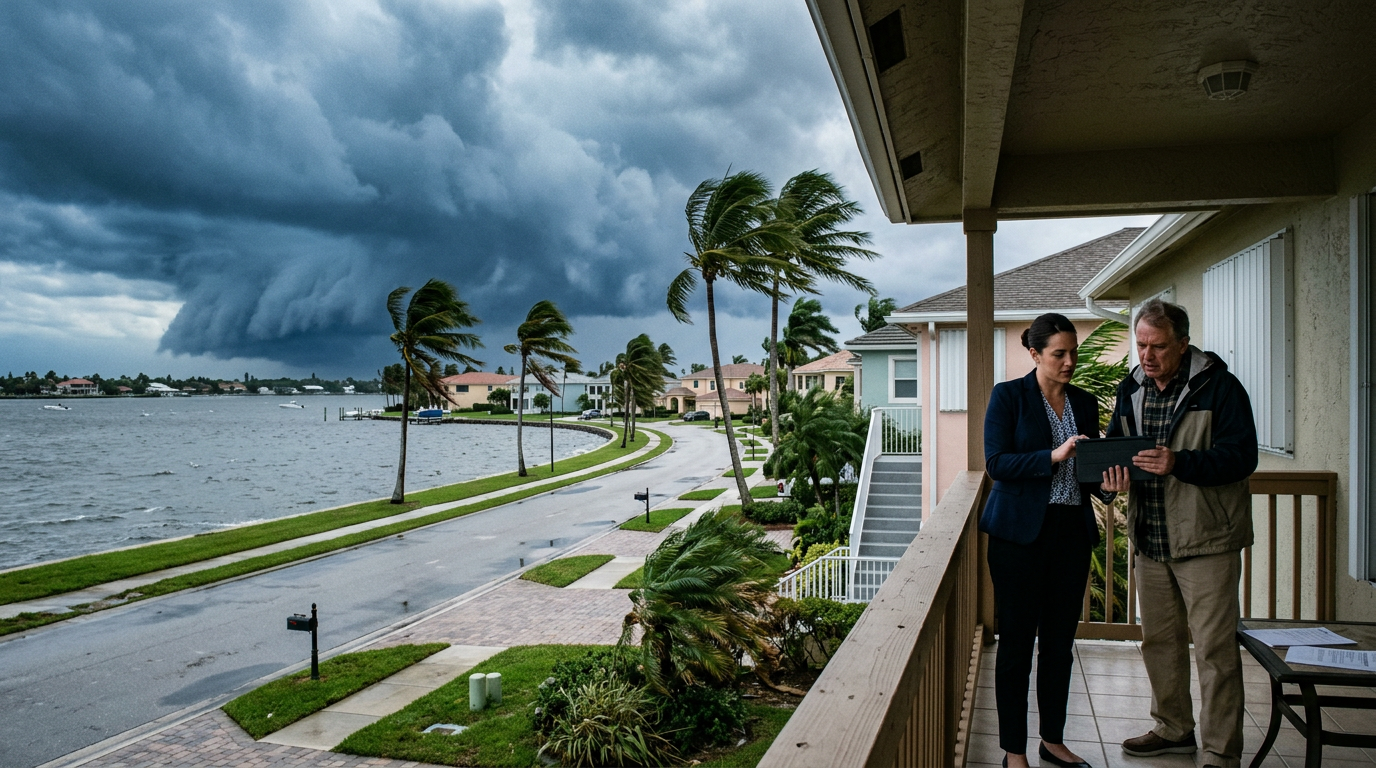
An insurance adviser reviewing a tablet with a homeowner on a Florida waterfront street under storm clouds
Baldwin grew up in Florida, one of the most heavily contested property-insurance markets in the US.

The Baldwin announcement sets the price at US$32.50 per share, an 88% premium to the unaffected close on 17 June. That reference date is nearly three months before signing. It tells you the shares had already moved on speculation, and that the board wanted credit for the full run-up.

The Tampa-based broker, which rebranded from BRP Group in 2024, built itself through a long run of acquisitions and embedded-insurance partnerships with homebuilders and lenders. Public markets never fully rewarded that model. Integration costs and earnout liabilities kept reported margins below the private-equity-owned peers Baldwin was competing with for deals.

A majority take-private removes the quarterly scrutiny and lets the buyers keep consolidating without explaining every adjusted-EBITDA bridge to the market. Read it next to Aon and USI: strategic buyers and private capital are chasing the same broking cash flows from opposite directions.

Acquiry’s read

An 88% premium is not a signal that Baldwin was cheap. It shows how much further private buyers will stretch for scaled US distribution than the public market would.

What to watch

  • Whether a go-shop or competing bid emerges before the shareholder vote.
  • How much of the existing management and founder equity rolls into the new structure.
Accounting and advisory

Grant Thornton, backed by New Mountain, bids US$5bn for CBIZ

A private-equity-funded accounting firm buying a listed one. The roll-up of the US mid-tier accountancy market has reached the public companies.

US$5.0bnDisclosed
Accountants working late in a glass-walled conference room surrounded by ledgers and laptops
Accounting partnerships were long out of reach for outside capital. That changed in 2024.

CBIZ’s filing confirms a US$55.00 cash offer, about 54% above its 30-day volume-weighted average price, for a US$5bn enterprise value. The buyer is Grant Thornton Advisors, the US firm that took a majority investment from New Mountain Capital in 2024.

Two years ago this deal could not have happened. Partnership structures and independence rules kept outside capital away from audit firms. The fix was to split the advisory business from the attest practice, and that opened the door. CBIZ had already used the same logic to absorb Marcum in 2024, so Grant Thornton is buying a platform that has done this before.

The prize is scale in tax, advisory and outsourced finance for mid-market clients: annuity-like revenue with high retention. Pricing is the question. Private equity will need to raise utilisation and cross-sell without losing the partners who own the client relationships.

Acquiry’s read

Of every deal this quarter, this is the clearest proof that sponsors have found a way to own professional-services partnerships at listed-company scale.

What to watch

  • Audit-independence carve-outs and whether regulators require any divestment.
  • Partner attrition in the first two busy seasons after close.
Part two

Platforms buying reach, not technology

The two big platform deals of the quarter were about customers and geography. Neither Uber nor Grab needed new software. They wanted the markets and the credit books that come with them.

Delivery and marketplaces

Uber goes for control of Delivery Hero at EUR 41.50 a share

A voluntary offer valuing the Berlin group at US$14.8bn, with Prosus’s irrevocable handing Uber about 53% before any other shareholder tenders.

US$14.8bnDisclosed
Food delivery riders on scooters waiting at a rainy night intersection in a European city
Delivery Hero operates across dozens of markets where Uber Eats is small or absent.

Uber’s 8-K exhibit lays out a voluntary takeover offer at EUR 41.50 per share. That puts the equity value at US$14.8bn for 100%, or US$13.7bn once you strip out the stake Uber already owns. The decisive line is the irrevocable undertaking from Prosus, Delivery Hero’s largest shareholder, which takes Uber to about 53%.

That structure makes the offer effectively unlosable on control. Minority holders who don’t tender stay in a company that Uber runs and consolidates. The price only has to be good enough for Prosus, which has spent two years looking for a clean exit from its food-delivery holdings.

Strategically, it gives Uber scale in Asia, the Middle East and parts of Europe where Delivery Hero brands lead, all at once. It also brings antitrust exposure wherever the two already overlap. Expect remedy negotiations market by market, not a single clearance.

Acquiry’s read

The headline is US$14.8bn, but the real cheque is closer to Prosus’s block. Uber buys control first and can decide later whether it wants the rest.

What to watch

  • Minimum acceptance conditions and whether Uber pursues a squeeze-out or delisting.
  • Competition reviews in markets where Uber Eats and Delivery Hero brands overlap.
  • What Prosus does with the proceeds.
Consumer credit

Grab proposes US$1.49bn for majority control of Atome Financial

Southeast Asia’s super-app moves to own the lending book behind buy-now-pay-later at the checkout.

~US$1.49bnReported, not disclosed
A shopper paying by phone at a night market stall in a Southeast Asian city
Embedded credit at the point of sale is where Southeast Asian super-apps are competing hardest.

The number comes from Linklaters’ announcement that it is advising Grab on a proposed US$1.49bn acquisition of a majority stake in Atome Financial. We have not yet retrieved the SGX notice or a Grab release, so treat the terms as reported rather than filed.

Atome built its business on buy-now-pay-later and consumer credit across Southeast Asia. Grab already runs payments and a digital-banking push. Owning a scaled lending and underwriting operation closes the loop: Grab sees the transaction, and now it can fund the credit behind it.

The risk is the one that has hurt every BNPL operator since 2022: credit losses in a slowing consumer cycle, and regulators treating instalment credit as lending. Control means Grab owns that book outright rather than sharing it with a partner.

Acquiry’s read

Like Uber, Grab is buying a customer relationship it already sees at checkout. The difference is that this one comes with a balance sheet.

What to watch

  • The exchange filing and the exact stake and valuation it confirms.
  • Licensing approvals in each market where Atome lends.
Part three

Private equity pays up to leave the market

Two sponsor take-privates, one in medtech manufacturing and one in small-business software, show the same pattern: a clear gap between what public markets would pay and what private buyers will.

Medtech manufacturing

KKR bids US$127 a share for Integer, the contract maker behind cardiac devices

A 51.8% premium for a business most patients have never heard of, and most device makers depend on.

US$5.7bnDisclosed
A cleanroom technician inspecting tiny precision medical components under a magnifier
Integer makes components and finished devices for cardiac, neuromodulation and vascular OEMs.

Integer’s announcement sets the price at US$127 per share, about US$5.7bn of enterprise value and a 51.8% premium to the unaffected close on 29 April. As with Baldwin, the unaffected date is months before signing, a sign the market had already priced in some chance of a bid.

Integer, formerly Greatbatch, sits deep in the medical device supply chain. It makes the leads, batteries, catheters and assemblies that big OEMs put their names on. It is sticky, regulated work: switching a qualified supplier on a Class III device can take years.

Those qualities suit private ownership. Long customer contracts support leverage, and a sponsor can fund capacity and tuck-ins without explaining lumpy quarters to public investors.

Acquiry’s read

KKR is paying for switching costs. Every regulated product line Integer supplies is a contract its customers cannot easily walk away from.

What to watch

  • Financing terms and how much leverage a regulated manufacturer can carry.
  • Any customer-concentration disclosures in the proxy.
Vertical software

Francisco Partners takes Weave private for US$7.40 a share

Small-business software for dentists, optometrists and vets, sold for about US$650m at a 34% premium.

US$0.65bnDisclosed
A dental practice receptionist with a headset at a front desk computer
Weave sells phones, texting, scheduling and payments to independent healthcare practices.

Weave’s press release exhibit confirms a US$7.40 cash price, about 34% above the undisturbed level, for roughly US$650m of equity value. It is the smallest disclosed deal in our sample, and one of the most typical.

Weave has what sponsors look for in sub-scale public software: a focused customer base, recurring revenue, and a product that sits at the front desk of every practice it serves. Public investors wanted faster growth or higher margins. Francisco Partners can pursue either without the quarterly stock reaction.

Expect bolt-ons. Payments, patient engagement and AI reception agents are all adjacent products a private owner can buy and cross-sell into the installed base.

Acquiry’s read

This is the template for a mid-2020s software take-private: a real product, a stalled share price, and a buyer who can move faster than the market’s patience.

What to watch

  • Go-shop outcome and any competing sponsor interest.
  • Early add-on acquisitions in payments or AI front-desk tools.
Part four

Picks and shovels for the AI build-out

The quarter’s AI deals were not about models. They were about the layers around them: routing and billing for model traffic, and silicon that runs inference on a battery.

AI infrastructure

Stripe buys OpenRouter and puts itself in the path of AI model spend

Terms were not disclosed. A New York Times source put the price at about US$7.5bn, which would make it the largest AI infrastructure deal we recorded.

~US$7.5bnReported, not disclosed
A developer at a monitor showing API request logs and model routing graphs in a dim studio
OpenRouter gives developers one API and one bill across hundreds of models.

CNBC reported the acquisition on 19 August. Neither party gave a price. The roughly US$7.5bn figure comes from an anonymous source quoted by the New York Times, so we treat it as reported, not disclosed, and it is excluded from every total in this report.

OpenRouter is a routing and billing layer for large language models. Developers call one API, and OpenRouter picks the model, provider and price and settles the bill. Every AI request that flows through it is also a payment. That is why Stripe wants it.

The fit is billing, not intelligence. Stripe already processes usage-based subscriptions for a large share of AI companies. Owning the router lets it see, meter and settle model consumption at the source, and potentially offer credit and fraud controls on top of it.

Acquiry’s read

Stripe is betting that AI spend becomes a payments category of its own, and it wants to own the checkout for it.

What to watch

  • Whether model providers treat a Stripe-owned router as neutral.
  • Any confirmed price in Stripe’s next investor or tender-offer materials.
Semiconductors

Analog Devices pays US$1.35bn cash for Alif and its edge-AI microcontrollers

A bet that the next billion AI inference chips will be in wearables, sensors and appliances, not data centres.

US$1.35bnDisclosed
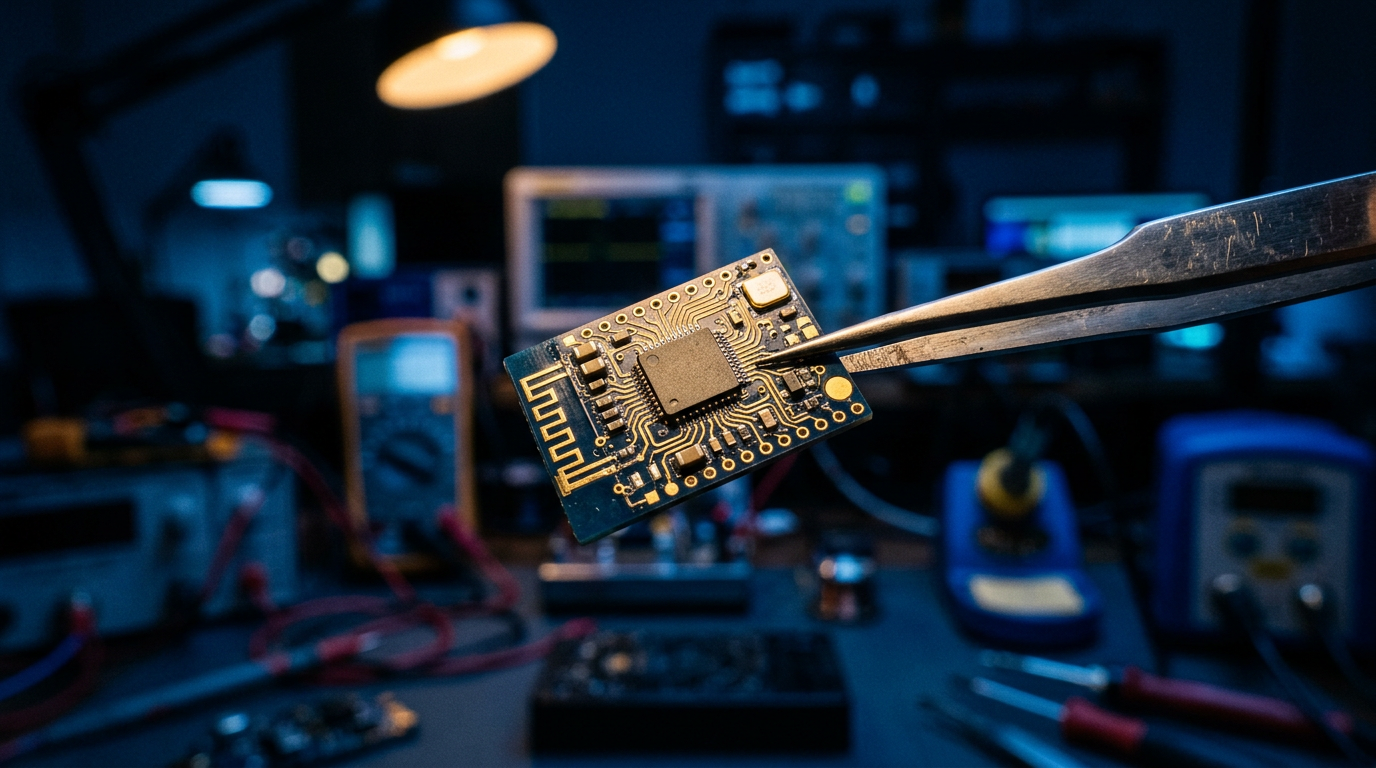
Macro view of a tiny microcontroller on a wearable sensor board held in tweezers
Alif’s Ensemble parts pair microcontroller cores with neural processing units for on-device AI.

The ADI filing confirms a US$1.35bn all-cash purchase of Alif Semiconductor. It is small by ADI’s standards, but it answers a gap in its portfolio: low-power processors that run machine-learning models directly on the device.

ADI’s strength is the analog edge, the sensors, converters and power parts that turn the physical world into data. Alif sits one step up, running inference on that data locally without a cloud round trip. Put together, ADI can sell a sensing-to-decision reference design rather than components.

For context on how silicon strategy has shifted this year, see our analysis of AMD and World Labs, which came at the same problem from the model end.

Acquiry’s read

Cash, not shares, and a price below US$1.5bn. ADI is buying a roadmap it could not build fast enough, and it isn’t reaching for scale.

What to watch

  • Design-win announcements that bundle ADI sensors with Alif processors.
  • Retention of Alif’s engineering team.
Part five

Crypto firms buy the regulated plumbing

Both digital-asset deals we could verify were purchases of licences, flows and institutional relationships, not tokens or protocols.

Stablecoins and cross-border payments

Circle buys Tazapay for US$400m to push USDC into trade payments

The USDC issuer adds a Singapore-based cross-border payments business and the licences that come with it.

~US$0.40bnReported, not disclosed
A container port at blue hour seen from an office with a payment dashboard on a laptop
Cross-border B2B payments are the stablecoin use case with the most real volume.

CoinDesk reported that Circle agreed to buy Tazapay for US$400m. We retrieved the article text and the terms matched. We have not seen the figure in a Circle filing.

Tazapay handles collections and payouts for businesses trading across Asia, the Middle East and beyond. The hard part of that business is not the software. It is the licences, banking partners and compliance stack in each corridor. Circle is buying those so USDC can settle real invoices, not just crypto trades.

Set it next to Grab and Atome: in both cases, the buyer is paying for regulated access to Asian payment flows.

Acquiry’s read

Stablecoin issuers are becoming payment companies. This is Circle buying the corridors rather than waiting to be invited in.

What to watch

  • Licence transfer approvals in Tazapay’s key markets.
  • USDC settlement volumes Circle attributes to the business.
Institutional digital assets

BitGo agrees to buy NYDIG’s institutional trading business, price blank

The filing is signed and dated. The share counts in the exhibit are not, so the value is officially undisclosed.

UndisclosedNo price published
An institutional trading desk at night with traders facing screens of price charts
Custody firms are adding trading desks so institutions can keep assets and execution in one place.

BitGo’s 8-K exhibit references an Equity Purchase Agreement dated 27 August and shows that part of the consideration is paid in BitGo Class A shares. The share counts in the filed form are blank, so no value can be inferred.

BitGo’s core is custody and wallet infrastructure. Adding NYDIG’s institutional trading operation lets it offer execution alongside safekeeping, which is what asset managers and corporates holding bitcoin increasingly ask for.

Paying partly in stock also makes NYDIG’s owners BitGo shareholders, an alignment choice that is common when the buyer’s shares are liquid and the seller believes in the combined platform.

Acquiry’s read

A small deal on paper. It shows custody businesses turning into full-service prime brokers for digital assets.

What to watch

  • The definitive share count in a later filing or registration statement.
  • Client migration from NYDIG to BitGo.
Part six

Pipelines, pills and a bank merger

Outside technology and financial services, three deals stand out: a midstream bolt-on, a consumer-health brand and a bank combination where the listed company is not the one in control.

Midstream energy

ONEOK adds Brazos’s Midland Basin assets for US$4.425bn

Another gathering and processing bolt-on in the Permian, extending a buying streak that began with Magellan.

US$4.43bnDisclosed
Aerial view of a gas processing plant and pipelines across the West Texas desert at golden hour
Midland Basin gathering and processing assets tie producers’ wells to ONEOK’s downstream network.

ONEOK’s release sets the purchase price at US$4.425bn for Brazos Midstream’s Permian Midland Basin assets. We retrieved the text through a syndication site and the terms matched.

ONEOK has spent three years turning itself from a natural-gas-liquids specialist into a diversified midstream major, through Magellan in 2023 and EnLink and Medallion in 2024. Brazos adds gathering and processing capacity in the same basin, feeding volumes into pipes ONEOK already owns.

These are some of the most predictable deals in M&A: fee-based contracts, known geology and obvious synergies. Execution risk sits with producer drilling activity, not integration.

Acquiry’s read

Bolt-ons like this are the cleanest synergy maths of the quarter. ONEOK is buying volume for its own pipes.

What to watch

  • Hart-Scott-Rodino clearance timing.
  • Producer activity guidance in the Midland Basin.
Consumer health

Procter & Gamble agrees to buy Thorne for US$3.8bn

Disclosed not in a press release but in a subsequent-events note in P&G’s annual report. It is a large bet on premium supplements.

US$3.8bnDisclosed
Unbranded amber supplement bottles and capsules beside a laboratory beaker on stone
Thorne sells practitioner-grade supplements and testing, a premium niche in consumer health.

The deal surfaced in the subsequent-events note of P&G’s 10-K: an agreement dated 4 August to acquire Thorne for US$3.8bn. For a company that has mostly shrunk its brand portfolio over the past decade, that is a notable reversal.

Thorne was taken private by L Catterton in 2023. If the headline holds, the sponsor has multiplied its money in about three years, a strong reference point for anyone selling a premium consumer-health brand.

For P&G, Thorne adds a practitioner channel and a direct-to-consumer data relationship its mass-market vitamin lines lack. The integration risk is cultural: a clinical, science-led brand inside a mass-marketing machine.

Acquiry’s read

P&G rarely buys. When it does, it pays for categories where it believes premium pricing will hold through a downturn.

What to watch

  • Whether P&G keeps Thorne operating as a standalone brand.
  • Any earnout or contingent consideration disclosed at close.
Regional banking

EverBank and WaFd combine in an all-stock deal EverBank will control

WaFd files the paperwork, but EverBank’s holders end up with 59.2% of the combined bank.

~US$3.9bnReported, not disclosed
A regional bank branch in the Pacific Northwest on a misty morning
A Seattle-based thrift and a Jacksonville-based bank combine on both coasts.

The WaFd filing describes an all-stock combination in which EverBank holders will own 59.2% of the combined company and WaFd holders 40.8%. The US$3.9bn headline value circulating in press coverage does not appear in the text we retrieved, so we hold it as reported.

The ownership split is the story. WaFd is the listed filer, but economic control goes to EverBank’s owners, making this effectively a reverse merger that gives a private bank a public listing and a Pacific Northwest franchise in one move.

Regional bank consolidation has been held back for years by slow approvals. A deal of this size is a test of how quickly regulators are now willing to clear mid-sized combinations.

Acquiry’s read

Count this as EverBank buying WaFd, whatever the filing header says. The ownership split decides who is really in charge.

What to watch

  • Regulatory approval timeline.
  • Board composition and which management team leads the combined bank.
Off the books

Reported, not confirmed

Big headlines we could not verify from a filing or company release. They are part of the story of the quarter, but they are not in our numbers.

Nvidia and Hugging Face

US$12.9bn, reported

A syndicated report on 27 August said Nvidia had agreed to buy Hugging Face for US$12.9bn. Neither company confirmed it in anything we could retrieve, and the only EDGAR hit was an unrelated mention. If true, it would be the largest AI deal of the year. Until one of the parties confirms it, it stays out of our numbers.

Syndicated report (MSN)

Goldman Sachs and NEOS

US$2.25bn, headline only

Headlines on 12 August put a US$2.25bn price on Goldman’s purchase of NEOS, the options-income ETF issuer, including its bitcoin and ether funds. We found no SEC filing in the window. It would fit Goldman’s push into asset management and BitGo’s thesis that institutions want digital-asset exposure in regulated wrappers.

Syndicated report (MSN)

Cyera completes Oasis Security

Terms undisclosed

Data-security company Cyera said on 3 September it had completed its acquisition of Oasis Security, a specialist in non-human identity: the service accounts, API keys and AI agents that now outnumber human users in most enterprises. Both are private, so no filing is expected.

Syndicated release (Yahoo Finance)
Casualties

Deals that broke, or might

Terminated deals and regulatory threats. They show where the ceiling on dealmaking currently sits.

Solstice and Element walk away

US$14.5bn merger terminated

Reuters reported on 27 August that Solstice and Element had terminated their US$14.5bn merger after shareholder feedback. It is the largest broken deal we recorded. It would have been the third-largest in our sample had it survived.

Reuters

Brussels lines up against UPM and Sappi

Reported block, no decision yet

EU antitrust regulators were reported on 18 September to be preparing to block the combination of the two paper and pulp producers, citing people familiar with the matter. No Commission decision had been published at our cutoff.

Syndicated Reuters report (MSN)

Howmet and a GE Aerospace deal

Counterparty unidentified

Howmet’s chief executive told Reuters on 9 September he was “fine” with a GE Aerospace deal. We could not identify the counterparty or terms, so it is noted here and excluded from everything else.

Reuters
Joash Boyton
Analyst profile

Founder & Managing Director, Acquiry

Joash Boyton is a technology sector analyst, publisher, and the founder of Acquiry, where he executes buy-side and sell-side M&A mandates across digital assets, software, and gaming technologies. He is the author of peer-reviewed corporate finance literature indexed across institutional repositories including Google Scholar and the ORCID Registry. Joash publishes Acquiry Deal Intelligence to deliver independent, forensic strategic reviews and valuation benchmarks of global technology acquisitions, compiling primary data directly from corporate disclosures, SEC filings, and regulatory ledgers.

Research support: Acquiry Deal Intelligence.

Acquiry services

Start a confidential M&A conversation.

Selling, buying or working through a complex transaction, Acquiry runs buy-side and sell-side mandates across digital businesses.

Start here

Strictly confidential. No obligation. Acquiry was not engaged by AMD or World Labs.