
Supabase is buying the database architecture agents need
An unpriced acquisition, a disclosed $150 million round, and a bet that the next billion databases will be created by software, not people.
Supabase says it now adds more than four million new databases a month, most of them created by AI agents rather than people. Turso’s architecture is built for exactly that volume.
At 09:00 ET on 2 October 2026, Supabase, the open source Postgres platform used by more than 13 million developers, announced it is acquiring Turso, the database infrastructure company built around a rewritten version of SQLite designed to run at enormous scale. The purchase price was not disclosed.
The acquisition landed in the same release as $150 million in new primary funding for Supabase, led by Singapore’s sovereign wealth fund GIC, with Alphabet’s growth fund CapitalG, IronArc and SquarePeg also participating, just four months after Supabase closed a $500 million Series F. Two transactions, one strategic thesis: that the fastest-growing source of demand on Supabase’s platform is no longer people, it is AI agents, and agents need a kind of database infrastructure Supabase did not yet have.
Every AI agent that spins up a workspace, a sandbox, or a customer environment now wants its own database. We built Turso for exactly that world, and joining Supabase means that world gets built on Postgres too.
Neither company has disclosed what Supabase paid for Turso. What both have disclosed is a shared bet: that the next order-of-magnitude increase in database creation will come from software acting on behalf of users, not from users themselves, and that the company that owns the infrastructure for that workload owns a durable piece of the agentic stack.
The deal in five points
Research cut-off 2 October 2026. Facts below are drawn from the joint Supabase/Turso press release of 2 October 2026 and the companies’ own product pages unless marked otherwise.
- 1
Supabase announced on 2 October 2026 that it is acquiring Turso, the venture-backed database company built around a rewritten version of SQLite designed to run millions of small, independent databases cheaply and at scale. The purchase price was not disclosed.
- 2
The acquisition was announced alongside $150 million in new primary funding for Supabase, led by Singapore sovereign fund GIC, with participation from Alphabet’s growth-stage fund CapitalG, IronArc and SquarePeg. The round lands just four months after Supabase closed a $500 million Series F.
- 3
Supabase says it now adds more than 1 million users and 4 million new databases every month, with roughly 70% of those new databases created by AI agents and coding tools rather than people, a share that has climbed sharply since the company first flagged 600% year-over-year database growth in June 2026.
- 4
Turso’s architecture was built to answer the operational problem that creates: provisioning a dedicated server for every database an agent needs is too slow and too expensive at that volume. Turso instead runs enormous numbers of lightweight, isolated SQLite-compatible databases on shared infrastructure, in Turso’s own cloud or inside a customer’s own cloud account (BYOC).
- 5
Turso founder Glauber Costa and co-founder Pekka Enberg are joining Supabase with their team; Costa becomes Supabase’s Head of Agentic Services. The Turso platform keeps running independently in the near term, with what both companies describe as a graduation path for customers into the wider Supabase ecosystem.
Key facts
- Purchase price Undisclosed
- UndisclosedNeither company has disclosed the consideration paid for Turso
- Parallel funding Disclosed
- $150mNew primary round for Supabase led by GIC, alongside the acquisition announcement
- Lead investor Disclosed
- GICSingapore’s sovereign wealth fund. Also participating: CapitalG, IronArc, SquarePeg
- Prior round Disclosed
- $500m Series FClosed roughly four months before this announcement
- Announced Disclosed
- 2 Oct 2026Joint press release, 09:00 ET, San Francisco
- Deal type Disclosed
- Acquisition + fundingTurso acquired outright; Supabase separately raises new primary capital
- Turso leadership Disclosed
- Joins SupabaseGlauber Costa becomes Head of Agentic Services; co-founder Pekka Enberg and team join
- Turso platform Disclosed
- Continues operatingExisting customers stay on Turso Cloud, with a graduation path into Supabase
- Disclosed
- Stated by a party to the transaction
- Reported
- Press or data-provider figure, not company-confirmed
- Calculated
- Derived by Acquiry from disclosed or reported inputs
- Illustrative
- Hypothetical or reader-supplied input
- Undisclosed
- Not public and not estimated
The numbers behind the deal
Each figure has its own permanent link and a ready-made citation. Journalists, analysts and researchers are welcome to quote them with credit and a link to Acquiry.
- 4M+Disclosed
New databases created monthly
Across the Supabase platform, self-reported at announcement
- 13M+Disclosed
Developers using Supabase
Cumulative, as stated in the company’s own description
- 4 monthsDisclosed
Between the Series F and this round
$500m Series F to $150m new round plus the Turso acquisition
Part I
The deal
What was announced, the architecture problem behind it, and the money involved.
What Supabase and Turso actually announced
A same-day pairing of an acquisition and a funding round, with the purchase price withheld and the financing terms disclosed.
At 09:00 ET on 2 October 2026, Supabase published a single release carrying two pieces of news. The first: it is acquiring Turso (opens in a new tab), a database infrastructure company. The second: it has raised $150 million in new primary funding, led by Singapore’s sovereign wealth fund GIC, with Alphabet’s growth-stage fund CapitalG, along with IronArc and SquarePeg, also participating.
The two events are related in timing and strategic logic, not in structure. The $150 million is equity capital into Supabase itself. The Turso acquisition is a separate purchase of a company, and Supabase has not disclosed what it paid. That silence is unremarkable for a private-to-private technology acquisition of this size; it is the funding round, not the acquisition price, that carries disclosed numbers here.
Two transactions, one release: an unpriced acquisition and a priced funding round, announced together for the same strategic reason.
The headline numbers
- Funding. $150 million in new primary equity, arriving roughly four months after Supabase’s $500 million Series F.
- Lead investor. GIC, with CapitalG, IronArc and SquarePeg also participating in the round.
- Acquisition. All of Turso, the company and its team, with terms undisclosed.
- Use of proceeds. The release states the round will also fund employee liquidity, something the founders describe as important to being, in their words, the best company for engineers.
Paul Copplestone, Supabase’s co-founder and CEO, framed the round as recognition of a growth rate rather than a rescue or a pivot: "The past year has been the fastest growth in our history by a wide margin." He credited the investor group, and specifically CapitalG’s ties into the broader Alphabet ecosystem, as valuable for what comes next. On the acquisition, he was explicit about the underlying thesis: "The future is agents and the architecture Turso provides will help us accelerate Supabase as the backend platform for supporting that future."
“The future is agents and the architecture Turso provides will help us accelerate Supabase as the backend platform for supporting that future.”
Derek Zanutto, general partner at CapitalG, offered the investor’s framing of the same moment: "Supabase has established itself as the critical open infrastructure layer powering the AI revolution. We’re proud to back one of the fastest growing private database companies on the planet as Paul and the team empower millions of developers and agents to build at unprecedented speed."
Both parties are describing the same underlying fact from different sides: Supabase’s own usage data shows growth concentrated in a kind of demand, agent-created databases, that its existing Postgres-based platform (opens in a new tab) was not originally built to serve at this volume. That is the thread that connects the funding round to the acquisition, and it is worth examining on its own before anything else, because it is the entire rationale for buying Turso.
The problem only Turso’s architecture was built to solve
Why provisioning a dedicated server per database breaks down once agents, not people, are the ones creating databases.
The economics of one database per agent only work if provisioning one is close to free. That is the specific problem Turso’s architecture was built around.
A traditional database platform, Supabase’s own included, is built around the assumption that a database is provisioned for a project, a company or an application, and that it will be used by some number of human end users and backend services over a long lifetime. Supabase built an entire company on making that provisioning step fast and the resulting database fully featured, with auth, storage, edge functions, realtime and vector search (opens in a new tab) included by default.
Agentic workloads break that assumption in a specific way. An AI coding agent or an autonomous service might need its own database for a single task, a single customer, or a single user session, and it might need thousands or millions of those databases created and torn down continuously rather than once. Supabase’s release puts that shift in its own numbers: more than 4 million new databases created every month platform-wide, with roughly 70% of those now created by agents or AI-driven tools rather than a person clicking through a dashboard, up from a point in June 2026 when the company had already reported 600% year-over-year growth in total databases created.
The economics of one database per agent only work if provisioning one is close to free. Turso built exactly that.
That lets Turso Cloud, the hosted product built on top of the engine, offer something a conventional managed-Postgres platform struggles to match at scale: instantiating a new, isolated database in the time it takes to make an API call, with a cost structure that holds up even when most of those databases are small, short-lived, or barely used. Turso also ships features that matter specifically for agent and multi-tenant workloads out of the box, including full-text search with BM25 ranking, native vector embedding storage and similarity search, per-database encryption at rest, and change data capture for audit logging of every mutation.
Public cloud and BYOC, not either-or
The release is specific that Turso’s architecture "enables the provisioning of on-demand per-agent databases both in the public Cloud and BYOC," bring-your-own-cloud, where the infrastructure runs inside a customer’s own cloud account rather than Turso’s. That detail matters for the kind of customer Turso names in the release: Superhuman, Sauna.ai, CTO.new and Mastra, companies building AI products where regulated or security-conscious end customers may require that per-agent data never leaves their own network boundary.
Put simply, Turso solved, ahead of most of the market, the specific infrastructure problem Supabase’s own growth has just made unavoidable: how to make "a database per agent" as cheap and instant as "a row per agent" would be in a shared table, without losing the isolation, security and portability that make a dedicated database the right answer in the first place.
Reading the $150 million round
A fast follow to a $500 million Series F, with a sovereign fund in the lead and Alphabet’s growth arm back at the table.
A $150 million round, led by a sovereign wealth fund, arriving four months after a $500 million Series F.
Four months is an unusually short gap between a $500 million Series F and a further $150 million raise, even in the current AI infrastructure financing environment. Supabase has not characterised this round as an extension, a bridge, or a down round of any kind; the release frames it purely as new capital arriving because growth accelerated further after the Series F closed, not because of any shortfall.
Who is in the round, and why it reads as a signal
- GIC. Leads the round. GIC is one of the largest sovereign wealth funds globally, and a GIC-led growth round is typically read as a vote on durability and scale, not just near-term momentum.
- CapitalG. Alphabet’s independent growth fund. Copplestone specifically called out CapitalG’s "connections to the broader Alphabet ecosystem" as valuable going forward, which reads as more than a passive capital commitment.
- IronArc and SquarePeg. Round out the syndicate. The release does not break out amounts by investor.
The release also states plainly that the round "will provide liquidity for employees," which the founders describe as "an important and vital part of being the best company for engineers." That is a deliberate, disclosed use of proceeds: at this stage of a company’s life, a secondary liquidity component in a primary round is usually there to let early employees and some early investors realise partial gains without forcing a sale of the company, which keeps talent retention intact through a long private tenure.
Acquiry’s own read: the purchase of Turso and the $150 million round were very likely financed and negotiated together even though they are structured as two separate transactions, since announcing both unpriced and priced events on the same day, from the same release, with the same strategic rationale, is a choice rather than a coincidence. The practical effect is that Supabase does not have to disclose what it paid for Turso, while still giving the market a clear, disclosed data point, the $150 million round, on how its own growth is being valued at this exact moment.
Part II
What it means
Integration, competitive context and the questions still open.
Why Turso keeps running, and who stays on to run it
A continuity-first integration: the platform stays live, the founders take senior roles, and the merge happens on a graduation path rather than a cutover.
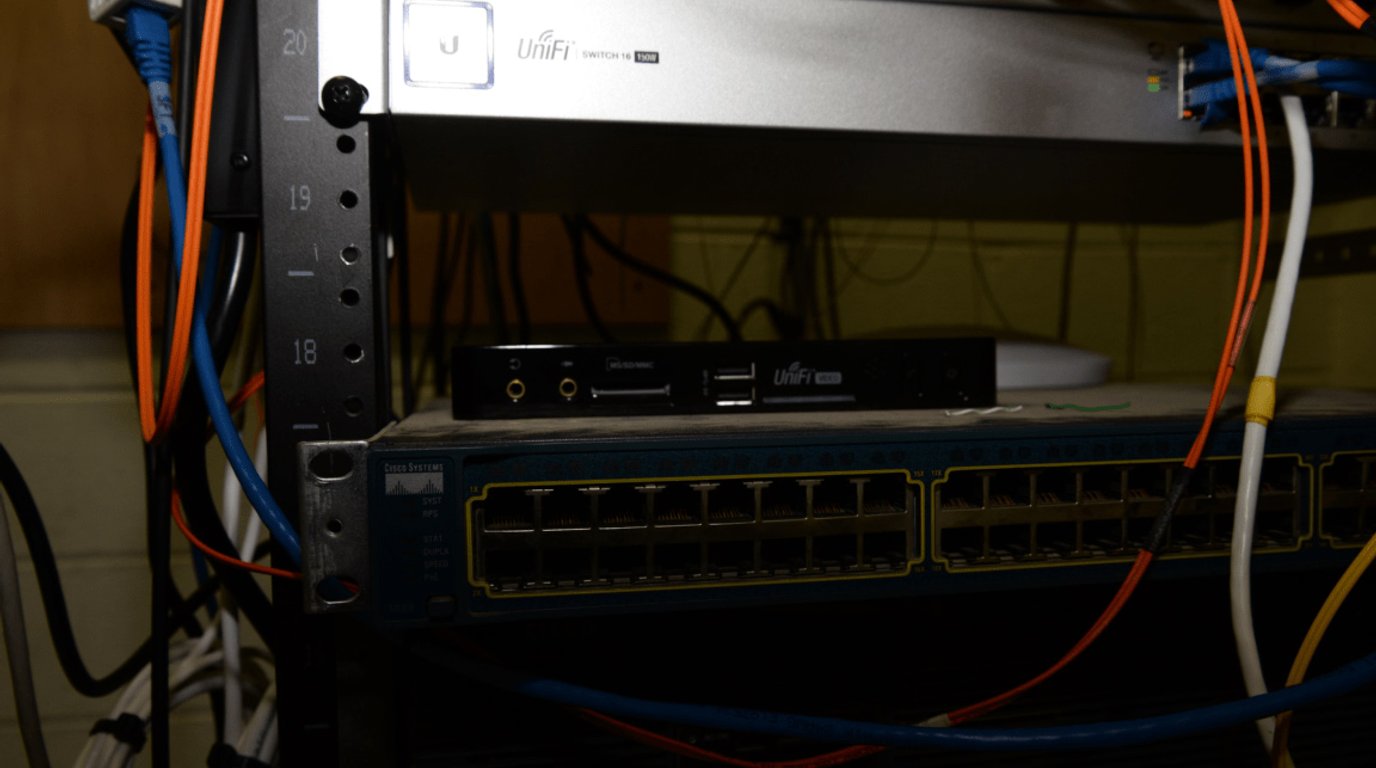
Turso Cloud stays operational for existing customers through the transition, under Supabase ownership.
Two integration decisions stand out in the release, and both point toward continuity rather than disruption. First, the Turso platform is not being wound down or merged overnight: "The Turso platform will continue operations, with a clear graduation path into the rest of the Supabase ecosystem." Second, Turso’s leadership is not exiting; it is moving into a defined role inside Supabase.
Leadership after close
- Glauber Costa. Turso’s founder joins Supabase as Head of Agentic Services, a title that puts him in charge of exactly the capability Supabase bought his company for.
- Pekka Enberg. Turso’s co-founder joins alongside Costa, along with "the rest of the Turso team," per the release.
“From the start of our journey, I’ve had as a goal to serve upwards of a billion databases to our customers. Being a part of Supabase, with its gargantuan developer success and ever-growing partner ecosystem will bring this goal closer.”
That quote is worth reading closely, because it reframes the deal from Turso’s side as scale-seeking rather than exit-seeking. Costa is not describing a team cashing out; he is describing a company that hit a ceiling on how many databases it could plausibly reach on its own distribution, and bought itself a route past that ceiling by joining the platform with 13 million developers already building on it.
Glauber Costa: “I’ve had as a goal to serve upwards of a billion databases... being a part of Supabase... will bring this goal closer.”
The release frames the cultural fit in similar terms on both sides: "Both companies have a strong focus on open source, developer experience, a willingness to tackle hard problems, and a shared understanding for how infrastructure will evolve to support the future of agentic AI." That is standard acquisition language, but it is also consistent with the public track record of both teams: Supabase has built its entire platform in the open, and Turso’s rewritten SQLite engine and client libraries are likewise open source projects with existing external contributors and dependents.
A "graduation path" rather than a hard migration deadline is a meaningful integration choice. It avoids forcing Superhuman, Sauna.ai, CTO.new, Mastra and Turso’s other customers to re-platform under time pressure immediately after an acquisition, a pattern that has damaged customer trust in other infrastructure deals. It also buys Supabase time to decide exactly how deep the integration between a Postgres-based platform and a SQLite-based one should go, rather than committing to an architecture before the ink is dry.
Where this leaves the rest of the agentic database market
A land grab for the infrastructure layer underneath AI agents, and the specific risks Supabase now owns along with Turso’s technology.
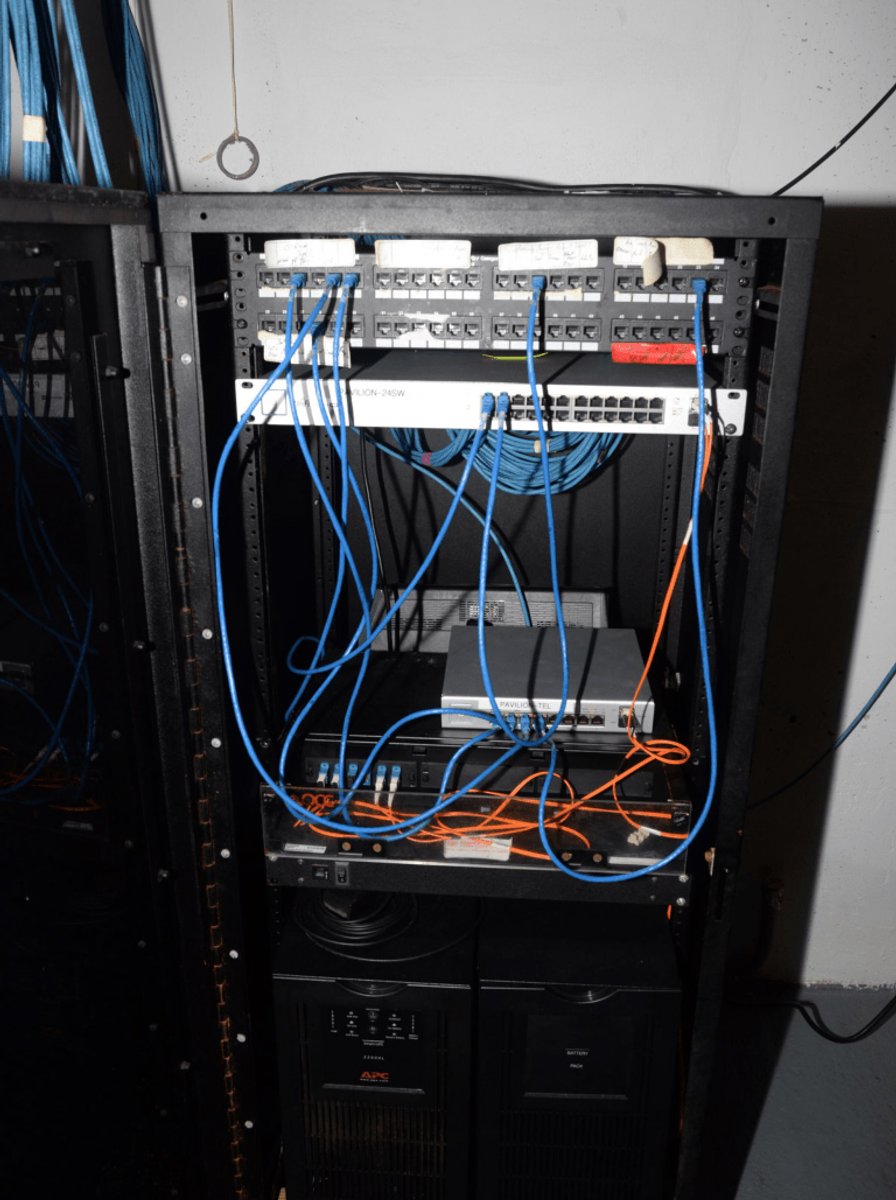
Every major developer platform is racing to make database-per-agent cheap enough to be the default.
Supabase is not the only company racing to make "spin up a database instantly, cheaply, and in enormous volume" a core product capability. Every modern backend-as-a-service and database platform is watching the same shift: coding agents and autonomous software are becoming database customers in their own right, not just a new kind of user hitting an existing database through an API. Owning Turso’s architecture, rather than licensing it or building an equivalent in-house, gives Supabase a two-sided advantage: it removes a potential competitor from the market and compresses years of specialised engineering into a single acquisition.
Models & research
World Labs contributes: Spatial-intelligence world models; robot learning via SceniX
Effect on AMD: New in-house frontier research function led by a chief scientist
Software & developer ecosystem
World Labs contributes: Marble, World API, Spark open-source renderer
Effect on AMD: Reference workloads and a developer surface running on AMD
Systems & rack scale
World Labs contributes: Training and inference at scale; simulation pipelines
Effect on AMD: Profiling of memory, latency and interconnect demands
Silicon roadmap
World Labs contributes: Mixed neural, rendering and geometry workloads
Effect on AMD: The stated prize: design inputs for future CPUs, GPUs and accelerators
Free to reference with credit and a link to Acquiry.
What Supabase is actually buying
It is worth being precise about what transfers in a deal like this, because the headline, "Supabase acquires Turso," understates how much of the value sits in people and operating experience rather than code alone. Supabase gets: a production-proven engine for high-volume, low-cost database provisioning; a team led by Costa and Enberg who have already solved the hardest parts of running that engine at scale, including for BYOC deployments; and a small set of reference customers, Superhuman, Sauna.ai, CTO.new and Mastra, already running real agentic workloads on exactly the architecture Supabase now needs to scale.
| Factor | Disclosed | Acquiry view | Rating |
|---|---|---|---|
| Leadership | Turso co-founder and CEO Glauber Costa becomes Supabase’s Head of Agentic Services; co-founder Pekka Enberg also joins. | Both founders stay and get a mandate that matches the reason Supabase bought the company. | Strong |
| Platform continuity | Turso Cloud and the open source libSQL engine continue to operate; existing customers are not forced to migrate. | No forced cutover removes the single biggest cause of lost revenue in infrastructure acquisitions. | Strong |
| Strategic fit | Supabase frames the deal around agent-created databases, a workload it says is already a majority of new database creation on its platform. | The capability gap being filled is specific and already measured in Supabase’s own usage data. | Strong |
| Financing structure | A $150m primary round, led by GIC, closed alongside the acquisition; terms of the acquisition itself were not disclosed. | Fresh primary capital funds integration without using disclosed acquisition consideration or straining the balance sheet. | Positive |
| Customer base | Turso cites Superhuman, Sauna.ai, CTO.new and Mastra as customers or design partners for agent-facing database infrastructure. | A small set of named, credible AI-native companies already depend on the exact workload Supabase is buying. | Positive |
| Technical integration | Turso’s libSQL (a fork of SQLite) and Supabase’s Postgres are different database engines; no technical merger of the two has been described. | The two products run side by side rather than being merged, which limits near-term engineering risk but also near-term product unification. | Standard |
| Disclosure | Purchase price, deal structure and closing conditions were not disclosed in the joint release. | Typical for a private-to-private technology acquisition of this size; limits external verification of value paid. | Standard |
Free to reference with credit and a link to Acquiry.
The clearest risk is architectural: Supabase’s core identity and most of its revenue sit on Postgres, and Turso’s engine is a SQLite-compatible, not Postgres-compatible, system. Running both well, long-term, without either confusing customers about which engine to pick or quietly starving one of investment, is a genuinely hard product management problem, and it is the one Costa’s new title, Head of Agentic Services rather than, say, Head of Turso, suggests Supabase intends to solve by organising around the workload, not the database engine.
The questions this deal leaves open
A timeline of the two companies converging, and the specific things to watch as the graduation path plays out.
- 2020
Supabase founded
Open source alternative to Firebase, built on Postgres.
Completed · Turso
- 2022
Turso founded as Chiselstrike
Glauber Costa and Pekka Enberg begin rebuilding SQLite for the server.
Completed · Turso
- Jun 2026
Supabase closes $500m Series F
Comes alongside the company reporting 600% year-over-year growth in databases created.
Completed · Transaction
- 2 Oct 2026
Acquisition and $150m round announced
Joint press release at 09:00 ET: Supabase acquires Turso; $150m new round led by GIC.
Completed · Transaction
- Ongoing
Turso Cloud continues; graduation path begins
Existing Turso customers stay on the platform while a path into the Supabase ecosystem is built.
Expected · Transaction
Free to reference with credit and a link to Acquiry.
Because the companies disclosed a strategic rationale and a funding round but not a purchase price or an integration timetable, most of what happens next will be visible in product behaviour rather than further press releases. Three things are worth watching over the coming two to three quarters.
- Whether Turso pricing changes for new customers. A straightforward signal of whether Supabase intends to grow Turso’s existing customer base independently or primarily route new agentic demand through Supabase’s own front door.
- How database-per-agent is packaged inside Supabase. Whether it ships as a distinct Supabase product, a mode inside existing Supabase projects, or stays a separate Turso-branded offering during the "graduation" period.
- Whether other platforms respond with their own acquisitions. Database-per-agent infrastructure is now a proven-enough category that other developer platforms with large existing user bases have a motive to either partner with a remaining independent provider or make a similar purchase of their own.
For now, the clearest fact in the entire announcement is the one both sides chose to make public: not the price, but the scale. Supabase is adding four million databases a month and expects the agent share of that number to keep climbing; Turso says its founding goal has always been to serve upward of a billion databases. Put the two together and the acquisition reads less like a typical tuck-in and more like two companies independently arriving at the same forecast for how agentic software gets built, and deciding to meet it together rather than compete over who gets there first.
Frequently asked questions
How much did Supabase pay for Turso?
Neither company has disclosed the purchase price. The acquisition was announced jointly on 2 October 2026 alongside a separate $150 million funding round for Supabase, which is not the same transaction and was not described as payment for Turso.
What is Turso and why does Supabase want it?
Turso is a database company built around a rewrite of SQLite that supports concurrent writes, async I/O and built-in cloud sync, packaged as Turso Cloud, a hosted platform for running millions of lightweight, isolated databases. Supabase wants that architecture to support database-per-agent workloads, where an AI agent needs its own database created instantly rather than sharing one with other users.
Is Turso shutting down after the acquisition?
No. Supabase and Turso have both said the Turso platform will continue operating for existing customers, with what the companies describe as a graduation path into the wider Supabase ecosystem over time.
Is the $150 million round connected to the Turso acquisition?
They were announced together but are structurally distinct: the $150 million is new primary equity funding for Supabase, led by GIC with CapitalG, IronArc and SquarePeg participating, arriving four months after Supabase’s $500 million Series F. The Turso acquisition is a separate, unpriced M&A transaction.
What happens to the Turso team?
Turso founder Glauber Costa and co-founder Pekka Enberg are joining Supabase along with the rest of the Turso team. Costa takes the title of Head of Agentic Services at Supabase.
Why is Supabase acquiring a database company now?
Supabase says it is now adding more than 4 million new databases a month, with roughly 70% created by AI agents and coding tools rather than people. That volume makes per-database server provisioning impractical, which is the specific problem Turso’s architecture was built to solve.
What does BYOC mean in this context?
Bring Your Own Cloud. It lets a customer run Turso’s database infrastructure inside their own cloud account rather than Turso’s, which matters for regulated or security-sensitive customers who need agent-provisioned databases to stay inside their own network boundary.
Does this mean Supabase is moving away from Postgres?
No indication of that. Supabase’s core platform remains built on Postgres; Turso’s SQLite-based architecture is being positioned as a complementary layer for the specific case of spinning up very large numbers of small, short-lived or per-agent databases, not a replacement for Supabase’s primary database product.
Methodology and limitations
This analysis is built entirely from the joint Supabase/Turso press release of 2 October 2026 and the public product pages at supabase.com and turso.tech, each retrieved at research cutoff.
Every figure is tagged with its provenance: disclosed (stated directly by the companies), reported (stated by the companies but not independently verified by a regulator or filing, as there is no public filing for a private acquisition of this kind) or undisclosed (not made public by either company).
Acquiry’s own interpretation and ratings are marked as such throughout and are clearly separated from company-disclosed facts.
Independence. Acquiry was not engaged by any party. This is independent research from public sources and is not a solicitation, investment advice, or an offer to buy or sell any security. Acquiry holds no disclosed position in Supabase, Inc. or Turso (Chiselstrike, Inc.).
Sources
Numbered to match the superscript citations. Sources marked “not independently retrieved” are cited as reported and were not verified against the original.
- 1Supabase Announces $150M in New Funding and Turso Acquisition
PR Newswire (Supabase) · · Company release
- 2Supabase — Build in a weekend. Scale to millions.
Supabase · · Company release
Product, pricing and platform description as published on supabase.com at research cutoff.
- 3Turso: Millions of Databases. One Architecture.
Turso · · Company release
Product and architecture description as published on turso.tech at research cutoff.
- 4Acquiry Deal Intelligence calculations
Acquiry · · Acquiry calculation
Figures derived by Acquiry from the primary sources above; see methodology.
Cite this report
Boyton, J. (2 October 2026). Supabase to Acquire Turso, Raises $150 Million to Build the Database Layer for AI Agents. Acquiry Deal Intelligence. https://www.acquiry.com/deal-intelligence/supabase-to-acquire-turso/
@online{boyton2026amdworldlabs,
  author = {Boyton, Joash},
  title = {Supabase to Acquire Turso, Raises $150 Million to Build the Database Layer for AI Agents},
  organization = {Acquiry Deal Intelligence},
  date = {2026-10-02},
  url = {https://www.acquiry.com/deal-intelligence/supabase-to-acquire-turso/}
}
Joash Boyton is a technology sector analyst, publisher, and the founder of Acquiry, where he executes buy-side and sell-side M&A mandates across digital assets, software, and gaming technologies. He is the author of peer-reviewed corporate finance literature indexed across institutional repositories including Google Scholar and the ORCID Registry. Joash publishes Acquiry Deal Intelligence to deliver independent, forensic strategic reviews and valuation benchmarks of global technology acquisitions, compiling primary data directly from corporate disclosures, SEC filings, and regulatory ledgers.
Research support: Acquiry Deal Intelligence.
Further reading
- Market reportThe Flight to Control: Q2 2026 Digital M&A Market Report
- Deal IntelligenceMastercard Completes BVNK: What the Close Means for Stablecoin Infrastructure M&A
- InsightEarnouts After Platform Risk: Structuring Digital M&A When Distribution Shifts
- ToolDeal Structure Comparison
- ToolEarnout Modeller
- ArchiveAll Deal Intelligence reports