Summary
Summary
- Warranties are the seller's promises about the business. If one proves untrue and the buyer loses money, the buyer wants a reliable way to get paid. Escrow, holdbacks and insurance are the three common routes.
- Escrow parks part of the price with an independent agent until a set date. Holdbacks keep that money with the buyer. Both put the seller's own money at risk for the claim period.
- Warranty and indemnity insurance, called representations and warranties (R&W) insurance in the US, moves much of that risk to an insurer. The buyer claims against the policy instead of the seller.
- Insurance does not cover everything: known issues, matters found in diligence, forward-looking statements and some specific risks are commonly excluded. Those gaps are often handled with a specific indemnity, sometimes backed by a smaller escrow.
- Many deals combine the tools. A seller who wants a clean exit tends to prefer insurance; a buyer facing a known, quantifiable risk tends to want cash set aside.
01 · Guides
Warranties, indemnities and why protection is needed
What the buyer is protecting against.
In a purchase agreement the seller gives warranties (called representations and warranties in US practice): statements of fact about the business, such as "the accounts are accurate", "there is no litigation", "the company owns its software". If a warranty is untrue, the buyer may be able to claim for its loss. Separately, the seller may give indemnities: promises to pay pound-for-pound or dollar-for-dollar for specific identified risks, such as a known tax exposure.
A warranty is only worth what can be recovered under it. Once the seller has been paid and the proceeds have been spent, invested or distributed, chasing a claim can be slow and uncertain. Protection mechanisms exist to make recovery practical. The purchase agreement sets the rules around them: caps, time limits, minimum claim sizes and what the seller has disclosed.
02 · Guides
The three tools at a glance
Same goal, different places to put the risk.
| Row | Escrow | Holdback | W&I / R&W insurance |
|---|---|---|---|
| What it is | Part of the price paid to an independent escrow agent | Part of the price kept by the buyer | An insurance policy covering loss from breach of warranty |
| Who holds the money | Escrow agent, under a written agreement | Buyer | Insurer pays claims; no price is withheld for it |
| Seller's risk | Escrowed amount at risk until release | Held amount at risk, plus buyer credit risk | Usually limited to a small retention share or none, except for fraud |
| Buyer's risk | Recovery limited to the escrow unless the SPA allows more | Easiest recovery, but the seller may dispute set-off | Policy exclusions and the retention |
| Cost | Escrow agent fee; seller's money tied up | No third-party fee; seller's money tied up | Premium, underwriting fee, broker fee and premium taxes |
| Typical duration | A set claim period, sometimes released in stages | Similar to escrow | Policy period, often longer for fundamental and tax warranties |
| Best fit | Seller and buyer want a neutral holder | Buyer has leverage or an ongoing relationship with the seller | Seller wants a clean exit; buyer wants a creditworthy counterparty |
03 · Guides
How escrow works
Neutral money with written release rules.
At completion, part of the price is paid into an account controlled by an escrow agent, usually a bank or specialist provider. An escrow agreement signed by buyer, seller and agent sets out when money is released: on a set date, on joint written instructions, or on a court or tribunal decision. If the buyer brings a valid claim before the release date, the disputed amount stays in escrow until resolved.
- StrengthThe money exists and is held by a neutral party. Neither side has to trust the other to pay.
- WeaknessThe seller does not have use of the money, and recovery is usually capped at the escrowed amount unless the purchase agreement says otherwise.
- Watch forStaged releases, interest on the escrowed funds, who pays the agent, and the exact wording of release instructions.
Holdbacks and deferred consideration
A holdback works like escrow, but the buyer keeps the money and pays it later. It is cheaper and simpler, but the seller carries the buyer's credit risk and must trust the set-off rules. Seller notes and deferred payments can carry similar set-off rights; our guide to seller financing covers how sellers protect themselves when part of the price is paid later.
04 · Guides
How W&I and R&W insurance works
The buyer claims against an insurer, not the seller.
In the most common form, a buy-side policy, the buyer takes out insurance that pays for loss caused by breach of the seller's warranties. Underwriters review the diligence reports and the draft purchase agreement, hold an underwriting call with the buyer's advisers, then issue terms. The buyer chooses a policy limit (the most the policy will pay) and accepts a retention (the first slice of loss the policy does not pay, similar to an excess or deductible).
Because the insurer stands behind the warranties, the seller can often agree a much lower cap on its own liability, sometimes nominal, except for fraud. That is why sellers, and private equity sellers in particular, frequently ask for insurance-backed deals: it lets them distribute proceeds without a long tail of potential claims.
- Buy-side policyThe buyer is the insured. Most common, because the buyer can claim directly and the seller can be released.
- Sell-side policyThe seller is insured against claims the buyer brings. Less common; the buyer still claims against the seller.
- Knowledge scrape and materiality scrapePurchase agreement terms that affect how breaches are measured; insurers review how these interact with the policy.
- Synthetic or enhanced coverSome insurers will cover warranties wider than those the seller actually gives, at extra cost. Availability varies.
05 · Guides
What insurance usually excludes
Where escrow and indemnities still earn their place.
A policy covers unknown problems. It is not designed for risks already identified. Common exclusions, which vary by insurer, jurisdiction and deal, include:
- Matters the buyer's deal team actually knew about before signing or completion, including issues found in diligence
- Forward-looking statements, forecasts and projections
- Purchase price adjustments such as working-capital true-ups
- Areas the diligence did not cover adequately, as judged by the underwriter
- Specific deal or sector exclusions, for example certain pension, environmental, product liability or cyber exposures
- Fines and penalties that cannot lawfully be insured
- Losses caused by the buyer's own fraud; seller fraud is usually covered for the buyer, with the insurer able to pursue the fraudulent seller
06 · Guides
Choosing, or combining, the tools
Match the tool to who needs what.
| Situation | What usually works |
|---|---|
| Seller wants a clean exit and full proceeds now | Buy-side W&I with a low seller cap; escrow only for specific known risks |
| Small deal where premium is disproportionate to price | General escrow or holdback for a defined period |
| Diligence found a specific, quantifiable risk | Specific indemnity plus a targeted escrow, whether or not there is a policy |
| Seller will stay on as an employee or shareholder | Holdback or set-off against deferred consideration may be acceptable |
| Competitive process with several bidders | Buyers often offer an insured, low-recourse deal to stand out |
| Buyer worried about seller's ability to pay later | Escrow or insurance rather than an unsecured warranty claim |
Combinations are common. A frequent structure is a buy-side policy covering general warranties, a small escrow that sits under the retention, and a specific indemnity with its own escrow for one known issue. The more these layers interact, the more important it is that the purchase agreement, policy and escrow agreement use consistent definitions.
07 · Guides
How the process fits the deal timetable
Insurance has its own timeline inside exclusivity.
- 01Early in exclusivityBroker approaches insurers with a summary; non-binding indications come back.
- 02Mid-diligenceChosen insurer receives diligence reports and the draft agreement, then holds the underwriting call.
- 03SigningPolicy is usually bound at signing, with a no-claims declaration from the deal team.
- 04CompletionA second declaration covers the gap between signing and completion where relevant.
- 05EscrowThe escrow agent's onboarding and know-your-customer checks can take time; start early.
For the money side of these choices, see M&A transaction costs, which budgets premium and escrow fees alongside other deal costs. For how protection interacts with price adjustment, read locked box vs completion accounts. The due diligence checklist helps make sure diligence is deep enough for an underwriter to rely on.
Reference
Frequently asked questions
What is W&I insurance?
Warranty and indemnity insurance pays for loss caused by breach of the warranties a seller gives in a purchase agreement. In the US it is usually called representations and warranties (R&W or RWI) insurance.
What is the difference between escrow and a holdback?
With escrow, part of the price is held by an independent agent under written release rules. With a holdback, the buyer keeps the money and pays it later, so the seller carries the buyer's credit risk.
Does W&I insurance replace escrow?
Often for general warranties, but not always. Insurance usually excludes known issues and matters found in diligence, so a specific indemnity and escrow may still be used for those.
Who pays for W&I insurance?
The buyer usually pays on a buy-side policy, though sellers sometimes contribute or the cost is reflected in the price. It is negotiated deal by deal.
What is a retention in W&I insurance?
The amount of loss the policy does not pay, similar to an excess. Depending on the deal, the buyer bears it, the seller covers part of it, or a small escrow sits underneath it.
Can a buyer claim under W&I for something found in due diligence?
Generally no. Matters the buyer knew about are typically excluded, which is why known issues are handled with specific indemnities.
Keep reading
Related analysis

Guides · M&A
M&A Transaction Costs: What to Budget When Acquiring a Business
The purchase price is only part of what an acquisition costs. Legal work, diligence, financing, insurance and filings add up, and most of the spend lands before you know the deal will close. This is how to budget for it, stage by stage.

Guides · M&A
Locked Box vs Completion Accounts: How the Final Price Gets Set
The headline price in a letter of intent is not the cheque the seller receives. Cash, debt and working capital move every day until completion. Two mechanisms decide who carries that movement: the locked box fixes the price early, completion accounts true it up afterwards.
Research · Research
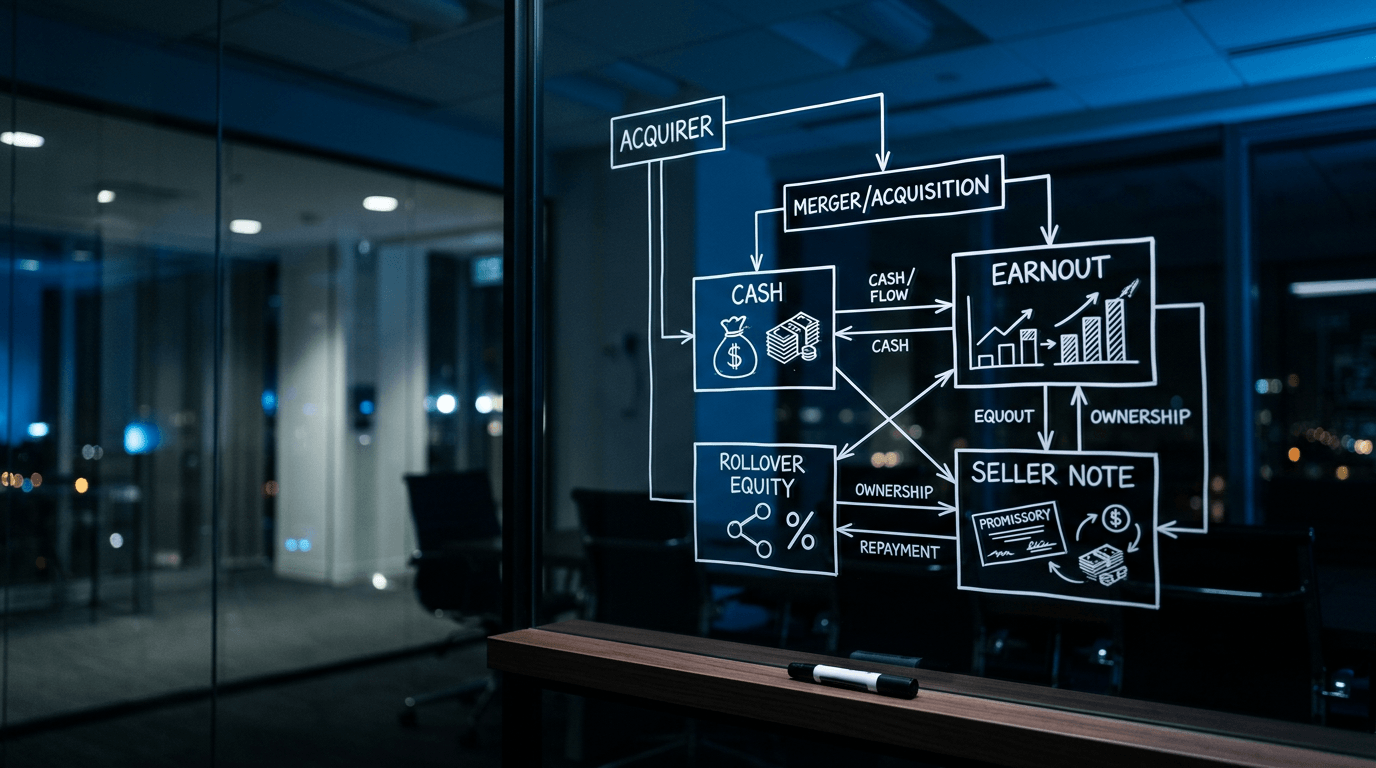
Deal Structure Playbook
Market benchmarks for earnouts, rollovers, seller notes, and working capital adjustments in digital asset M&A.

Research · Research
Buyer Underwriting Checklist
A structured checklist for pre-LOI, commercial, technical, and legal diligence on digital asset acquisitions.
Explore the sector:/acquisitions//process/
About the analyst

Joash Boyton
Founder and Managing Director, Acquiry · Melbourne, Australia · Global coverage
Joash Boyton is the Founder and Managing Director of Acquiry, an M&A firm built around buy-side acquisition origination. He works with strategic acquirers, private equity firms and advisers supporting buyers on mandates from USD $1M to $500M. Most of the work sits in technology, SaaS, fintech, payments, gaming and digital assets, and it is not limited to them: any sector, any market.