


After decades as equal partners in A+E Global Media, Hearst and Disney have reached a simple but revealing conclusion: the same media assets now mean something very different to each company.
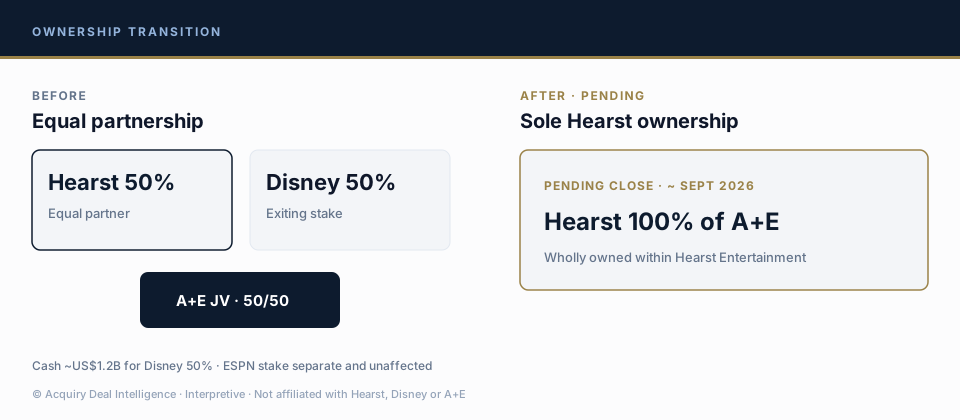
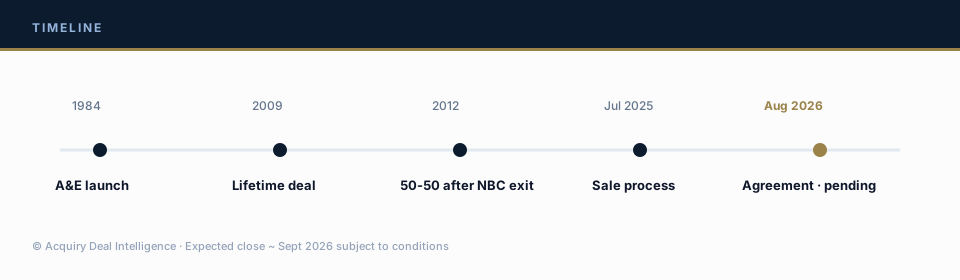
Hearst announced on 4 August 2026 an agreement to acquire Disney's 50% interest in A+E Global Media for approximately $1.2 billion in cash. The deal is expected to close in September 2026, subject to customary closing conditions. Until then, Hearst does not yet own 100% of A+E.
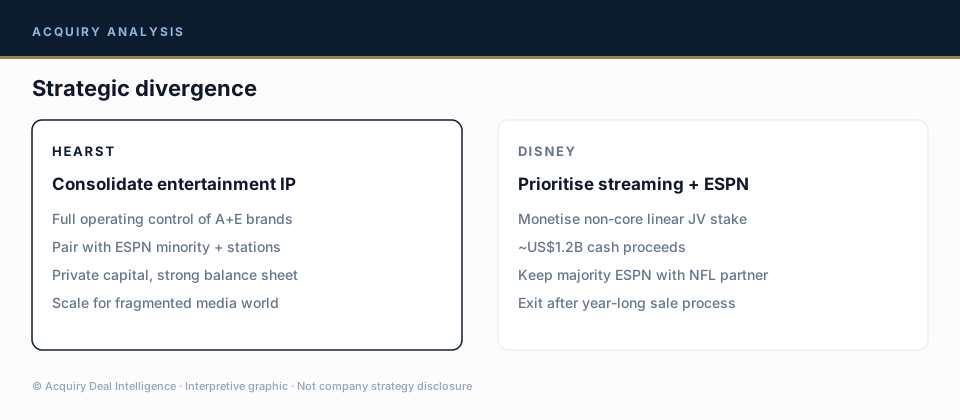
Disney is concentrating further on streaming, ESPN and its most important intellectual property. Hearst is increasing its control over an established global content portfolio with recognised brands, international distribution and enduring commercial value. Both moves look commercially rational.
The companies
Hearst is a diversified private information, services and media company spanning financial data (Fitch), health and transportation software, newspapers, magazines, television stations and entertainment holdings. In his 2025 annual letter, CEO Steven R. Swartz described record revenue of $13.5 billion and a balance sheet with no net debt, while stressing continued commitment to consumer media alongside Business Media growth.
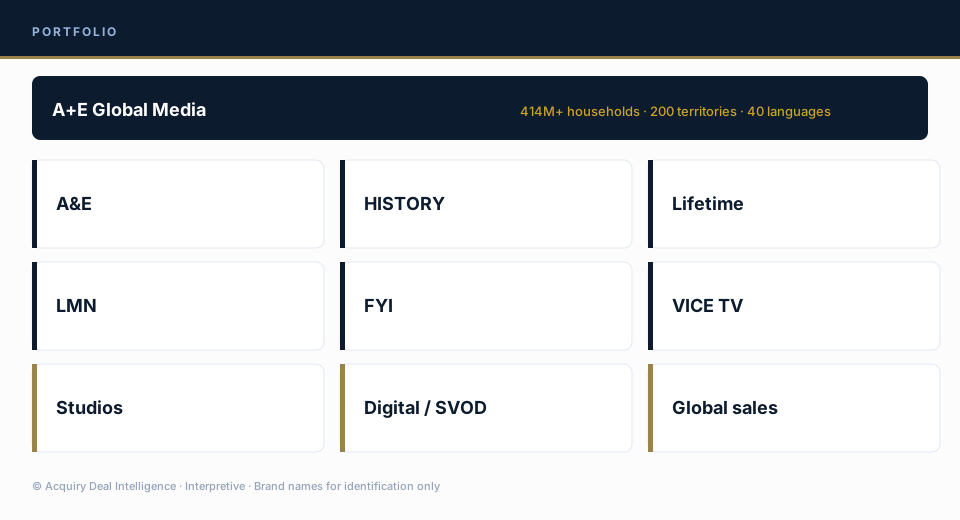
A+E Global Media operates brands including A&E, Lifetime, The HISTORY Channel, LMN, FYI and VICE TV, plus studios and digital products. Hearst says the portfolio reaches more than 414 million households across 200 territories in 40 languages.
Disney has been a 50-50 partner in A+E since buying out NBCUniversal's minority stake in 2012 (trade press). Separately, Hearst holds roughly an 18% interest in ESPN; that stake is unaffected by this transaction.
Why the deal happened now
A year-long process after the partners retained Wells Fargo to explore options (Deadline, Variety) ended with Hearst buying Disney out rather than selling the whole company to an outsider. For Hearst, that is the cleanest route to sole operating control of brands it already knows. For Disney, it is a cash exit from a mature linear joint venture while sports and streaming remain the centre of gravity.
Discuss a technology M&A mandate
Paul Buccieri continues as president and chairman of A+E. Swartz's public language is continuity and support for HISTORY, Lifetime and A&E. Buccieri emphasises owned libraries, partnerships and multi-platform storytelling. The commercial story is ownership simplification, not a sudden product reinvention.
What changes after closing
Upon closing, A+E becomes a wholly owned Hearst business inside Entertainment. Affiliate negotiations, international sales and digital packaging then sit under one private owner rather than a 50-50 board. That can speed decisions. It also concentrates risk: Hearst owns the upside and the cord-cutting pressure.
Until September closing is confirmed, the correct public status remains agreement announced / pending closing. Trade headlines that imply the deal has already "closed" should be read against Hearst's primary language: agreement now, close later, subject to conditions.
Acquiry's read
Central view
This is a strategic divergence deal. Hearst wants control of a branded content machine. Disney wants capital and focus. The assets did not suddenly become more or less valuable; their fit with each owner's agenda changed.
Why Hearst moved
Equal partnerships work until the partners need different things from the same asset. Hearst's letter already signalled the need for scale in a world of YouTube, Amazon, Apple and Netflix. Buying the other half is a direct answer: own the brands, set the investment pace, keep Buccieri's team.
Why Disney sold
Exiting A+E does not mean Disney doubts linear brands in the abstract. It means a public entertainment major can often do more with cash and management attention on streaming, parks and ESPN than with a shared cable JV. A $1.2 billion cash exit is a clean instrument for that shift.
What could go wrong
Closing conditions could delay the September timetable. After close, integration risk is less about technology than about distribution economics, cost inflation in programming, and whether digital and international growth offset linear decline. Sole ownership removes a partner veto; it does not remove the market.
What it means for the market
Private, diversified owners remain natural homes for mid-tier media brands when public majors reallocate capital. The signal is not that cable is finished. The signal is that ownership structure and capital agenda now matter as much as brand strength.
For corporate development teams watching media M&A, the practical lesson is straightforward. When a joint venture partner wants focus and the other wants control, a negotiated buyout of the stake can be cleaner than a contested auction of the whole company. Hearst already knew A+E. Disney already knew the cash was useful. The September close will show whether customary conditions stay customary.
Acquiring or selling a scaled digital business?
Acquiry advises founders, investors and strategic buyers across software, technology and digital markets.