
Summary
Summary
- Independent sponsors are experienced investors or operators who buy companies deal by deal, without a committed fund. They raise equity and debt for each acquisition after agreeing terms with the seller.
- That model can work well for owners: sponsors are often sector specialists, flexible on structure, and focused on one business at a time.
- The core risk is certainty of close. A letter of intent from a sponsor is only as strong as the equity and debt partners behind it, and those partners usually make their own decisions after diligence.
- Owners should test evidence of capital, track record, the planned financing structure, the sponsor's fees and economics, and the exclusivity terms requested.
- Clear milestones, a short exclusivity period with checkpoints, and early contact with the capital partners make a sponsor deal far safer for the seller.
01 · Guides
What an independent sponsor is
Deal-by-deal capital, usually with deep sector or operating experience.
An independent sponsor, sometimes called a fundless sponsor, is an individual or small team that identifies, negotiates and leads acquisitions without a committed pool of capital. Many have worked at private equity firms, investment banks or as operating executives. When they find a company they want to buy, they agree terms with the owner, then raise equity from capital partners such as family offices, private equity funds or high-net-worth investors, and arrange debt from lenders.
In return for finding and leading the deal, the sponsor typically earns a closing fee, an ongoing management or monitoring fee, and a share of the profits above a hurdle, often called a promote or carried interest. Exact economics vary and are negotiated with the capital partners, not the seller, but they influence how the sponsor structures the offer.
02 · Guides
How sponsors compare with other buyers
Where the money sits changes the risk.
| Buyer type | Where the money comes from | What the LOI usually means | Main thing to test |
|---|---|---|---|
| Strategic acquirer | Balance sheet or corporate facilities | Board or committee approval still needed, but capital usually exists | Internal approvals, integration intent |
| Private equity fund | Committed fund capital plus debt | Equity available subject to investment committee | Investment committee process, lender appetite |
| Family office | Family capital | Often flexible, sometimes slower decision-making | Decision-maker access, holding period |
| Independent sponsor | Raised per deal from capital partners plus debt | Intent to buy, financing still to be assembled | Who the capital partners are and how committed they are |
| Search fund or searcher | Search investors plus debt, often small-business lending | Similar to a sponsor; investors usually have a right to back the deal | Investor commitment, lender approval |
03 · Guides
What a sponsor offer usually contains
Read the structure, not just the headline price.
Sponsor offers are frequently creative, because creativity bridges the gap between what the owner wants and what lenders and capital partners will fund. Common features include:
- Seller rolloverThe owner reinvests part of the proceeds in the new holding company. It aligns interests and reduces the cash the sponsor needs to raise. Model it with the rollover equity guide.
- Seller notePart of the price paid later by the buyer, often subordinated to bank debt. See seller financing and seller-note protection.
- EarnoutPart of the price tied to future performance. Test it with the earnout modelling tool.
- Senior and mezzanine debtBank or private credit funding secured on the business, which ranks ahead of the seller's note and rollover.
- Management roleA transition period, consulting agreement or ongoing role for the owner.
The LOI value decoder converts these components into the cash and risk the owner actually receives. Two offers with the same headline can be very different once rollover, notes and earnouts are separated out.
04 · Guides
The questions that test certainty of close
Ask for evidence, not reassurance.
Capital
- Who are your capital partners for this deal, and have they reviewed the opportunity?
- Have you closed deals with them before? How many, and when?
- Will they confirm their interest in writing, and can we speak to them before exclusivity?
- What happens if your lead equity partner declines after diligence?
Debt
- Which lenders are you working with, and have they issued indicative terms?
- What leverage does the offer assume, and is the price dependent on it?
- Does any lender require my note to be subordinated or on standby?
Track record
- Which acquisitions have you led and closed as an independent sponsor?
- Can we speak to owners who sold to you, including any where the deal did not close?
- How did the businesses perform after you bought them?
Process and economics
- What is your diligence plan and timetable, by workstream?
- Which fees will the company pay you after closing, and how will they affect cash flow, earnout targets or my note?
- What exclusivity period do you need, and what milestones will you hit within it?
05 · Guides
How owners protect themselves in a sponsor deal
Shape the process before signing the LOI.
- Short exclusivity with checkpointsFor example, an initial period with the right to end exclusivity if capital partner confirmation or lender terms are not delivered by set dates.
- Named capital partnersAsk for the lead equity partner to be named in the LOI or confirmed in a side letter.
- Early accessA call with the equity partner before exclusivity starts is a strong signal; refusal is a signal too.
- Information disciplineStage the data room. Sensitive customer and pricing data can wait until financing is confirmed.
- Protect deferred valueIf part of the price is a note or rollover, negotiate security, covenants and information rights as carefully as the cash price.
- Keep alternatives warmWhere possible, keep relationships with other credible buyers until financing is firm.
06 · Guides
A simple scorecard
Score each offer on the same five lines.
| Factor | Strong | Needs work |
|---|---|---|
| Capital evidence | Named partner, written interest, prior deals together | Unnamed partners, "we have many relationships" |
| Debt | Indicative lender terms in hand | Price relies on leverage not yet discussed with a lender |
| Track record | Closed sponsor deals and reachable references | Experience only as an employee of a fund |
| Structure | Cash at close covers the owner's priorities; deferred value is protected | Most value deferred, unsecured or contingent |
| Process | Clear timetable and milestone-linked exclusivity | Long exclusivity, vague timetable |
The buyer underwriting checklist shows how buyers themselves underwrite a deal, which helps owners anticipate the questions a sponsor's capital partners will ask. Owners comparing several buyer types can also use our research on strategic vs private equity buyer premiums.
Reference
Frequently asked questions
What is an independent sponsor?
An investor or small team that leads acquisitions deal by deal without a committed fund, raising equity from capital partners and debt from lenders after agreeing terms with the seller.
Is an independent sponsor offer risky?
It carries more financing risk than an offer backed by committed capital, because the money is raised after terms are agreed. Many sponsors close reliably; the risk depends on their capital partners and track record.
How can I check a sponsor has the money?
Ask who the capital partners are, whether they have reviewed the deal, whether they will confirm interest in writing, and whether you can speak to them before granting exclusivity.
How long should exclusivity be with an independent sponsor?
There is no standard, but owners often agree a shorter initial period with milestones, such as capital partner confirmation and lender terms, and the right to end exclusivity if they are missed.
Why do sponsor offers often include rollover and seller notes?
They reduce the cash the sponsor must raise and align the owner with the business after the sale. They also defer value, so the owner should negotiate protections for them.
What is the difference between a search fund and an independent sponsor?
Search funds are usually led by early-career operators backed by search investors who fund the search and often have the right to fund the deal. Independent sponsors are typically more experienced dealmakers raising capital deal by deal.
Keep reading
Related analysis
Guides · M&A
Seller Financing: How to Protect Yourself When You Carry a Note
Agreeing to be paid part of the price later can win a deal, raise the headline value or close a funding gap. It also turns the seller into a lender to the business it just sold. These are the terms that decide whether that note actually gets paid.

Research · Research
Buyer Underwriting Checklist
A structured checklist for pre-LOI, commercial, technical, and legal diligence on digital asset acquisitions.

Research · Cross-sector
The Buyer Hierarchy: why strategic acquirers can outbid private equity, and when they don't
Founders are told a strategic buyer always pays more. The research says strategics usually do, but not always, and the reason is structural: what each buyer can finance and what each buyer can do with the asset after completion.
Research · Research
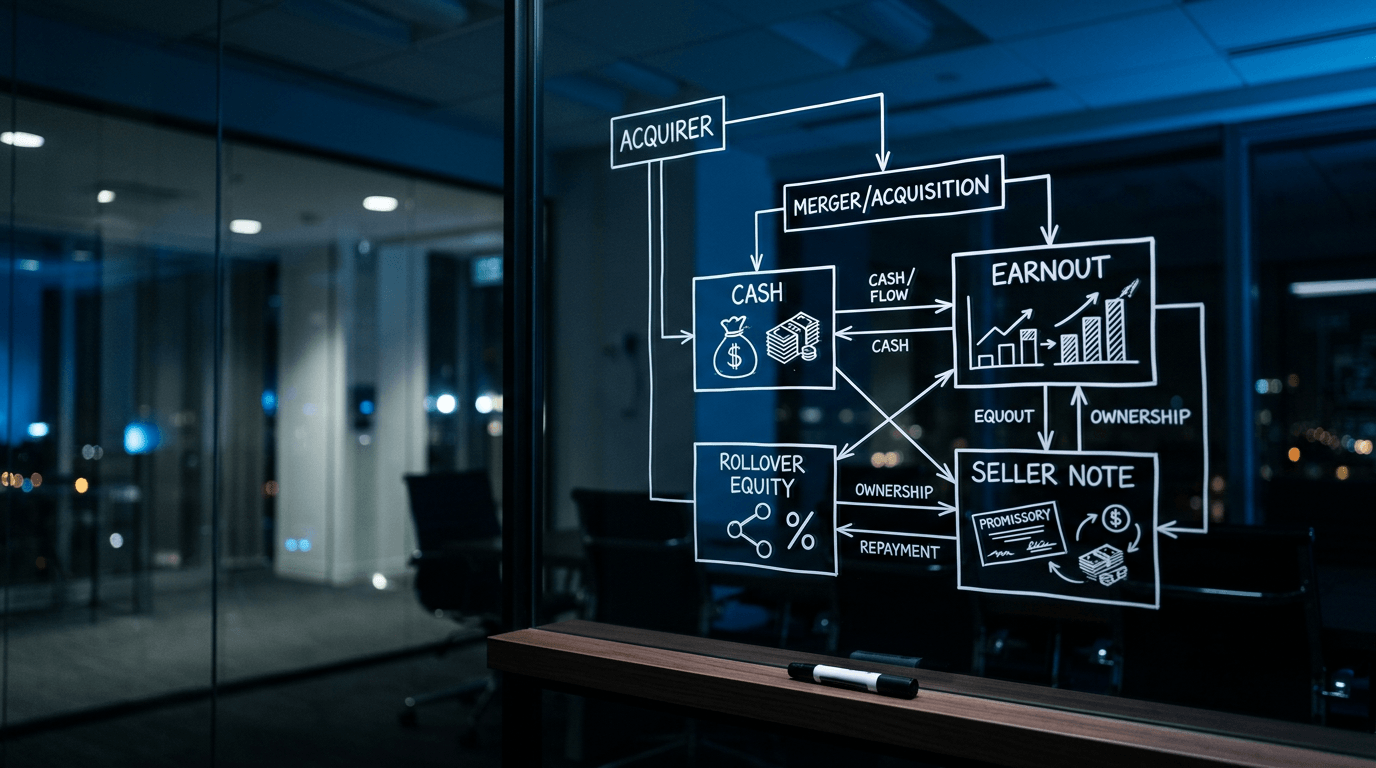
Deal Structure Playbook
Market benchmarks for earnouts, rollovers, seller notes, and working capital adjustments in digital asset M&A.
About the analyst
Joash Boyton
Founder and Managing Director, Acquiry · Melbourne, Australia · Global coverage
Joash Boyton is the Founder and Managing Director of Acquiry, an M&A firm built around buy-side acquisition origination. He works with strategic acquirers, private equity firms and advisers supporting buyers on mandates from USD $1M to $500M. Most of the work sits in technology, SaaS, fintech, payments, gaming and digital assets, and it is not limited to them: any sector, any market.