
In this report
Palo Alto Networks agrees to acquire Applied Compute and bring secure open-weight AI to the enterprise
SANTA CLARA, California — Palo Alto Networks (NASDAQ: PANW) announced on 18 November 2026 that it has entered into a definitive agreement to acquire Applied Compute, a platform for post-training and inference of open-weight AI models. The all-stock transaction is valued at $4.5 billion, subject to adjustments, and is expected to close in Palo Alto Networks’ fiscal third quarter of 2027, subject to customary closing conditions that include regulatory clearance. Following the close, Applied Compute’s co-founder and CEO, Yash Patil, will become Palo Alto Networks’ Co-Chief AI Officer.
The two companies describe a shared view of where enterprise AI is heading. Palo Alto Networks says the future is hybrid, with a large share of enterprises running open-source and open-weight models tuned to their own data, cost and control needs alongside closed frontier models. Applied Compute supplies the platform and the research team for training, adapting and deploying those open models, and Palo Alto Networks supplies the security foundation and a customer base it describes as 75,000+ customers. This report sets out the terms, the company being acquired, the buyer’s base and the road to closing, using primary company announcements and filings throughout.

Applied Compute’s platform trains and serves open-weight models for enterprise customers.
The deal in five points
Key facts
- Transaction value Disclosed
- $4.5 billionTotal consideration, subject to adjustments, stated in the press release and Form 8-K of 18 November 2026.
- Consideration Disclosed
- All stockPaid in shares of Palo Alto Networks common stock to holders of Applied Compute stock and warrants.
- Issue price Disclosed
- $337.16 per shareVolume-weighted average closing price for the 15 consecutive trading days ending 17 November 2026.
- Target run rate Disclosed
- $100 millionAnnualized revenue run rate stated by Applied Compute on 2 November 2026.
- Last valuation Disclosed
- $3.25 billion$350 million of new funding announced by Applied Compute on 2 November 2026.
- Leadership Disclosed
- Yash Patil, Co-Chief AI OfficerApplied Compute’s co-founder and CEO takes the role at Palo Alto Networks after closing.
- Buyer revenue Disclosed
- $3.44 billionFiscal first quarter 2027 total revenue, up 39% year over year.
- Expected close Disclosed
- Fiscal Q3 2027Subject to customary closing conditions, including regulatory clearance.
- Disclosed
- Stated by a party to the transaction
The numbers behind the deal
Each figure has its own permanent link and a ready-made citation. Journalists, analysts and researchers are welcome to quote them with credit and a link to Acquiry.
- $4.5 billionDisclosed
Transaction value
All stock, subject to adjustments. Palo Alto Networks, 18 November 2026.
- $337.16Disclosed
Issue price per share
15-day volume-weighted average closing price to 17 November 2026, from the Form 8-K.
- $100 millionDisclosed
Applied Compute run rate
Annualized revenue run rate, company-stated, 2 November 2026.
- $3.44 billionDisclosed
Palo Alto Networks Q1 revenue
Fiscal first quarter 2027, up 39% year over year.
Part I of III
The agreement
Who signed, what the filing says and how $4.5 billion in shares is priced.
A definitive agreement brings Applied Compute’s platform and research team into Palo Alto Networks
Palo Alto Networks will acquire all outstanding stock, warrants and other equity rights of Applied Compute, and Yash Patil becomes Co-Chief AI Officer after the close.
Palo Alto Networks announced the agreement in a press release (opens in a new tab) dated 18 November 2026 from Santa Clara, California, and set out the legal structure the same day in a Form 8-K (opens in a new tab) filed with the SEC. The filing describes an Agreement and Plan of Merger dated 18 November 2026 under which the company will acquire all of the outstanding stock, warrants and other rights to acquire or receive equity of Applied Compute. The parties include Applied Compute, Inc., a Delaware corporation, and Fortis Advisors LLC, which acts as the exclusive representative of the indemnifying parties under the merger agreement.
What Palo Alto Networks gains: a platform, a research team and a named leader
The press release identifies two assets. The first is Applied Compute’s platform for post-training and inference of open-weight models. The second is its people: the release says Applied Compute brings “one of the strongest AI research teams in the industry”, a team that will help Palo Alto Networks embed AI across every offering and train its proprietary large and small AI models alike.
The release also describes how the business continues. Applied Compute will keep serving AI-native companies, digital natives and large enterprises, and Palo Alto Networks will bring the platform to its global customer base. Enterprises will be able to train, adapt and deploy open-weight AI models with security built in, in the public cloud or in sovereign environments, with the stated aim of improving compliance and security posture.

The Agreement and Plan of Merger was signed on 18 November 2026.
Yash Patil becomes Co-Chief AI Officer after the close
Following the close, Yash Patil, Applied Compute’s co-founder and CEO, will become Palo Alto Networks’ Co-Chief AI Officer, and the Applied Compute team will join the company. Applied Compute’s own account of its founders helps explain the pairing. In its founding essay (opens in a new tab), the company says its founders all worked on different parts of the problem as researchers at OpenAI, with Patil described as “a key member on the agentic software engineer effort (Codex)”.
Every enterprise is going to run a mix of open and closed models, and every one of those models needs to be secured. Applied Compute has built the best post-training and inference platform we’ve seen, and its research team is exceptional.
Patil frames the move around scale and security. He says Applied Compute was built to make it easy for any company to train, serve and improve proprietary models, and that joining Palo Alto Networks will put security at the center of all its products and accelerate its traction with the world’s largest organizations.
$4.5 billion in Palo Alto Networks shares, priced at $337.16 each
All consideration is paid in Palo Alto Networks common stock, converted at a price fixed in the merger filing.
The Form 8-K states that Palo Alto Networks will acquire all of the outstanding stock, warrants and other rights to acquire or receive equity of Applied Compute for total consideration of $4.5 billion, subject to adjustments, to be paid in shares of Palo Alto Networks common stock. The consideration is entirely in stock, and the press release describes the transaction in the same terms: an all-stock transaction valued at $4.5 billion, subject to adjustments.
How the share count is set: a 15-day average ending 17 November
The number of shares to be issued at closing will be based on a price per share of $337.16. The filing explains that this figure represents the volume-weighted average closing price of Palo Alto Networks common stock on The Nasdaq Stock Market LLC for 15 consecutive trading days ending on 17 November 2026. The filing therefore fixes both the value of the consideration and the price used to convert it into shares, and the final share count will be set from that price at closing.
Two calculations in the workbook follow directly from these inputs. Dividing the stock consideration by the issue price gives the number of Palo Alto Networks shares involved, and dividing that figure by the approximately 821 million shares the company says were outstanding on 11 November 2026 gives the ownership effect for existing shareholders. Both are computed on the page from sourced inputs, with their formulas, in the numbers behind the deal, and the share calculator below lets readers test a different reference price.

The filing fixes the issue price used to convert $4.5 billion into shares.
Figure 1
Palo Alto Networks shares issued for $4.5 billion
Editable default, not a forecast.
Approximately 821 million shares of common stock outstanding as of 11 November 2026, from the company’s Form 8-K.
- New Palo Alto Networks shares issued
- 13.3m
- Dilution to existing holders
- 1.60%
- Value paid
- $4.50bn
Show method and sourcesHide method
Shares issued = ($4.5 billion consideration + reader-supplied net adjustment) ÷ price per share. The default price is the $337.16 stated in the Form 8-K of 18 November 2026. Dilution = shares issued ÷ (shares outstanding + shares issued), using approximately 821 million shares outstanding as of 11 November 2026. The filing states that the consideration is subject to adjustments, so the net adjustment field starts at zero.
Shares are issued to accredited investors under Regulation D
The shares will be issued to holders of Applied Compute capital stock and warrants. The filing states that the issuance is expected to be made solely to accredited investors, in reliance on exemptions from the registration requirements of the Securities Act, including Section 4(a)(2) and Regulation D. Completion of the transactions is subject to customary closing conditions, including the expiration or termination of the applicable waiting period under the Hart-Scott-Rodino Antitrust Improvements Act of 1976, as amended.
Palo Alto Networks also extends its $1 billion repurchase authorization to the end of 2027
The same filing records a separate board decision. On 17 November 2026, the day before the announcement, the board approved an extension of the company’s current repurchase authorization of $1 billion of its common stock until 31 December 2027. The authorization will be funded from available working capital and allows repurchases through open market purchases, privately negotiated transactions, block purchase techniques, 10b5-1 trading plans or a combination of them.
Part II of III
Applied Compute
The platform, the growth in 2026 and the customer results behind it.
AC2 trains, serves and improves open-weight models on one platform
Applied Compute’s Agent Cloud brings training, inference and continual improvement together, with SOC 2 and ISO 42001 certification.
Applied Compute describes AC2, the Applied Compute Agent Cloud (opens in a new tab), as the internal platform its own researchers use to build custom models for customers. The company says AC2 gives every AI team one platform to train open models, serve them at scale and bring everything they encounter in production into the next run. Customers named in that launch post include Microsoft, NVIDIA, Cognition, Mercor, DoorDash and Harvey.
Training: a model factory built around the customer’s own harness
The launch post argues that open models are improving at an extraordinary pace, with more capable weights shipping every month, and that a company wins by building a model factory, “a repeatable process to turn your data into model improvements.” AC2 supports all the latest open models, so teams can choose the starting point for each workload on capability, speed and cost, and it lets teams bring their own harness for training and start with a few dozen lines of code.
Applied Compute’s applied research agent, Ari, works alongside the team throughout the training loop. According to the company, Ari monitors run health, reads through rollouts and takes action even when the team is offline, while the AC2 console serves as a researcher cockpit to examine rollouts, compare runs and iterate on graders.
Serving: checkpoints in production within minutes at 99.9% uptime
On the serving side, the company says a completed run can deploy a checkpoint in minutes with 99.9% uptime, autoscaling and low latency inference. Because training and serving happen on the same platform, production endpoints use the same sampling configuration, numerical precision and kernels used during training, and new checkpoints can be deployed behind the same endpoint without changing the API, routing, access controls or observability.

AC2 brings training, serving and improvement into one loop.
Improving: production traces feed the next training run
The final stage closes the loop. Applied Compute says the most valuable data often arrives after deployment, in the form of real user interactions, corrections and feedback, and that production traces help identify where a model can improve, build new data points and generate hints for self-distillation. Its homepage describes attaching production inference endpoints to a training runtime so that deployments update online as real user feedback comes in, using online reinforcement learning and self-distillation, with A/B tests for release candidates.
We built Applied Compute with an exceptional team of AI researchers and engineers to make it easy for any company to train, serve, and improve proprietary models.
SOC 2, ISO 42001 and deployment inside the customer’s perimeter
Applied Compute lists SOC 2 and ISO 42001 certification on its homepage and says data never leaves the customer’s perimeter, with a choice of serverless or VPC deployment. The homepage also describes role-based access control, audit logs on every dispatch and lifecycle automation for checkpoints, datasets and artifacts, and offers two ways of working with customers: an embedded model, in which Applied Compute engineers sit with the customer’s engineers, and a managed model, in which the customer’s team designs and runs experiments while Applied Compute manages training, serving and infrastructure.
In a September 2026 post on securely deploying open-weight models (opens in a new tab), the company says it has seen open-weight deployments across more than twenty enterprise applications and five model families move from early ideation to production. It deploys all models on Western-domiciled infrastructure, either under the customer’s direct control or through an approved U.S. cloud provider, which keeps model outputs and traces private from the model developer.
Applied Compute reaches a $100 million run rate in less than 18 months
Two priced rounds in 2026, a $100 million annualized revenue run rate and a team of about 70 people.
Applied Compute said on 2 November 2026 that, less than 18 months after its founding, it had grown from zero to $100 million in annualized revenue run rate. In the same announcement (opens in a new tab) it said it had raised $350 million in new funding at a $3.25 billion valuation, led by Elad Gil with participation from Kleiner Perkins, Lux Capital, Hanabi Capital, NVIDIA, Blackstone, Shopify Ventures, HubSpot Ventures and other investors.
Two priced rounds in 2026: $1.3 billion in April, $3.25 billion in November
The November round followed an $80 million financing announced on 8 April 2026 (opens in a new tab) at a $1.3 billion post-money valuation, led by Kleiner Perkins with continued participation from Elad Gil, Lux, Greenoaks, Neo and Hanabi, which brought Applied Compute’s total funding at that point to $160 million. The agreed transaction value of $4.5 billion can be read against both valuations, and the workbook sets out the comparison as a multiple and as a step-up on each.
Figure 2
Transaction value against Applied Compute’s stated run rate
Stated by Applied Compute on 2 November 2026 as annualized revenue run rate, a run-rate measure rather than recognised revenue.
- Implied transaction value / Annualized revenue run rate
- 45.0×
Show method and sourcesHide method
The $4.5 billion transaction value divided by the $100 million annualized revenue run rate Applied Compute stated on 2 November 2026. The run rate is the company’s own measure and is not audited revenue.
Usage growth: more than 1,700 training runs and more than 1 trillion tokens a day
The same post gives operating metrics. Since July, customers have run more than 1,700 training runs on AC2, and AC Inference has grown to serve more than 1 trillion tokens a day. Applied Compute says 40% of its customers now use it for both training and inference and that this share continues to grow, and that it has more than doubled the number of enterprises it serves since its last fundraise.
The company names Microsoft, Shopify, Mercor, Harvey, DoorDash, Cognition, Clay and Decagon among its customers, and says they span industries including life sciences, cybersecurity, hardware design, legal, financial services and logistics. It describes training, inference and routing as the first pieces of a much larger stack, aimed at the AI infrastructure every company will need to fully own its intelligence, from the models themselves to the systems that run, monitor and secure them.

Applied Compute describes a team of about 70 people in San Francisco.
A team of about 70 people, 85% of them researchers and engineers
Applied Compute’s careers page (opens in a new tab) describes a team of about 70 people in San Francisco, 85% of them researchers and engineers, many of them former founders, with prior experience building RL infrastructure at OpenAI, data foundations at Scale AI and systems at Together, Two Sigma and Watershed. The 2 November post adds that the team has tripled since January. Its earliest essay lists the founders’ roles at OpenAI: Patil on the agentic software engineer effort (Codex), Rhythm as a core contributor to the first RL-trained reasoning model (o1), and Linden as a core contributor on ML systems and infrastructure for RL training.
On 12 November 2026 the company also announced that it had acquired Delegate (opens in a new tab), founded in late 2025 by two former Scale AI colleagues who spent years building its enterprise AI business and who bring experience delivering AI into large companies in consulting, finance, healthcare and defense. Applied Compute says that in their short time with the company they have already strengthened its security posture and its shipping culture.
Figure 3
Valuation step-up modeller: from the funding rounds to the Palo Alto Networks price
- Step-up
- 1.38×
- Annualised pace
- 167,422%
- Holding value at exit
- $45.0m
Show method and sourcesHide method
Step-up = exit value ÷ entry valuation, using the $4.5 billion transaction value as the exit. The annualised pace is derived from the step-up and the number of days between entry and exit. The preset entries are the $3.25 billion valuation announced on 2 November 2026 and the $1.3 billion post-money valuation announced on 8 April 2026. Holding values scale the headline value by the ownership percentage and ignore preferences, dilution and adjustments. Modelled only; not investment advice.
Harvey, Clay and DoorDash each cite measurable results from models trained on AC2
Customer outcomes in Applied Compute’s own words: lower inference cost, fewer errors and models running in production.
Applied Compute’s customer evidence is published in its own words, and this report attributes it that way. The company’s homepage carries quotations from DoorDash, Cognition, Handshake, Clay, Mercor, Harvey, Decagon, Semgrep and Latch Bio, and its case studies describe the work behind several of them. The examples below are company-published results, each with its own scope and definition.
Harvey: a Review Table model at less than half the inference cost
In its 2 November post, Applied Compute says that for Harvey it trained a model for the Review Table product that improved answer and citation quality at less than half the inference cost of a frontier alternative. Gabe Pereyra, Co-Founder and President of Harvey, is quoted on the company’s homepage saying that the platform gives Harvey the high-performance training infrastructure it needs to run large-scale RL inside a custom legal-agent harness.
Clay: a router that cut Claygent inference costs by up to 47%
For Clay, Applied Compute says it trained and deployed a custom router that reduced production inference costs by up to 47% without sacrificing quality. Jeff Barg, Head of AI at Clay, describes the result in his own terms on the company’s homepage.
Applied Compute cut our Claygent inference costs by up to 47% while maintaining quality.
DoorDash: 30% fewer erroneous menus and more than 1000 hours saved
The DoorDash case study (opens in a new tab) describes a proprietary agent trained with internal experts to correct merchant menus during onboarding. Applied Compute lists 30% fewer erroneous menus and 1000+ hrs saved, and says that in an A/B test against DoorDash’s baseline system, graded by human reviewers, the share of low-quality menus fell by roughly 30% relative to the baseline. Andy Fang, Co-Founder and CTO of DoorDash, summarises the approach: by encoding the company’s quality standards directly into model training, DoorDash scaled its internal expertise and raised the bar on menu accuracy on the platform.

Applied Compute’s engineers work alongside customer teams from the first evaluation to production.
NVIDIA: custom Nemotron models in production for frontier enterprise customers
In an August 2026 collaboration note (opens in a new tab), Applied Compute says it deploys custom Nemotron models in production for its frontier enterprise customers in software engineering, financial services, logistics and AI-native companies, and that it is collaborating with NVIDIA on multiple projects in service of better open-source models and the systems around them. NVIDIA is also named among the investors in the November round.
There should be as many models in the world as there are firms.
Part III of III
The buyer and what follows
Palo Alto Networks’ base, the hybrid AI thesis and the road to closing.
Palo Alto Networks starts its fiscal year with revenue up 39% to $3.44 billion
First-quarter revenue growth, Next-Generation Security ARR of $9.73 billion and raised full-year guidance, announced the same day as the agreement.
Palo Alto Networks published its fiscal first quarter 2027 results (opens in a new tab) on 18 November 2026, for the quarter ended 31 October 2026. Total revenue grew 39% year over year to $3.44 billion. Next-Generation Security ARR grew 66% year over year to $9.73 billion, and remaining performance obligations grew 35% year over year to $21.0 billion. GAAP net income was $482 million, or $0.57 per diluted share, and non-GAAP net income was $881 million, or $1.05 per diluted share.
Net cash provided by operating activities for the quarter was $1.9 billion, and adjusted free cash flow was $1.9 billion at an adjusted free cash flow margin of 56.2%. Chief Financial Officer Dipak Golechha said the company delivered a very strong start to the year in what is typically a seasonally slower first quarter, with acceleration across each of its segments, and that the company is “materially raising our full year guidance.”
Full-year revenue guidance of $14.52 billion to $14.57 billion
For the fiscal year 2027, the company expects total revenue in the range of $14.52 billion to $14.57 billion, representing year-over-year growth of 26% to 27%, and Next-Generation Security ARR of $11.475 billion to $11.525 billion. At 31 October 2026 its balance sheet showed cash and cash equivalents of $2,594 million, short-term investments of $461 million and long-term investments of $6,080 million. In its annual report for the fiscal year ended 31 July 2026, the company recorded total revenue of $11,480 million and a global workforce of 21,921.

Palo Alto Networks announced its first-quarter results on the day of the agreement.
A platform built through organic innovation and acquisitions in 2026
The annual report records the 2026 acquisitions that shaped the platform: Chronosphere, completed in January 2026 and forming the company’s observability platform; CyberArk, completed in February 2026 and forming its identity security platform; and Koi, completed in April 2026, which adds agentic endpoint security capabilities to its security operations platform. The company completed the acquisition of Portkey (opens in a new tab) on 29 May 2026, establishing the AI Gateway as the core of Prisma AIRS, and acquired Console (opens in a new tab) on 1 September 2026 to deepen the agentic capabilities in Cortex.
Palo Alto Networks is delivering a platform that stays on the cutting edge through a deliberate combination of organic innovation and strategic acquisitions.
Arora links the Applied Compute agreement to the quarter in the results release, saying the company is pleased to announce its intent to acquire Applied Compute, which will allow it to deliver secure open weight models to its customers and accelerate the adoption of enterprise AI.
Palo Alto Networks sets out a hybrid AI thesis built on secure open and closed models
The release says the future of enterprise AI is hybrid, and that secure open-weight models are where Applied Compute fits.
The strategic case is set out in the press release. Palo Alto Networks says it firmly believes that the future of enterprise AI is hybrid, and that a large share of enterprises will run on open-source and open-weight models tuned to their own data, cost and control needs. It adds that, today, “no large provider is delivering those models securely”, and that with Applied Compute it intends to be that partner for enterprises that choose open-weight models, closed frontier models, or both.
Unit 42 assessed Applied Compute’s security foundations before signing
Arora says Palo Alto Networks saw the platform firsthand as a prospective customer, and that its Unit 42 Frontier AI Assessment confirmed Applied Compute’s strong security foundations. The press release describes the research team as the second asset in the combination: a team that will help the company embed AI across every offering, training its proprietary large and small AI models.
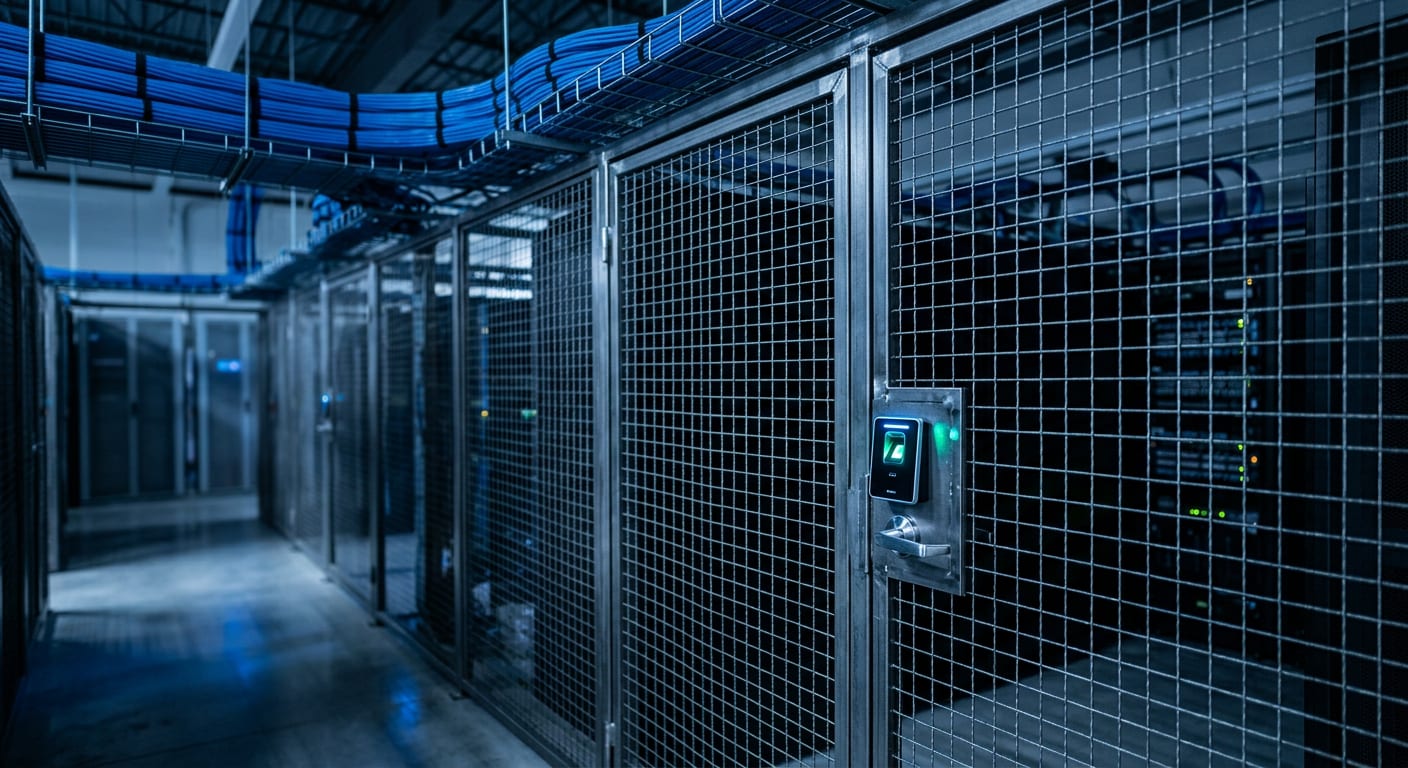
The release points to deployment in the public cloud or in sovereign environments.
Where the platform fits the existing AI security portfolio
The agreement follows a sequence of announcements around AI. When Palo Alto Networks completed the Portkey acquisition it described a control plane that natively integrates AI runtime security, agent identity security through Idira and AI observability through Chronosphere. The Console acquisition added agentic workflows in natural language to Cortex. Applied Compute adds the model layer: training, adapting and deploying open-weight models with security built in.
How Applied Compute approaches open-weight risk: defined privileges and realistic evaluation
Applied Compute’s September 2026 post sets out the framework the company uses. It separates data residency and access risks, which it says are more easily addressed with open models than with closed ones, from agentic risks such as data exfiltration, unauthorized or irreversible actions, degraded work artifacts, and prompt injection, compromised context and supply-chain risk. Its mitigation is two-fold: define a contract for agentic privileges and implement guardrails in support of it, and rigorously evaluate intended tasks in production-realistic environments before promoting a workload to production.
The guardrails cover what an agent can access, change and transmit: which files, records and systems it can modify, which domains and services it can reach, the permissions it inherits from the invoking user, and audit logs stored where the agent cannot modify or delete them. The post states that the company’s recommendations align with guidance from NIST and from U.S. and allied cybersecurity agencies on access controls, data protection, evaluation, monitoring and human oversight.
Closing is expected in fiscal third quarter 2027, after Hart-Scott-Rodino clearance
The agreement is signed. The remaining steps are customary closing conditions and regulatory clearance.
Palo Alto Networks expects the transaction to close in its fiscal third quarter of 2027, subject to customary closing conditions including regulatory clearance. The company’s fiscal year ends on 31 July, so its fiscal third quarter of 2027 ends on 30 April 2027. The Form 8-K identifies the specific regulatory step: the expiration or termination of the applicable waiting period under the Hart-Scott-Rodino Antitrust Improvements Act of 1976, as amended.
Before closing: the waiting period and customary conditions
Until closing, Applied Compute continues as an independent company serving its customers. Its own posts in November show that work continuing: the 2 November announcement of its funding and run rate, the 12 November announcement that it had acquired Delegate, and the research and platform posts published on its blog through the same weeks. Palo Alto Networks said it would provide further details on the transaction on its fiscal first quarter 2027 earnings call, scheduled for 1:30 p.m. PT on 18 November 2026.

Closing is expected in Palo Alto Networks’ fiscal third quarter of 2027.
After closing: Co-Chief AI Officer, a joined research team and a wider customer base
After the close, the stated steps are specific. Yash Patil becomes Palo Alto Networks’ Co-Chief AI Officer, the Applied Compute team joins the company, and the research team helps embed AI across every Palo Alto Networks offering while training its proprietary large and small AI models. Applied Compute will continue to serve AI-native companies, digital natives and large enterprises, and Palo Alto Networks will bring the platform to its global customer base.
The figure below sets the dated milestones from both companies on one timeline, from Applied Compute’s April 2026 funding round to the expected closing. Dates and terms come from the company announcements and the Form 8-K, and steps still ahead are marked as expected until completed.
Figure 4
From the April 2026 funding round to the expected closing
8 Apr 2026Applied Compute
Funding round at $1.3 billion
Applied Compute announces $80 million in new financing at a $1.3 billion post-money valuation, bringing total funding to $160 million.
2 Nov 2026Applied Compute
$100 million run rate and $350 million round
Applied Compute states a $100 million annualized revenue run rate and announces $350 million of new funding at a $3.25 billion valuation.
12 Nov 2026Applied Compute
Applied Compute acquires Delegate
Applied Compute announces that it has acquired Delegate, founded in late 2025 by two former Scale AI colleagues.
17 Nov 2026Palo Alto Networks
Reference price set at $337.16
The 15 consecutive trading days used for the volume-weighted average closing price end on 17 November 2026. The board also extends the $1 billion repurchase authorization.
18 Nov 2026Palo Alto Networks and Applied Compute
Definitive agreement announced
Palo Alto Networks enters into the Agreement and Plan of Merger for $4.5 billion in common stock and announces fiscal first quarter 2027 results.
Before closingRegulatorsExpected
Hart-Scott-Rodino waiting period
Expiration or termination of the applicable waiting period is a condition to closing, alongside other customary closing conditions.
Fiscal Q3 2027Palo Alto NetworksExpected
Expected closing
Yash Patil becomes Palo Alto Networks’ Co-Chief AI Officer and the Applied Compute team joins the company.
Show method and sourcesHide method
Dates and terms are from the Palo Alto Networks press release and Form 8-K of 18 November 2026 and from Applied Compute’s published announcements. Closing steps are shown as expected until completed.
The numbers behind the deal
30 sourced figures, each labelled by source type, and 22 calculations built from them. Every calculation shows its formula and inputs.
- Price as a multiple of last private valuation
- 1.38x
- Step-up on last private valuation
- 38.5%
- Months from last priced round to announcement
- 1
Open the full workbook
Acquiry calculations
| Measure | Result | Formula and why it matters |
|---|---|---|
| Price as a multiple of last private valuation | 1.38x | Transaction value ÷ last private valuationShows how far the business was re-rated between its last round and the exit. |
| Step-up on last private valuation | 38.5% | (Transaction value ÷ last private valuation − 1) × 100The value created for the cap table since the last priced round. |
| Months from last priced round to announcement | 1 | Days between the two dates ÷ 30.44How quickly the last-round valuation was tested by a buyer. |
| Months from last funding round to announcement | 1 | Days between the two dates ÷ 30.44How long the target stayed independent after its last round. |
| Price as a multiple of the last funding round | 12.9x | Transaction value ÷ amount raised in the last roundSizes the exit against the most recent capital committed. It is a round size, not a valuation. |
| Price-to-ARR multiple | 45x | Transaction value ÷ target ARRThe software benchmark buyers and boards use for recurring revenue. |
| Price per target employee | $64.29m | Transaction value ÷ target employeesA talent-density measure that travels across private deals with no revenue data. |
| Price as a share of the acquirer's cash and investments | 56.9% | Transaction value ÷ acquirer cash and investments × 100How comfortably the balance sheet carries the deal. |
| Price as a share of the acquirer's annual revenue | 39.2% | Transaction value ÷ acquirer revenue × 100Puts the price in terms of the buyer’s own scale. |
| Acquirer shares issued for the stock portion | 13.35m shares | Stock consideration ÷ acquirer share priceThe share count the stock consideration translates into. |
| Share issuance as a share of shares outstanding | 1.63% | (Stock consideration ÷ share price) ÷ shares outstanding × 100Ownership effect for existing shareholders. |
| Target team as a share of the acquirer's workforce | 0.32% | Target employees ÷ acquirer employees × 100Integration scale in people terms. |
| Days from announcement to expected close | 163 | Close date − announcement dateThe regulatory and integration runway. |
| Issue price multiplied by shares outstanding (a size reference at the issue price, not a market quotation) | $276.81bn | Issue price per Palo Alto Networks share (15-day volume-weighted average closing price) × Palo Alto Networks shares outstandingGives a reference size for the buyer at the stated issue price, from two figures in the same filing. |
| Total funding raised by Applied Compute (April 2026 total plus the November 2026 round) | $510m | Applied Compute total funding after the April 2026 round + Amount raised in Applied Compute’s November 2026 roundCombines the company’s stated funding total after April with the round announced in November. |
| Growth in Applied Compute’s priced valuation from April to November 2026 | 150% | (Applied Compute valuation in its November 2026 funding round ÷ Applied Compute post-money valuation, April 2026 round − 1) × 100Shows how far the company’s priced valuation moved between its two 2026 rounds. |
| Transaction value divided by the April 2026 post-money valuation | 3.46x | Transaction value, all stock ÷ Applied Compute post-money valuation, April 2026 roundSets the agreed price against the earlier of the two 2026 valuations. |
| November 2026 valuation divided by annualized revenue run rate | 32.5x | Applied Compute valuation in its November 2026 funding round ÷ Applied Compute annualized revenue run rate (company-stated)Shows what the November round valued each dollar of stated run rate at, for comparison with the transaction multiple. |
| Transaction value divided by one quarter of Palo Alto Networks revenue (a comparison of two amounts) | 1.31x | Transaction value, all stock ÷ Palo Alto Networks total revenue, fiscal first quarter 2027Sizes the transaction against the revenue the buyer earned in its latest quarter. |
| Transaction value divided by cash and cash equivalents at 31 October 2026 (a comparison of two amounts) | 1.73x | Transaction value, all stock ÷ Palo Alto Networks cash and cash equivalents at 31 October 2026Shows why the consideration is paid in shares rather than from cash on hand. |
| Applied Compute run rate as a share of Palo Alto Networks Next-Generation Security ARR | 1.03% | Applied Compute annualized revenue run rate (company-stated) ÷ Palo Alto Networks Next-Generation Security ARR, fiscal first quarter 2027 × 100Relates two annualized recurring measures, each on its own company definition. |
| Share repurchase authorization as a share of transaction value | 22.2% | Palo Alto Networks share repurchase authorization, extended to 31 December 2027 ÷ Transaction value, all stock × 100Puts the extended $1 billion authorization next to the size of the transaction. |
Sourced inputs
| Figure | Value | Source |
|---|---|---|
| Announcement date | November 18, 2026 | 2. Palo Alto Networks, Inc. via SEC (Form 8-K)SEC filing |
| Transaction value, all stock | $4.5 billion | 1. Palo Alto Networks (PR Newswire)Press release |
| Consideration paid in Palo Alto Networks common stock | $4.5 billion | 2. Palo Alto Networks, Inc. via SEC (Form 8-K)SEC filing |
| End of Palo Alto Networks’ fiscal third quarter of 2027 (the expected closing quarter) | Fiscal third quarter of 2027 | 1. Palo Alto Networks (PR Newswire)Press release |
| Issue price per Palo Alto Networks share (15-day volume-weighted average closing price) | $337.16 | 2. Palo Alto Networks, Inc. via SEC (Form 8-K)SEC filingAs at 2026-11-17 |
| Palo Alto Networks shares outstanding | approximately 821 million | 2. Palo Alto Networks, Inc. via SEC (Form 8-K)SEC filingAs at 2026-11-11 |
| Palo Alto Networks total cash, cash equivalents and investments | $7,906 million | 11. Palo Alto Networks, Inc. via SEC (Form 10-K)SEC filingAs at 2026-07-31 |
| Palo Alto Networks total revenue, fiscal year ended 31 July 2026 | $11,480 million | 11. Palo Alto Networks, Inc. via SEC (Form 10-K)SEC filing |
| Palo Alto Networks global workforce at 31 July 2026 | 21,921 | 11. Palo Alto Networks, Inc. via SEC (Form 10-K)SEC filing |
| Applied Compute valuation in its November 2026 funding round | $3.25 billion | 4. Applied ComputeCompany announcement |
| Date Applied Compute announced its November 2026 round | November 2, 2026 | 4. Applied ComputeCompany announcement |
| Amount raised in Applied Compute’s November 2026 round | $350 million | 4. Applied ComputeCompany announcement |
| Date of Applied Compute’s November 2026 round announcement | November 2, 2026 | 4. Applied ComputeCompany announcement |
| Applied Compute annualized revenue run rate (company-stated) | $100 million | 4. Applied ComputeCompany announcement |
| Applied Compute team size (company-stated as about 70 people) | about 70 people | 7. Applied ComputeCompany website |
| Applied Compute post-money valuation, April 2026 round | $1.3 billion | 5. Applied ComputeCompany announcement |
| Amount raised in Applied Compute’s April 2026 round | $80 million | 5. Applied ComputeCompany announcement |
| Applied Compute total funding after the April 2026 round | $160 million | 5. Applied ComputeCompany announcement |
| Palo Alto Networks total revenue, fiscal first quarter 2027 | $3.44 billion | 3. Palo Alto Networks (PR Newswire)Press release |
| Palo Alto Networks revenue growth, fiscal first quarter 2027, year over year | 39% | 3. Palo Alto Networks (PR Newswire)Press release |
| Palo Alto Networks Next-Generation Security ARR, fiscal first quarter 2027 | $9.73 billion | 3. Palo Alto Networks (PR Newswire)Press release |
| Palo Alto Networks cash and cash equivalents at 31 October 2026 | $2,594 million | 3. Palo Alto Networks (PR Newswire)Press release |
| Palo Alto Networks customers (company-stated) | 75,000+ | 3. Palo Alto Networks (PR Newswire)Press release |
| Palo Alto Networks share repurchase authorization, extended to 31 December 2027 | $1 billion | 2. Palo Alto Networks, Inc. via SEC (Form 8-K)SEC filing |
| Tokens served per day by AC Inference (more than) | 1 trillion | 4. Applied ComputeCompany announcement |
| Training runs on AC2 since July 2026 (more than) | 1,700 | 4. Applied ComputeCompany announcement |
| Share of Applied Compute customers using both training and inference | 40% | 4. Applied ComputeCompany announcement |
| Share of Applied Compute team who are researchers and engineers | 85% | 7. Applied ComputeCompany website |
| Clay production inference cost reduction (up to) | 47% | 4. Applied ComputeCompany announcement |
| AC2 deployment uptime (company-stated) | 99.9% | 8. Applied ComputeCompany announcement |
Calculations use only the sourced inputs above, as stated at publication. Cite as Acquiry Deal Intelligence with the article URL.
Frequently asked questions
What is the Palo Alto Networks and Applied Compute deal worth?
The press release and Form 8-K of 18 November 2026 state total consideration of $4.5 billion, subject to adjustments, paid in shares of Palo Alto Networks common stock.
How will Applied Compute holders be paid?
In Palo Alto Networks common stock. The number of shares will be based on a price of $337.16 per share, the volume-weighted average closing price for the 15 consecutive trading days ending 17 November 2026.
What does Applied Compute do?
Palo Alto Networks describes Applied Compute as a leading platform for post-training and inference of open-weight AI models. Applied Compute says its AC2 platform lets teams train open models, serve them at scale and carry production learning into the next run.
How large is Applied Compute?
Applied Compute says it reached a $100 million annualized revenue run rate less than 18 months after founding, announced $350 million of new funding at a $3.25 billion valuation on 2 November 2026, and describes a team of about 70 people.
Who will lead the AI effort after closing?
Yash Patil, Applied Compute’s co-founder and CEO, will become Palo Alto Networks’ Co-Chief AI Officer following the close of the transaction, and the Applied Compute team will join Palo Alto Networks.
What happens to Applied Compute’s existing customers?
The press release says Applied Compute will continue to serve AI-native companies, digital natives and large enterprises, and that Palo Alto Networks will bring the platform to its global customer base.
When is closing expected, and what does it depend on?
In Palo Alto Networks’ fiscal third quarter of 2027, subject to customary closing conditions including regulatory clearance and the expiration or termination of the Hart-Scott-Rodino waiting period.
How did Palo Alto Networks perform in its latest quarter?
For the fiscal first quarter 2027, announced on 18 November 2026, total revenue grew 39% year over year to $3.44 billion and Next-Generation Security ARR grew 66% year over year to $9.73 billion.
Where can I see the calculations behind the deal?
The numbers behind the deal panel lists every sourced input with its source and exact phrase, then computes multiples, step-ups, share counts and ownership effects from those inputs, with each formula shown.
Methodology and limitations
This analysis is built from the Palo Alto Networks press release and Form 8-K of 18 November 2026, its fiscal first quarter 2027 results and fiscal 2026 annual report, and from announcements and pages published by Applied Compute, each retrieved at research cutoff.
Every figure is labelled by basis: company-disclosed (stated directly in a company announcement or filing) or calculated (worked out by Acquiry from sourced inputs, with the formula and inputs shown in the data section). Calculated figures compare stated amounts and are not forecasts.
Applied Compute’s run rate, customer results and team size are company-published measures with their own definitions, and this report attributes them to the company. Acquiry’s own interpretation is marked as such throughout and is separated from facts stated by the companies.
Independence. Acquiry was not engaged by any party. This is independent research from public sources and is not a solicitation, investment advice, or an offer to buy or sell any security. Acquiry holds no disclosed position in Palo Alto Networks, Inc. or Applied Compute, Inc.
Sources
Numbered to match the superscript citations. Every source is a primary company announcement, filing or named publication.
- 1Palo Alto Networks to Acquire Applied Compute, Bringing Secure Open-Weight AI to the Enterprise
Palo Alto Networks (PR Newswire) · · Press release
- 2Form 8-K: Agreement and Plan of Merger with Applied Compute, Inc.
Palo Alto Networks, Inc. via SEC (Form 8-K) · · SEC filing
- 3Palo Alto Networks Reports Fiscal First Quarter 2027 Financial Results
Palo Alto Networks (PR Newswire) · · Press release
- 4Applied Compute hits $100M run rate and raises $350M
Applied Compute · · Company announcement
- 5The Advantage You Own: Applied Compute Raises $80M
Applied Compute · · Company announcement
- 6It’s time to get specific
Applied Compute · · Company announcement
- 7Careers | Applied Compute
Applied Compute · · Company website
- 8Applied Compute Agent Cloud (AC2)
Applied Compute · · Company announcement
- 9Securely Deploying Open-Weight Models
Applied Compute · · Company publication
- 10Delegate joins Applied Compute
Applied Compute · · Company announcement
- 11Palo Alto Networks, Inc. Annual Report on Form 10-K for the fiscal year ended 31 July 2026
Palo Alto Networks, Inc. via SEC (Form 10-K) · · SEC filing
- 12Palo Alto Networks Acquires Console to Agentify Security
Palo Alto Networks (PR Newswire) · · Press release
- 13Palo Alto Networks Completes Acquisition of Portkey to Secure AI Agents
Palo Alto Networks · · Press release
- 14Applied Compute: The AI Supercloud for Open Models
Applied Compute · · Company website
- 15Automating Merchant Onboarding at DoorDash
Applied Compute · · Case study
- 16Post-Training Collaboration with NVIDIA
Applied Compute · · Case study
Cite this report
Boyton, J. (2026, November 19). Palo Alto Networks to Acquire Applied Compute for $4.5 Billion. Acquiry Deal Intelligence. https://www.acquiry.com/deal-intelligence/palo-alto-networks-to-acquire-applied-compute-for-4-5-billion/
@online{boyton2026paloaltonetworksappliedcompute, author = {Boyton, Joash}, title = {Palo Alto Networks to Acquire Applied Compute for $4.5 Billion}, organization = {Acquiry Deal Intelligence}, date = {2026-11-19}, url = {https://www.acquiry.com/deal-intelligence/palo-alto-networks-to-acquire-applied-compute-for-4-5-billion/} }
Joash Boyton is a technology sector analyst, publisher, and the founder of Acquiry, where he executes buy-side and sell-side M&A mandates across digital assets, software, and gaming technologies. He is the author of peer-reviewed corporate finance literature indexed across institutional repositories including Google Scholar and the ORCID Registry. Joash publishes Acquiry Deal Intelligence to deliver independent, forensic strategic reviews and valuation benchmarks of global technology acquisitions, compiling primary data directly from corporate disclosures, SEC filings, and regulatory ledgers.
Research support: Acquiry Deal Intelligence.