
In this report
Workday moves identity governance into the core of HR, finance and IT
LAS VEGAS, United States — On 13 October 2026, at Workday Rising 2026 in Las Vegas, Workday, Inc. announced that it has signed a definitive agreement to acquire C1.ai, which it describes as a leading agentic identity platform for people and agents, according to Workday’s release (opens in a new tab). C1.ai connects to the systems a business runs on, from email and CRM to code repositories, finance systems and cloud infrastructure, and gives each person and agent the right access at the right time, removing it the moment it is no longer needed.
The logic starts with a simple observation that both companies repeat: every new hire, job change and exit is a Workday event. Workday already holds the record of who works for a company, what they do and when they leave. C1.ai governs what each of those workers, and now each AI agent, can reach across hundreds of other applications. Put together, Workday says it will become the identity governance layer for people, money and agents. The sections below cover the agreement, what C1.ai has built, the agent governance case, how it fits Workday’s platform and the path to closing.

Workday announced the agreement at Workday Rising 2026 in Las Vegas on 13 October 2026.
The deal at a glance
Key facts
- Status Disclosed
- Definitive agreement signedAnnounced on 13 October 2026 at Workday Rising 2026 in Las Vegas.
- Expected close Disclosed
- Q4 of fiscal 2027Workday’s fiscal year 2027 ends January 31, 2027; subject to customary closing conditions.
- Workday advisers Disclosed
- BofA Securities · OrrickFinancial and legal advisers to Workday respectively.
- C1.ai advisers Disclosed
- Qatalyst · Ashurst Perkins CoieFinancial and legal advisers to C1.ai respectively.
- C1.ai founders Disclosed
- Alex Bovee · Paul QuernaThe two co-founders started working on C1.ai in 2020.
- Last funding round Disclosed
- $79M Series BLed by Greycroft, announced 28 October 2025; revenue had more than tripled in the prior year.
- Disclosed
- Stated by a party to the transaction
The numbers behind the deal
Each figure has its own permanent link and a ready-made citation. Journalists, analysts and researchers are welcome to quote them with credit and a link to Acquiry.
Every figure below comes from the parties’ own announcements, or is calculated from them, with the method shown. The dataset holds the same figures with their sources, provenance and permalinks.
- 95%Disclosed
Large U.S. companies already running autonomous agents
C1.ai research, cited in Workday’s release of 13 October 2026.
- 21%Disclosed
Companies reporting a mature way to govern agents
Deloitte’s State of AI research, cited in Workday’s release.
- 11,500+Disclosed
Organizations that run on Workday
Including more than 65% of the Fortune 500.
- $2.471bnDisclosed
Workday subscription revenue, Q2 fiscal 2027
Up 13.9% year on year, in the quarter ended July 31, 2026.
- $27.403bnDisclosed
Workday total subscription revenue backlog
Up 8.0% year on year as of the second quarter of fiscal 2027.
- $79MDisclosed
C1.ai Series B
Led by Greycroft with CrowdStrike Falcon Fund, Accel, Felicis, Oregon Venture Fund and Operator Collective.
Part I of III
The deal
The agreement, and the identity platform Workday is buying.
A definitive agreement signed at Workday Rising 2026
Workday signed a definitive agreement to acquire C1.ai on 13 October 2026, with closing expected in the fourth quarter of Workday’s fiscal year 2027, ending January 31, 2027.
Workday made the announcement from the stage of its annual customer conference. The release describes Workday as "the trusted agentic platform for HR, finance, and IT" and C1.ai as "a leading agentic identity platform for people and agents". The same morning, C1.ai’s chief executive and co-founder Alex Bovee published a note to customers, partners and staff (opens in a new tab) that opens: "Today, C1.ai signed a definitive agreement to be acquired by Workday."
The transaction is expected to close in the fourth quarter of Workday’s fiscal year 2027, which ends on January 31, 2027, subject to the satisfaction of customary closing conditions. That puts completion within roughly three and a half months of signing, a timetable that suits a software acquisition of a private company with a single class of buyer.
Both sides brought full advisory teams. BofA Securities is serving as financial adviser to Workday and Orrick as its legal adviser. Qatalyst is serving as financial adviser to C1.ai and Ashurst Perkins Coie as its legal adviser. Orrick also acted as legal adviser to Workday on its agreement to acquire Pipedream in November 2025, which gives the buyer a well-practised legal team for its run of AI platform acquisitions.
Kazmaier and Bovee put the combined workforce first
The two executives who will carry the integration framed the deal in the same terms. Gerrit Kazmaier, president, product and technology at Workday, said: "Today's companies run on a combined workforce of people and AI agents." He continued: "With C1.ai, we'll help secure that workforce by managing and enforcing exactly who – and what – has access to connected apps and systems, giving each person and agent the right access at the right moment to make work easier, safer, and more compliant."
Enterprises can't secure the AI era using yesterday's IT tickets.
Bovee added that "Workday is the operational heart of the enterprise, and by bringing C1.ai's identity governance directly into that core, we'll be able to manage access for every human and agent in real time – making work faster without making it less secure." In his own note, he called the moment a bigger stage for a bet he and co-founder Paul Querna made six years ago, almost to the day: that identity would be the most important control point for companies in the future.

BofA Securities and Orrick advised Workday; Qatalyst and Ashurst Perkins Coie advised C1.ai.
Figure 1
The agreement at a glance
- AgreementAs announced: Definitive agreement to acquire C1.aiWhat it means (Acquiry reading): Signed and announced at Workday Rising 2026
- TimingAs announced: Q4 of fiscal 2027, ending January 31, 2027What it means (Acquiry reading): A short path from signing to completion
- Workday advisersAs announced: BofA Securities (financial), Orrick (legal)What it means (Acquiry reading): Orrick also advised on Pipedream
- C1.ai advisersAs announced: Qatalyst (financial), Ashurst Perkins Coie (legal)What it means (Acquiry reading): A full sell-side team for a venture-backed company
- Product goalAs announced: Identity governance layer for people, money and agentsWhat it means (Acquiry reading): Access governed from hire to exit, for humans and agents
Show method and sourcesHide method
Terms as set out in Workday’s release of 13 October 2026. The third column is Acquiry’s reading.
Six years from access reviews to one platform for people and agents
Founded by Alex Bovee and Paul Querna in 2020, C1.ai grew from an access-review product into a unified identity platform, raised a $79 million Series B in October 2025 and more than tripled revenue in the year before it.
C1.ai (opens in a new tab) started with a practitioner problem. Bovee and Querna began working on the company in 2020 after routinely hearing IT, security and governance teams describe their frustration with securing and managing identities. As Bovee wrote when the company raised its Series A (opens in a new tab) in June 2022, the adoption of cloud infrastructure and SaaS had led to "a massive sprawl of identities, permissions, and levels of access", and the work of provisioning, reviewing and revoking access was still being handled through spreadsheets and help desk tickets.
That $15 million Series A was led by Accel, with existing investors Fuel Capital, Fathom Capital and Active Capital participating, and brought total funding to $20 million at the time. It came with the general availability of the first product: an access reviews solution that helps security, IT and GRC teams run quick, automated reviews to reach least privilege and meet compliance goals such as SOC2, SOX and PCI audits.
Fourteen months later, Felicis led an additional $12 million (opens in a new tab), expanding the Series A to $27 million. By then C1.ai had added customers including DigitalOcean, Ramp, Loom, Panther and DeepWatch, and had launched a just-in-time access product. Bovee used the moment to set out a broader ambition: taking the best parts of identity access management, privileged access management and identity governance, and turning them into one central platform.
Baton connectors reach hundreds of enterprise systems
Integration was the problem the founders chose to solve first. C1.ai built Baton, an open-source connector framework that lets the service connect agentlessly to SaaS and IaaS applications, and that customers can host in their own infrastructure to cover hybrid or on-premises applications. By the time of the Series B, Bovee described Baton as having hundreds of enterprise-grade integrations, and called it the foundation that lets the platform unify identity security regardless of the size or complexity of a customer’s environment.
The Series B of $79 million (opens in a new tab), announced on 28 October 2025, was led by Greycroft with participation from CrowdStrike Falcon Fund, Accel, Felicis, Oregon Venture Fund and Operator Collective. Bovee said revenue had more than tripled in the previous year, that C1.ai managed millions of identities on its platform and that it was rapidly expanding across the Fortune 500. He described the platform as AI-native from inception, "unifying IGA, IAM, and PAM into a single, intelligent system that delivers both stronger security and greater productivity."
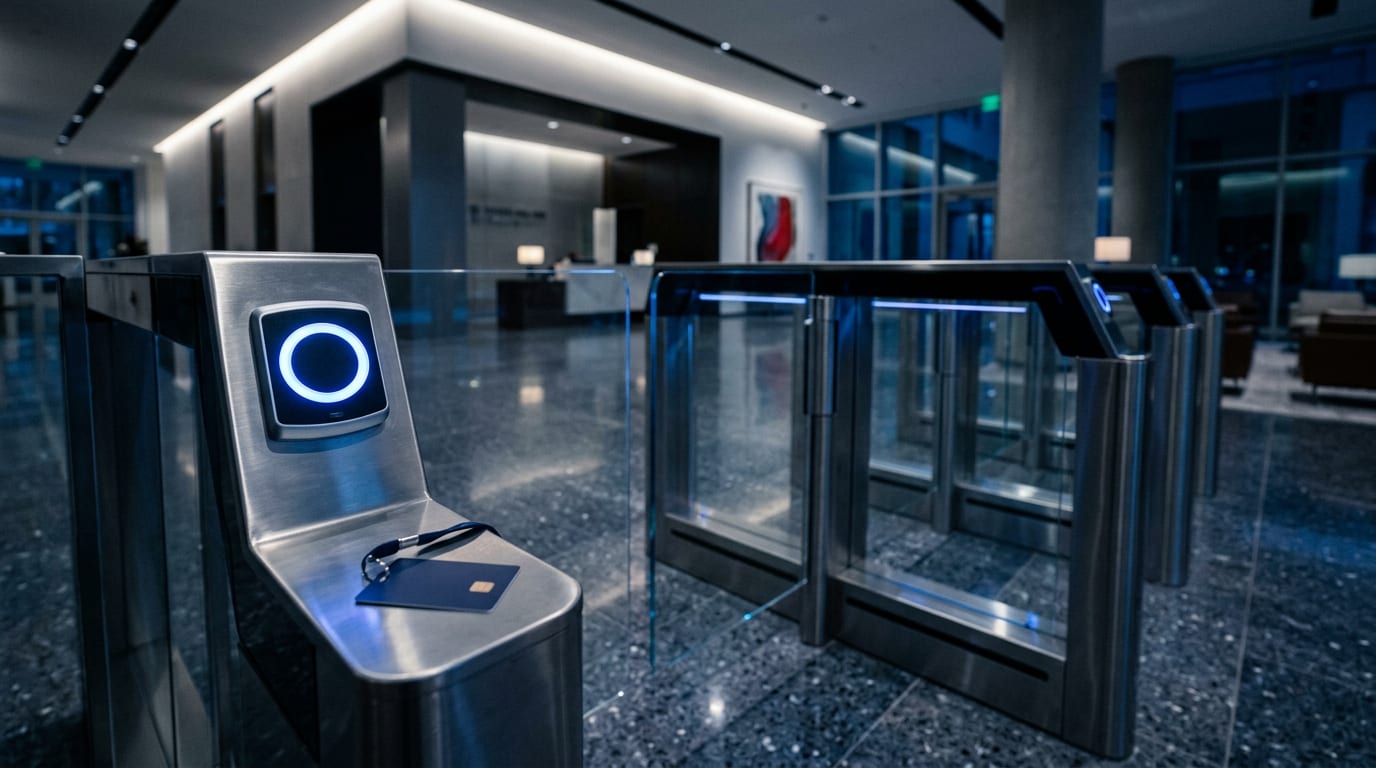
C1.ai gives each person and agent the right access at the right time, and removes it the moment it is no longer needed.
Four launches in four days for the agentic enterprise
The product line has moved quickly toward agents in 2026. In June, C1.ai introduced the C1 Autonomous Worker (opens in a new tab), an agent that runs work loops, carries state, executes code and acts on a user’s behalf across the full C1.ai API surface. It runs with the exact access of the person who operates it, so it can never reach anything its operator could not, and every action is attributed to that user’s agent identity in the audit trail. Sensitive changes route to a human approver before they run.
In September, C1.ai opened an EU instance (opens in a new tab) for customers who need tenant data held in Europe, running in AWS Frankfurt with Ireland as the disaster-recovery region. Then, in the week before the Workday announcement, it shipped four launches in four days (opens in a new tab): C1 AppHub, a governed internal platform for apps built with coding agents; sign-in and permissions through a standard OIDC provider and an authorization endpoint built on OpenID AuthZEN; credential vending with C1 Egress, which mints scoped credentials at the moment a workload needs them; and the C1 LLM Gateway for governed access to models.
Figure 2
C1.ai from first product to Workday
Jun 2022C1.ai and Accel
Series A, $15M
Led by Accel; access reviews generally available.
Aug 2023C1.ai and Felicis
Series A to $27M
Felicis leads an additional $12 million.
Oct 2025C1.ai and Greycroft
Series B, $79M
Led by Greycroft; revenue more than tripled.
Jun 2026C1.ai
C1 Autonomous Worker
An agent that acts across the C1.ai API surface.
Oct 2026C1.ai
Launch week
AppHub, sign-in, credential vending, LLM Gateway.
13 Oct 2026Workday and C1.ai
Agreement with Workday
Definitive agreement announced at Workday Rising.
Show method and sourcesHide method
Dates and amounts from C1.ai’s own funding and product announcements. Expected events reflect company guidance.
Part II of III
The logic
Why agent identity belongs next to the HR system of record.
95% of large U.S. companies already run autonomous agents
C1.ai’s research shows that 95% of large U.S. companies already run autonomous agents, while Deloitte finds only 21% report a mature way to govern them. Workday and C1.ai aim to meet that need from the system that already records every hire, move and exit.
The release sets out the need the combination is designed to meet. Most organizations manage employee access across hundreds of applications through manual service tickets, spreadsheets and periodic reviews as workers join, move and leave. The rapid adoption of AI agents has accelerated that challenge: C1.ai’s research shows that 95% of large U.S. companies already run autonomous agents, yet according to Deloitte’s State of AI research, only 21% report having a mature way to govern them.
The companies are direct about what is at stake. Organizations need to know who and what has access, why they have it and when to remove it. Without those controls, the release says, AI agents can become lawless, creating security and compliance risks across the business. C1.ai’s Series B announcement put the human side of the same problem in numbers, noting that 82% of organizations experienced a cyberattack in the past year due to improper access.
From first-day tickets to access that follows the role
For employees, the release paints a familiar picture: a new hire spending their first few days filing tickets just to get access to Slack, Jira and the finance dashboard, and then keeping that access long after changing roles. Workday and C1.ai will bring these processes together so that new hires get the right access when they start, employees gain and lose access as their roles change, and departing workers are removed promptly. The promised result is less time waiting on permissions, fewer manual approvals for managers and fewer open doors for attackers.
This is where the fit is most natural. Bovee’s note explains why the old model worked in the cloud era: it worked because every identity started as a person in an HR system. Workday is that HR system for more than 11,500 organizations. By connecting C1.ai’s governance to the events Workday already records, access changes can follow a hire, a promotion or an exit at the moment it happens, instead of waiting for a ticket or a quarterly review.

C1.ai connects to email, CRM, code repositories, finance systems and cloud infrastructure, where agents increasingly act on their own.
Agents that lose access the moment their work ends
Agents raise a harder version of the question. Some act on behalf of an employee and should only reach part of what that person can; others work on their own with broader access that needs close oversight. As the release puts it, an agent that was retired last quarter should not still be able to get in, and most companies do not yet have a way to manage access at that level of detail. Bovee describes the same shift: agents spin up in seconds, run around the clock, and "don't file tickets, and they don't wait for a quarterly review."
The Workday Agent System of Record already gives companies one place to see and manage their agents. C1.ai will build on that, going beyond registering agents to governing what they can access across Workday and other enterprise systems. Once registered, an agent can receive the access it needs when it needs it, and lose that access immediately when its work or role ends. In C1.ai’s own words, Workday knows who each person is and what each agent is for, and C1.ai governs what each of them can access.
The system that records every hire, move and exit becomes the system that decides what every person and agent can reach.
Sana, Pipedream and now C1.ai complete Workday’s agent stack
C1.ai joins Sana and Flowise, acquired in 2025, and Pipedream, agreed in November 2025, in Workday’s plan for an end-to-end agent platform, backed by $2.649 billion of quarterly revenue and $3.403 billion of cash and marketable securities.
C1.ai is the latest step in a deliberate sequence. On 4 November 2025, Workday completed its acquisition of Sana (opens in a new tab), an AI company building enterprise knowledge tools, to make Workday what Kazmaier called "the new front door for work". Two weeks later, Workday agreed to acquire Pipedream (opens in a new tab), an integration platform for AI agents with more than 3,000 pre-built connectors to widely used business applications. That release said the recent acquisitions of Sana and Flowise, along with Pipedream, bring together the intelligence, orchestration and connectivity required to turn insight into action.
Each piece answers a different question. Sana gives employees a single interface to knowledge and work. Flowise brings agent orchestration and an open-source builder community. Pipedream lets agents initiate workflows, pull data and execute tasks across Workday and third-party systems such as Asana, Hubspot, Jira, Recurly and Slack. C1.ai answers the question that follows once agents can act everywhere: what each of them is allowed to reach, for how long, and with what record.
Leadership has made the direction explicit. On 9 February 2026, Workday announced that co-founder Aneel Bhusri was returning as chief executive officer (opens in a new tab), working alongside presidents Gerrit Kazmaier and Rob Enslin. "AI is a bigger transformation than SaaS — and it will define the next generation of market leaders," Bhusri said at the time. Eight months later, the C1.ai agreement shows that view being carried into security and access, an area that sits next to every system Workday touches.
Subscription revenue up 13.9% to $2.471 billion
The buyer comes to the deal with a strong financial base. In the second quarter of fiscal 2027 (opens in a new tab), which ended on July 31, 2026, Workday posted total revenues of $2.649 billion, up 12.8% year on year, and subscription revenues of $2.471 billion, up 13.9%. Non-GAAP operating income was $824 million, or 31.1% of revenues. The 12-month subscription revenue backlog stood at $9.034 billion, up 14.2%, and total subscription revenue backlog at $27.403 billion.
Cash, cash equivalents and marketable securities were $3.403 billion as of July 31, 2026, after Workday repurchased approximately 9.8 million shares for $1.3 billion in the quarter. Its board authorized up to an additional $4.0 billion of repurchases, and the company raised its fiscal 2027 non-GAAP operating margin guidance to 31.0%, with subscription revenue expected at $9.940 billion to $9.950 billion. That combination of growth, margin and cash gives Workday room to keep investing in its agent platform while returning capital to shareholders.

More than 11,500 organizations, including more than 65% of the Fortune 500, run their people, money and agents on Workday.
Figure 3
How C1.ai fits Workday’s agent platform
- SanaAs described by Workday: Enterprise knowledge and learning, the new front door for workRole in the stack (Acquiry reading): Where employees start and finish their day
- FlowiseAs described by Workday: Agent orchestration and an open-source builder communityRole in the stack (Acquiry reading): How custom agents are designed
- PipedreamAs described by Workday: More than 3,000 pre-built connectors for AI agentsRole in the stack (Acquiry reading): How agents act in third-party systems
- Agent System of RecordAs described by Workday: One place to see and manage agentsRole in the stack (Acquiry reading): Which agents exist and what they are for
- C1.aiAs described by Workday: Identity governance for people, money and agentsRole in the stack (Acquiry reading): What every person and agent is allowed to access
Show method and sourcesHide method
Roles as described in Workday’s releases on Sana (4 November 2025), Pipedream (19 November 2025) and C1.ai (13 October 2026). The third column is Acquiry’s reading.
Part III of III
What comes next
How C1.ai fits Workday’s agent platform, and the road to closing.
Closing expected before Workday’s fiscal year ends on January 31, 2027
The transaction is expected to close in the fourth quarter of Workday’s fiscal year 2027, subject to customary closing conditions, after which C1.ai’s governance will extend across Workday and other enterprise systems.
The remaining steps are short. The agreement is subject to the satisfaction of customary closing conditions, and Workday expects completion in the fourth quarter of its fiscal year 2027, which ends on January 31, 2027. Until then the two companies operate independently, and Workday’s release notes, as is standard, that features described for the combined offering are subject to change at its discretion and that customers should base purchase decisions on what is currently available.
After closing, the product direction is already set out. Workday and C1.ai will bring joiner, mover and leaver processes together so that access follows each worker through their time at a company. On the agent side, C1.ai will extend the Workday Agent System of Record from registering agents to governing what they can access across Workday and other enterprise systems, so that each registered agent gets the access it needs and loses it when its work ends.
C1.ai’s commitments to its existing base are clear in Bovee’s note. To customers, he wrote that they trusted C1.ai to govern access for their business in the AI era, and that the team is excited to keep earning that trust. To partners, he noted that many of the company’s best wins came side by side with them. To his own team, he wrote that they built a technology platform which powers some of the most important businesses in the world, and asked them to do more of that.
The scale change for C1.ai is large. Its customer stories already include Ramp, DigitalOcean, Brex, Instacart, Qualtrics, Zscaler, PriceSmart and DailyPay. Inside Workday, the same platform becomes available to more than 11,500 organizations. "Joining Workday will get our mission to far more organizations, far faster," Bovee wrote, closing with: "Now we get to prove it at scale."

Workday expects to complete the acquisition in the fourth quarter of its fiscal year 2027, ending January 31, 2027.
Five milestones between signing and a governed agent workforce
- Closing. Completion in the fourth quarter of Workday’s fiscal year 2027, as set out in the agreement.
- Agent governance in Workday. C1.ai’s access controls extending the Agent System of Record.
- Joiner, mover, leaver. Access that follows each worker from hire to exit, as described under role-based access.
- Connector reach. How C1.ai’s Baton connectors work alongside Pipedream’s library of more than 3,000.
- Agent launches. Adoption of AppHub, credential vending and the LLM Gateway from C1.ai’s October launch week.
Frequently asked questions
Is Workday acquiring C1.ai?
Yes. Workday, Inc. announced on 13 October 2026 that it has signed a definitive agreement to acquire C1.ai, a leading agentic identity platform for people and agents.
When will the Workday C1.ai acquisition close?
The transaction is expected to close in the fourth quarter of Workday’s fiscal year 2027, ending January 31, 2027, subject to the satisfaction of customary closing conditions.
What does C1.ai do?
C1.ai connects to the systems a business runs on, from email and CRM to code repositories, finance systems and cloud infrastructure, giving each person and agent the right access at the right time and removing it the moment it is no longer needed.
Why is Workday buying C1.ai?
Every new hire, job change and exit is a Workday event. With C1.ai, Workday says it will become the identity governance layer for people, money and agents, so access follows each worker and agent from the day they join to the day they leave.
How will C1.ai work with the Workday Agent System of Record?
The Workday Agent System of Record already gives companies one place to see and manage their agents. C1.ai will build on that by governing what those agents can access across Workday and other enterprise systems.
Who advised Workday and C1.ai?
BofA Securities is financial adviser to Workday and Orrick its legal adviser. Qatalyst is financial adviser to C1.ai and Ashurst Perkins Coie its legal adviser.
Who founded C1.ai?
Alex Bovee, CEO, and Paul Querna co-founded C1.ai and started working on it in 2020.
How much funding had C1.ai raised?
C1.ai raised a $15 million Series A led by Accel in 2022, expanded it to $27 million with Felicis in 2023, and raised a $79 million Series B led by Greycroft in October 2025.
Methodology and limitations
This report draws on Workday’s release of 13 October 2026, C1.ai’s announcement of the same date, C1.ai’s funding and product announcements from 2022 to 2026, and Workday’s releases on Sana, Pipedream, its CEO transition and its fiscal 2027 second-quarter results. Research cutoff: 15 October 2026.
Figures are labelled by provenance. Every figure in this report is disclosed by Workday or C1.ai in those documents; adoption figures are as cited in Workday’s release.
Statements about the combined product and the expected closing are company forward-looking statements.
Independence. Acquiry was not engaged by any party. This is independent research from public sources and is not a solicitation, investment advice, or an offer to buy or sell any security. Acquiry holds no disclosed position in Workday or C1.ai.
Sources
Numbered to match the superscript citations. Every source is a primary company announcement, filing or named publication.
- 1Workday to Acquire C1.ai, a Leading Agentic Identity Platform for People and Agents
Workday, Inc. · · Press release
- 2C1.ai to join Workday
C1.ai · · Company announcement
- 3C1.ai, the Identity Security Platform of the AI Era, Raises $79M Series B
C1.ai · · Company announcement
- 4C1.ai Raises $15M In Series A Funding to Solve Identity Security Challenges
C1.ai · · Company announcement
- 5Announcing Our Felicis Led Series A Expansion to $27M
C1.ai · · Company announcement
- 6Launch Week Roundup: The Paved Road to the Agentic Enterprise
C1.ai · · Product announcement
- 7Introducing the C1 Autonomous Worker
C1.ai · · Product announcement
- 8C1.ai is now available in Europe
C1.ai · · Product announcement
- 9Workday Announces Fiscal 2027 Second Quarter Financial Results
Workday, Inc. · · Earnings release
- 10Workday Signs Definitive Agreement to Acquire Pipedream
Workday, Inc. · · Press release
- 11Workday Announces CEO Transition as Co-Founder Aneel Bhusri Returns to Lead the Company's Next Chapter
Workday, Inc. · · Press release
- 12Workday Completes Acquisition of Sana
Workday, Inc. · · Press release
Cite this report
Boyton, J. (2026, October 7). Workday to Acquire C1.ai: One Identity Layer for Every Person and AI Agent. Acquiry Deal Intelligence. https://www.acquiry.com/deal-intelligence/workday-to-acquire-c1-ai/
@online{boyton2026workdayc1ai, author = {Boyton, Joash}, title = {Workday to Acquire C1.ai: One Identity Layer for Every Person and AI Agent}, organization = {Acquiry Deal Intelligence}, date = {2026-10-07}, url = {https://www.acquiry.com/deal-intelligence/workday-to-acquire-c1-ai/} }
Joash Boyton is a technology sector analyst, publisher, and the founder of Acquiry, where he executes buy-side and sell-side M&A mandates across digital assets, software, and gaming technologies. He is the author of peer-reviewed corporate finance literature indexed across institutional repositories including Google Scholar and the ORCID Registry. Joash publishes Acquiry Deal Intelligence to deliver independent, forensic strategic reviews and valuation benchmarks of global technology acquisitions, compiling primary data directly from corporate disclosures, SEC filings, and regulatory ledgers.
Research support: Acquiry Deal Intelligence.