In this report
Siemens agrees to add Lauterbach’s debug and trace tools to its chip design portfolio
MUNICH, Germany — Siemens has signed an agreement to acquire Lauterbach, the company near Munich whose TRACE32 debug and trace tools help engineers analyse embedded software on complex system-on-chip designs. Siemens set out the planned acquisition in a press release dated 10 November 2026 (opens in a new tab), and Lauterbach published its own announcement (opens in a new tab) the same day. Siemens says the purchase will let it integrate hardware-assisted verification with embedded software debug and trace technology into a single workflow. The transaction is expected to close in the first half of 2027, subject to customary closing conditions and required regulatory approvals. Financial terms were not disclosed.
Lauterbach is a company with a long record in a specialised field. According to Siemens, it was co-founded by the brothers Lothar and Stephan Lauterbach beginning in 1979, employs around 170 people, serves more than 1,200 global customers and generated roughly €60 million in revenue in 2025. Siemens describes it as a leading provider of debug and trace solutions for embedded software and complex system-on-chip (SoC) architectures, with customers across automotive, semiconductors and telecommunications. The buyer is much larger: in fiscal 2025 the Siemens Group generated revenue of €78.9 billion and net income of €10.4 billion, and as of 30 September 2025 it employed around 318,000 people worldwide.
Both companies frame the agreement around one idea: hardware and software development are converging. Siemens points to artificial intelligence, software-defined vehicles, the Internet of Things, multi-core architectures, cybersecurity and functional safety as the trends driving that convergence, and says that Siemens and Lauterbach solutions are already used by numerous mutual customers. This report sets out what was signed, the company Siemens is adding, the technology it builds, and how the deal fits the Siemens electronic design automation (EDA) portfolio. Every figure is traced to a primary source listed at the end, and the workbook near the end of the page shows the calculations that can be made from those figures.

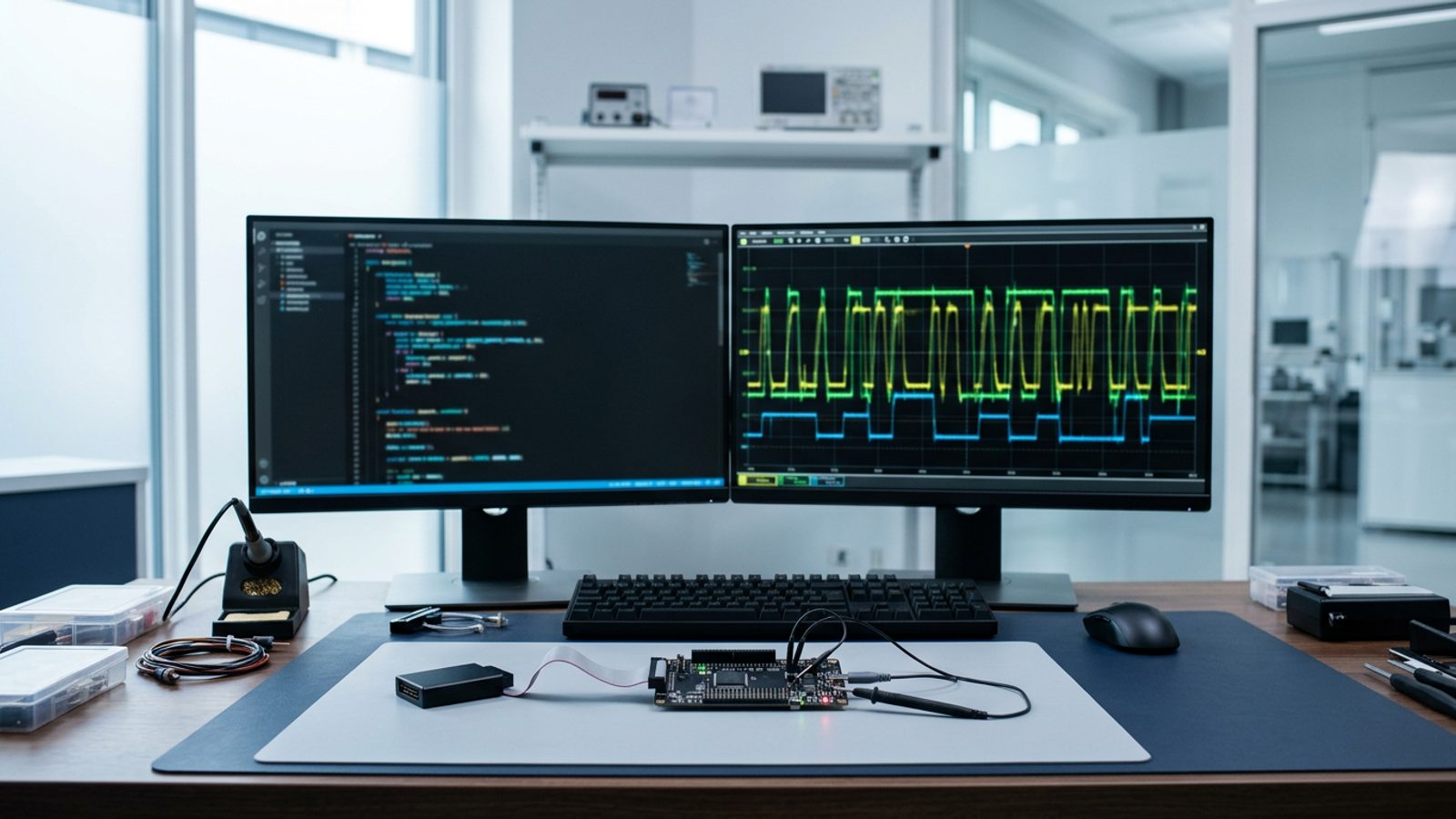
Generated image, not a photograph of the parties’ people or premises. Siemens and Lauterbach both describe the convergence of hardware and software development as the reason for the agreement.
The deal in five points
Key facts
- Structure Disclosed
- Signed agreement to acquireSiemens describes a planned acquisition; closing is still ahead.
- Announced Disclosed
- 10 November 2026Siemens AG press release from Munich, with a matching Lauterbach release.
- Expected close Disclosed
- First half of 2027Subject to customary closing conditions and required regulatory approvals.
- Lauterbach revenue, 2025 Disclosed
- Roughly €60 millionAs stated by Siemens in its announcement.
- Lauterbach people Disclosed
- Around 170Employees, as stated by Siemens.
- Lauterbach customers Disclosed
- More than 1,200Global customers across automotive, semiconductors, telecommunications and other industries.
- Continuing leaders Disclosed
- Stephan Lauterbach and Thomas UllmannBoth continue their work as part of Siemens following closing.
- Siemens Group revenue, fiscal 2025 Disclosed
- €78.9 billionYear ended 30 September 2025, with net income of €10.4 billion.
- Disclosed
- Stated by a party to the transaction
The numbers behind the deal
Each figure has its own permanent link and a ready-made citation. Journalists, analysts and researchers are welcome to quote them with credit and a link to Acquiry.
- Roughly €60 millionDisclosed
Lauterbach revenue, 2025
Stated in the Siemens announcement of 10 November 2026.
- Around 170Disclosed
Lauterbach employees
Stated in the Siemens announcement of 10 November 2026.
- More than 1,200Disclosed
Lauterbach customers
Stated in the Siemens announcement of 10 November 2026.
- €78.9 billionDisclosed
Siemens Group revenue, fiscal 2025
Siemens boilerplate in the announcement; year ended 30 September 2025.
- Around 318,000Disclosed
Siemens Group employees
As of 30 September 2025, continuing operations.
Part I of III
The agreement and the company
What Siemens signed on 10 November 2026 and who Lauterbach is.
Siemens signs to acquire Lauterbach, with closing expected in the first half of 2027
A signed agreement announced on 10 November 2026, with closing expected in the first half of 2027.
The core of the announcement is short. Siemens has signed an agreement to acquire Lauterbach, and describes Lauterbach as “a leading provider of debug and trace solutions for embedded software and complex system-on-chip (SoC) architectures.” Lauterbach develops what Siemens calls “comprehensive, modular and extensible development and verification tools for microprocessors and embedded CPU cores in the form of hardware-assisted debuggers and real-time trace tools.” The announcement is dated 10 November 2026 and was issued by Siemens AG from Munich, with a matching release from Lauterbach at its headquarters in Höhenkirchen-Siegertsbrunn near Munich.
Siemens describes the agreement as a planned acquisition and says it expects the transaction to close in the first half of 2027, subject to customary closing conditions and required regulatory approvals. Lauterbach’s own release says that, “following Closing and as part of Siemens,” the company will take its “Enabling Embedded Innovations” claim to the next level, creating distinctive value for customers from early chip design to final system verification.
Stephan Lauterbach and Thomas Ullmann continue after closing
Siemens says it is “delighted that Stephan Lauterbach and Thomas Ullmann will continue their work as part of Siemens following the closing of the transaction.” Lauterbach’s management board page (opens in a new tab) shows what each does. Stephan Lauterbach, co-owner and Chief Technology Officer, is responsible for the entire development department. Dr. Thomas Ullmann joined the company in March 2020 and oversees finance, human resources and strategic corporate development. Siemens also says it will build on “the impressive legacy that founders Lothar and Stephan Lauterbach and their team have achieved over the past decades” and is pleased to welcome the Lauterbach group to Siemens.

Generated image, not a photograph of the parties’ people or premises. Siemens signed an agreement to acquire Lauterbach on 10 November 2026; closing is expected in the first half of 2027.
With Lauterbach, we are further extending our industry-leading EDA portfolio for semiconductor design by bringing together our premier hardware-assisted verification portfolio with its industry-leading software debugging technologies. As semiconductors represent a core vertical for our technology strategy, this enables customers to test and optimize their products even before the actual chip is produced – significantly reducing development time
Lauterbach: founded in 1979, around 170 people, more than 1,200 customers
A specialised tools company with more than four decades of history and a broad customer base.
Lauterbach’s company history page (opens in a new tab) dates the business to 1979, when, the company says, it quickly established itself as a market leader in in-circuit emulators and JTAG debug tools. Its first major breakthrough came in 1983 with TRACE80, an in-circuit emulator for the Z80 and other 8-bit CPUs, and the company moved into a new office building in Hofolding near Munich. TRACE32 followed in 1989 as an in-circuit emulator for 8-, 16- and 32-bit microprocessors. Lauterbach says it was highly modular, which allowed support to extend over the years to up to 15 microprocessor architectures.
The product line then followed the industry’s move to more complex chips. The company launched its first JTAG debugger in 1996, added parallel trace ports in 1998 and trace-based debugging in 1999, which lets engineers move forwards and backwards through recorded trace information to find what led to faulty behaviour. Linux-aware debugging arrived in 2000, multicore debugging from 2003, and in 2005 support for Qualcomm’s Hexagon took TRACE32 to its 50th core milestone. In 2018 it added MC/DC code coverage without instrumentation, and in the same year its TRACE32 Tool Qualification Support-Kit was certified by TÜV NORD.
A footprint of 11 branch offices and more than 20 resellers
Lauterbach describes a worldwide presence of 11 branch offices and more than 20 technical value-added resellers. Its release lists branch offices in the United Kingdom, Italy, France, Tunisia, on the East and West Coast of the United States, in Japan and in China, with highly qualified sales and support engineers in many other countries. The company also says that over 80% of its staff are highly qualified and trained engineers, many of whom take part in international standards committees. Its management board (opens in a new tab) comprises founder Lothar Lauterbach, co-owner and Chief Technology Officer Stephan Lauterbach and Dr. Thomas Ullmann.
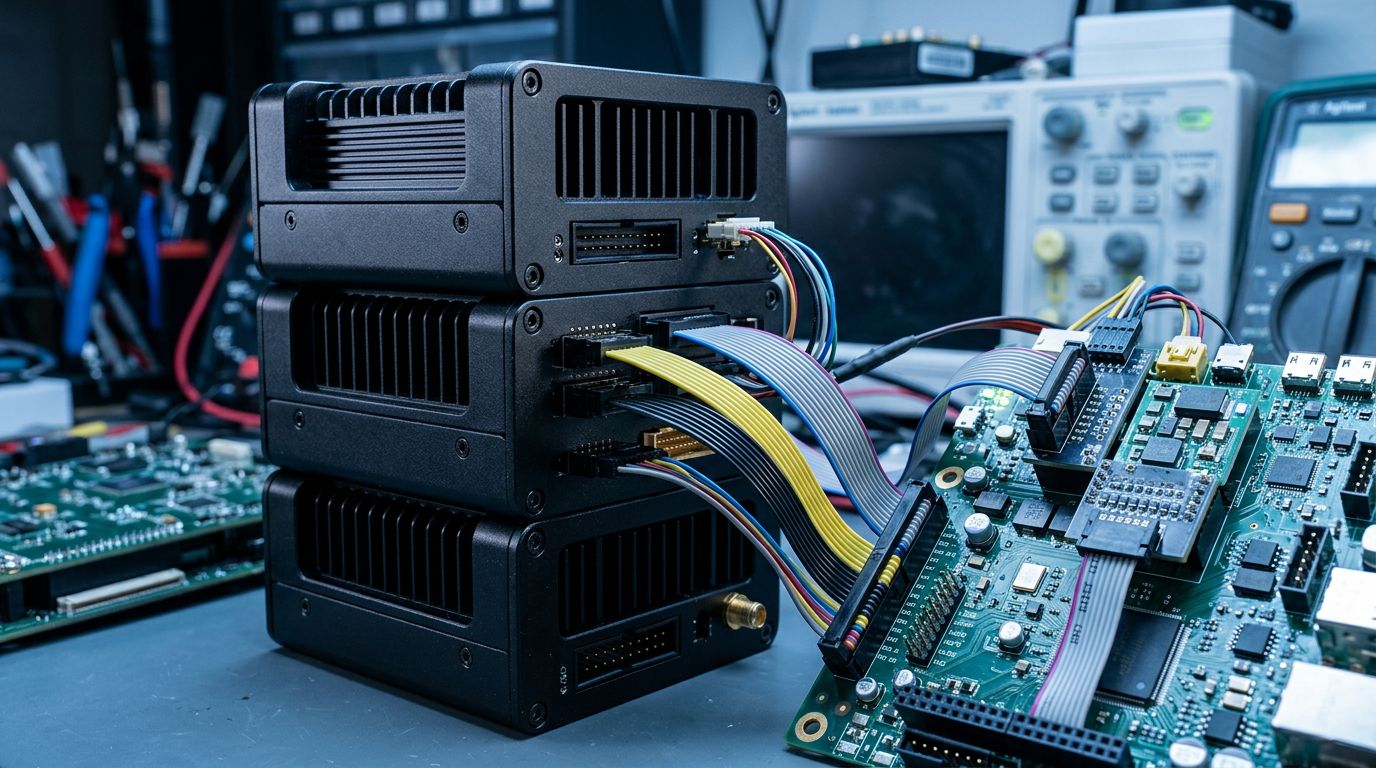
Generated image, not a photograph of the parties’ people or premises. Lauterbach’s TRACE32 family combines software with modular debug and trace hardware.
Siemens puts the company’s scale in numbers: around 170 people, more than 1,200 global customers and roughly €60 million in revenue in 2025. Those customers span automotive, semiconductors and telecommunications, among other industries, and Lauterbach says its customers range from small companies to the world’s largest technology leaders. The company describes its tools as used “from renewable energies to smartphones to vehicles.”
Part II of III
The technology
What TRACE32 does and how it joins Siemens Veloce hardware-assisted verification.
TRACE32 analyses more than 150 microarchitectures, from pre-silicon models to chips in the field
The TRACE32 family covers the product life cycle from pre-silicon development to in-field analysis.
TRACE32 is the name under which Lauterbach sells its debug and trace tools. Its home page (opens in a new tab) describes the family as covering the entire product life cycle, from pre-silicon, cloud-based development through prototyping and testing to in-field analysis. The software at the centre is TRACE32 PowerView, which Lauterbach says is used as a pure software solution to analyse RTL simulations, emulations and virtual targets on remote PCs and in the cloud, and, with its hardware extensions, to test targets in the field through interfaces such as USB or XCP.
The hardware side comes in modules. According to Lauterbach, the PowerDebug System is a modular, flexible debug system that adapts as teams move from project to project and chip to chip, trace extensions collect information while the system under examination runs normally and without interruption, and software-only solutions allow analysis of virtual targets in the cloud, use of a built-in instruction set simulator and closed-chassis debugging in the field. Its Why Lauterbach page (opens in a new tab) adds that the modular design means a configuration can be upgraded or modified for the next project, and that everything is driven by the same user interface.
Complemented with our leading-edge debug- and trace-hardware extensions you can analyze more than 15.000 chips and more than 150 different microarchitectures, by far the most ones in the embedded industry.
The XuanTie C950 release shows how support for new processors is added
A recent release shows how that breadth is maintained. On 15 September 2026 Lauterbach announced (opens in a new tab) that TRACE32 supports Alibaba’s XuanTie C950, a 64-bit RISC-V processor core that Lauterbach describes as the highest-performance RISC-V computing flagship processor to date. Lauterbach says the C950 achieves a single-core score of over 70 points on the SPECint-2006 benchmark and features a superscalar, out-of-order microarchitecture with up to 8 cores per cluster and clock speeds reaching 3.2 GHz. TRACE32 support covers simultaneous debugging of the processor cores and “non-intrusive processor trace capture,” and Lauterbach says its tools handle both parallel off-chip trace and serial high-speed trace via HSSTP.
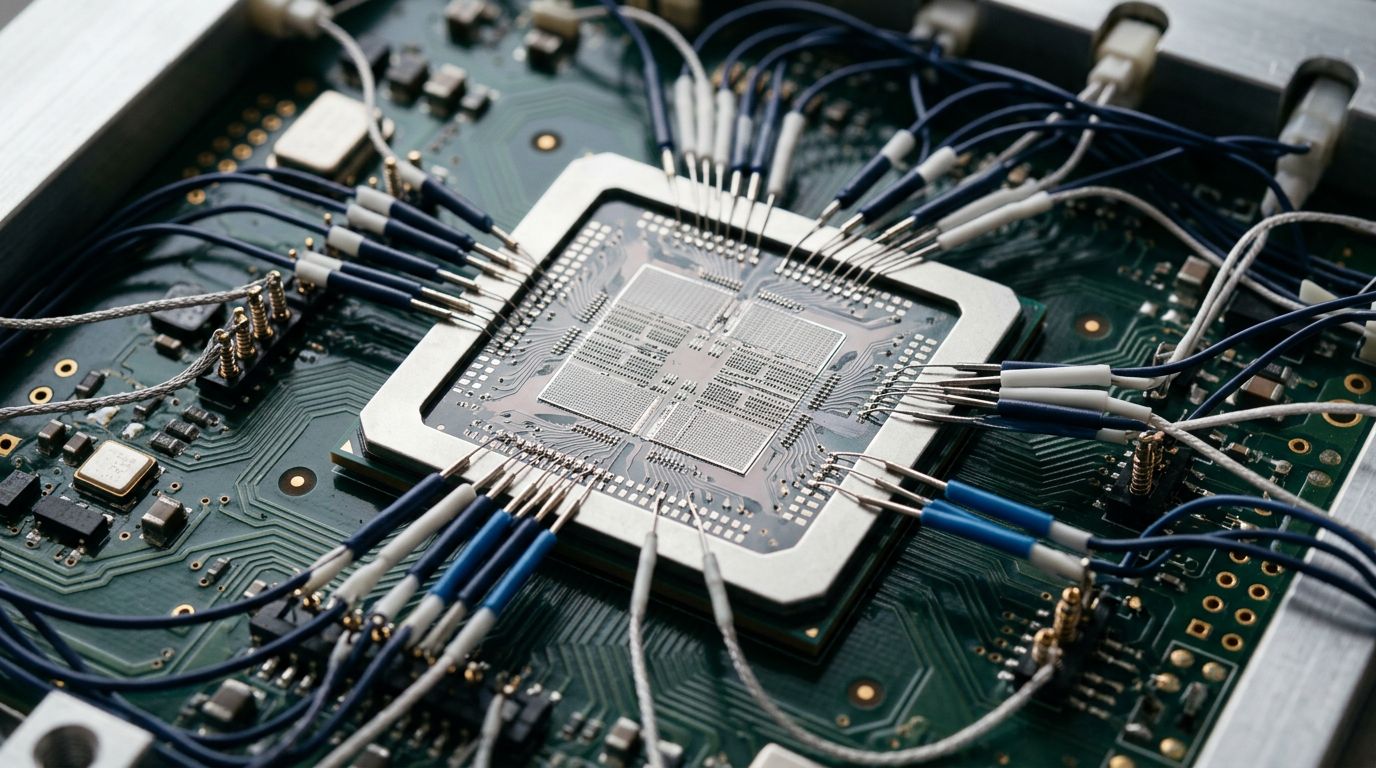
Generated image, not a photograph of the parties’ people or premises. TRACE32 connects debug and trace hardware to processors such as the XuanTie C950.
The same release quotes Dr. Chunqiang Li, Vice President of RISC-V at Alibaba DAMO Academy, who says XuanTie and Lauterbach have continued to deepen their collaboration, gradually covering basic debugging, multicore debugging, trace analysis and performance profiling. Lauterbach’s emulators and virtual targets page (opens in a new tab) lists, among others, Veloce CS, Synopsys HAPS-200 and ZeBu-200, Cadence Palladium and Protium, Arm Fast Models and QEMU, and the company says TRACE32 supports by far the most virtual targets and third-party simulators in the tool industry.
Veloce emulation and TRACE32 debug are planned to become a single hardware and software workflow
Siemens aims to join hardware-assisted verification and embedded software debug into one shift-left workflow.
Siemens’ side of the workflow is its Veloce CS family (opens in a new tab). Siemens describes Veloce CS as a hardware, software and system validation platform made up of Veloce Strato CS for emulation, Veloce Primo CS for enterprise prototyping and Veloce proFPGA CS for software prototyping. The platforms share the same Veloce hardware and software architecture, which Siemens calls congruency, so that users can move an environment from one platform to another with minimal effort.
Siemens’ Veloce page makes the case for starting software work earlier. Its “Software Rising” section states that software development and validation is the bottleneck in today’s system design flow across all industries, and that the Veloce CS System pulls the software development cycle in earlier, verifying application software, enabling power and performance analysis at system level, and benchmarking the entire system in a targeted application environment.
A single view of chip and software behaviour
That is where Lauterbach enters. In the announcement, Siemens says that bringing together previously separate workflows into a single solution is meant to give customers a unified hardware and software view of how increasingly complex ASIC and SoC devices behave. It describes this as a shift-left approach that helps customers analyse hardware and software interactions at an early stage and significantly shortens the time to market for new software-defined products. The planned combined solution, it says, will let customers develop and verify embedded software even earlier, and well before the physical chip is available.
Siemens’ EDA site (opens in a new tab) places the same idea inside its hardware-software co-design offer: realistic workload development and testing for early, pre-silicon software development, visibility into performance and power consumption, and synchronised communication between domains, systems, protocols and tools. A customer quoted on that site, Karima Dridi of Arm, describes the result of using Veloce at scale.
Siemens’ solutions enabled full-system verification of the Arm AGI CPU at scale using multiple towers of Veloce Strato CS, helping to ensure it meets the performance and efficiency requirements of hyperscale deployments.

Generated image, not a photograph of the parties’ people or premises. Hardware-assisted verification runs chip designs before silicon exists, which is where software teams can start work.
Part III of III
The buyer and the road ahead
Siemens software history from Altair to Lauterbach, and the path to closing.
Siemens: €78.9 billion in revenue and a software portfolio that already includes Altair
Siemens completed the Altair acquisition on 26 March 2025 and now adds Lauterbach to its EDA offer.
Siemens AG describes itself as a leading technology company focused on industry, infrastructure, mobility and healthcare, and as a leader in industrial AI. In fiscal 2025, which ended on 30 September 2025, the Siemens Group generated revenue of €78.9 billion and net income of €10.4 billion, and it employed around 318,000 people worldwide. It also owns a majority stake in the publicly listed company Siemens Healthineers. The announcement quotes Cedrik Neike, Member of the Managing Board of Siemens AG and President Digital Industries, and lists the Siemens Digital Industries Software PR team as a press contact.
Siemens’ recent software history gives the Lauterbach agreement context. On 26 March 2025 it completed the acquisition (opens in a new tab) of Altair Engineering Inc., a provider of software in the industrial simulation and analysis market, for an enterprise value of approximately USD 10 billion. Siemens said at the time that Altair added capabilities in mechanical and electromagnetic simulation, high-performance computing, data science and AI, and that the acquisition was part of its ONE Tech Company program and would meaningfully increase its digital revenue share. Roland Busch, President and CEO of Siemens AG, said Altair’s innovations would help create “the world's most complete AI-powered design, engineering and simulation portfolio.”
From simulation at Altair to verification and debug at Lauterbach
The two transactions address different layers. Altair, in Siemens’ words, extended its leadership in simulation and industrial AI. Lauterbach, by Siemens’ account, extends the electronic design automation portfolio for semiconductor design, a field where the announcement says Siemens is further establishing its position as “one of the world's leading electronic design automation (EDA) powerhouses.” Siemens EDA describes a portfolio that spans IC design and verification, 3D IC, chiplet, advanced packaging and test workflows, and PCB and electronic systems design, and says it is bringing secure generative and agentic AI into production EDA environments.
The announcement also places an expectation on the commercial side. Siemens says it expects significant revenue synergies from the transaction, and that Lauterbach and Siemens solutions are already used by numerous mutual customers. Siemens states the expectation without a quantified target, and this report does not add one.
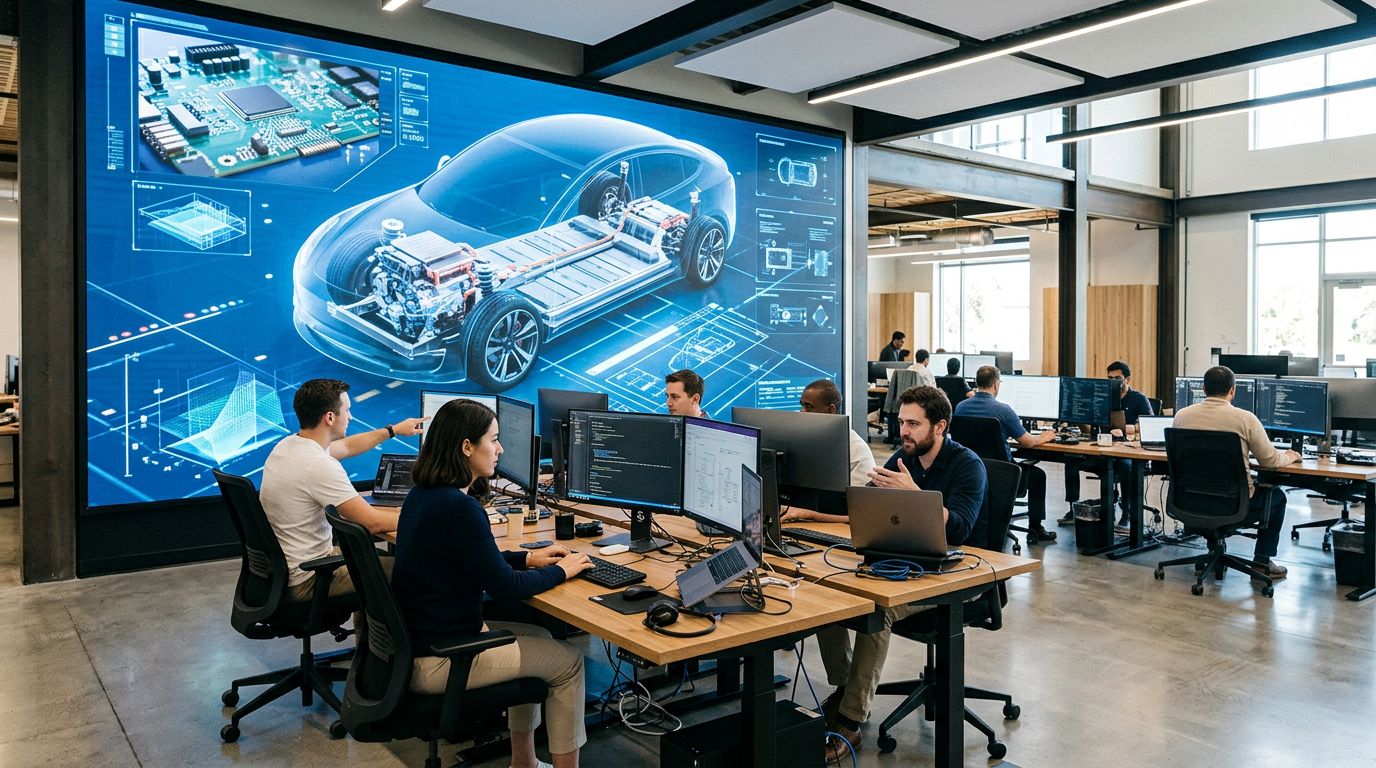
Generated image, not a photograph of the parties’ people or premises. Siemens describes its EDA offer as built on digital twin technology.
Closing is expected in the first half of 2027, with Stephan Lauterbach and Thomas Ullmann continuing
The signed agreement is followed by customary closing conditions and required regulatory approvals.
Closing is the next milestone. Siemens says the transaction is expected to close in the first half of 2027, subject to customary closing conditions and required regulatory approvals, and it describes the deal throughout as a planned acquisition. The agreement is signed and the transaction is not yet complete.
For customers, the two companies give the same message. Stephan Lauterbach says: “Our commitment to keeping our customers at the center of everything we do remains unchanged.” Lauterbach’s release says that, after closing and as part of Siemens, it will take its “Enabling Embedded Innovations” claim to the next level. Lauterbach’s own pages describe what customers already know: over 80% of staff are engineers, the company says it is renowned for fast response times, deep processor expertise and lifetime product support, and its tools integrate with third-party tools at every stage of development.
TRACE32 already works with partners and chip makers
Lauterbach describes an open software interface and long-standing relationships with chip manufacturers and IP providers, operating system providers, compiler vendors and customers, which it says allows it to support recent advances in embedded systems design, often long before a new chip arrives on the market. The company says the same interfaces let customers choose the tools that meet their needs at every stage of development. Those are the relationships and interfaces that continue into the closing period, and Siemens has not announced changes to them.
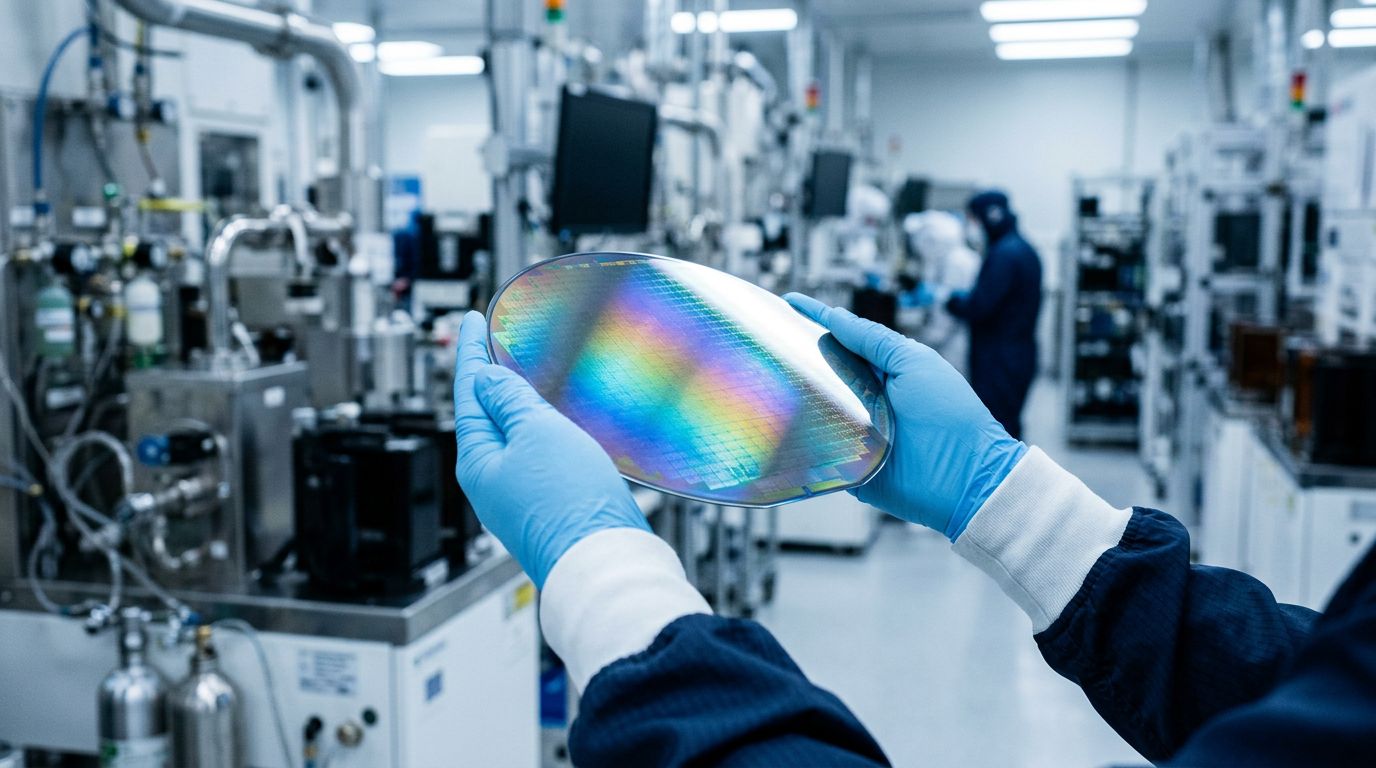
Generated image, not a photograph of the parties’ people or premises. Siemens and Lauterbach describe a combined workflow that runs from early chip design to final system verification.
The timeline below places the agreement on the path from Lauterbach’s start in 1979 to the expected close. The dates up to 10 November 2026 are completed events from company sources, and the closing is shown as expected until it happens.
Figure 1
From Lauterbach’s start in 1979 to the expected close in the first half of 2027
1979Lauterbach
Lauterbach co-founded
Siemens states that Lothar and Stephan Lauterbach co-founded the company beginning in 1979 to develop tools for microprocessor development.
1989Lauterbach
TRACE32 launched
The TRACE32 in-circuit emulator for 8-, 16- and 32-bit microprocessors reaches the market, per Lauterbach’s company history.
26 Mar 2025Siemens
Siemens completes Altair acquisition
Siemens closes the acquisition of Altair Engineering Inc. for an enterprise value of approximately USD 10 billion.
15 Sep 2026Lauterbach
TRACE32 support for XuanTie C950
Lauterbach announces TRACE32 support for Alibaba’s 64-bit RISC-V XuanTie C950 processor.
10 Nov 2026Siemens and Lauterbach
Agreement to acquire Lauterbach signed
Siemens and Lauterbach announce the agreement. Siemens describes it as a planned acquisition.
First half of 2027SiemensExpected
Expected close
Closing is expected in the first half of 2027, subject to customary closing conditions and required regulatory approvals.
Show method and sourcesHide method
Dates are from the Siemens announcement of 10 November 2026, Lauterbach’s company history and press releases, and the Siemens release of 26 March 2025. The close is shown as expected until it is completed.
The numbers behind the deal
14 sourced figures, each labelled by source type, and 8 calculations built from them. Every calculation shows its formula and inputs.
- Years from founding to announcement
- 47 years
- Target team as a share of the acquirer's workforce
- 0.05%
- Lauterbach revenue as a share of Siemens Group revenue
- 0.08%
Open the full workbook
Acquiry calculations
| Measure | Result | Formula and why it matters |
|---|---|---|
| Years from founding to announcement | 47 years | Announcement year − founding yearTime to outcome for founders and early investors. |
| Target team as a share of the acquirer's workforce | 0.05% | Target employees ÷ acquirer employees × 100Integration scale in people terms. |
| Lauterbach revenue as a share of Siemens Group revenue | 0.08% | Lauterbach revenue in 2025, in euros ÷ Siemens Group revenue, fiscal 2025, in euros × 100Sizes the target against the whole of the buyer, in the same currency. |
| Siemens Group revenue as a multiple of Lauterbach revenue | 1315x | Siemens Group revenue, fiscal 2025, in euros ÷ Lauterbach revenue in 2025, in eurosShows the difference in scale between buyer and target. |
| Lauterbach revenue per employee (euros) | 352,941 | Lauterbach revenue in 2025, in euros ÷ Lauterbach employeesA productivity measure for a specialised tools business. |
| Lauterbach revenue per customer (euros) | 50,000 | Lauterbach revenue in 2025, in euros ÷ Lauterbach global customersShows the average annual revenue across the customer base. |
| Siemens Group revenue per employee (euros) | 248,113 | Siemens Group revenue, fiscal 2025, in euros ÷ Siemens Group employees, as of 30 September 2025Gives the buyer’s own productivity measure for comparison with the target. |
| Siemens Group net income as a share of revenue | 13.2% | Siemens Group net income, fiscal 2025, in euros ÷ Siemens Group revenue, fiscal 2025, in euros × 100Shows the profit base of the buyer in fiscal 2025. |
Sourced inputs
| Figure | Value | Source |
|---|---|---|
| Announcement date | 10 November 2026 | 1. Siemens AG (press release)Press release |
| Lauterbach founded (co-founded beginning in) | 1979 | 1. Siemens AG (press release)Press release |
| Lauterbach employees | around 170 people | 1. Siemens AG (press release)Press release |
| Lauterbach global customers | more than 1,200 global customers | 1. Siemens AG (press release)Press release |
| Lauterbach revenue in 2025, in euros | € 60 million | 1. Siemens AG (press release)Press release |
| Siemens Group revenue, fiscal 2025, in euros | €78.9 billion | 1. Siemens AG (press release)Press release |
| Siemens Group net income, fiscal 2025, in euros | €10.4 billion | 1. Siemens AG (press release)Press release |
| Siemens Group employees, as of 30 September 2025 | around 318,000 people | 1. Siemens AG (press release)Press release |
| Altair enterprise value (Siemens acquisition completed 26 March 2025) | USD 10 billion | 6. Siemens AG (press release)Press release |
| Siemens completed the Altair acquisition | March 26, 2025 | 6. Siemens AG (press release)Press release |
| Microarchitectures TRACE32 can analyse | more than 150 different microarchitectures | 4. Lauterbach GmbH (company website)Company website |
| Share of Lauterbach staff who are engineers | over 80% | 9. Lauterbach GmbH (company website)Company website |
| Lauterbach branch offices | 11 branch offices | 3. Lauterbach GmbH (company website)Company website |
| Lauterbach technical value-added resellers | more than 20 technical value-added resellers | 3. Lauterbach GmbH (company website)Company website |
Calculations use only the sourced inputs above, as stated at publication. Cite as Acquiry Deal Intelligence with the article URL.
Frequently asked questions
What has Siemens agreed to acquire?
Siemens has signed an agreement to acquire Lauterbach, a provider of debug and trace solutions for embedded software and complex system-on-chip (SoC) architectures, as announced on 10 November 2026. Siemens describes it as a planned acquisition.
How much is the Siemens–Lauterbach deal worth?
Financial terms were not disclosed in the announcements of 10 November 2026. Siemens states that Lauterbach generated roughly €60 million in revenue in 2025, employs around 170 people and serves more than 1,200 global customers.
When is the Siemens–Lauterbach deal expected to close?
Siemens says the transaction is expected to close in the first half of 2027, subject to customary closing conditions and required regulatory approvals.
What does Lauterbach make?
Lauterbach develops TRACE32 debug and trace tools: hardware-assisted debuggers and real-time trace tools for microprocessors and embedded CPU cores. Lauterbach says TRACE32 analyses more than 150 different microarchitectures across the product life cycle, from pre-silicon development to in-field analysis.
Why is Siemens acquiring Lauterbach?
Siemens says the planned acquisition will let it integrate hardware-assisted verification with embedded software debug and trace technology into a single workflow, so customers can identify hardware and software issues earlier, boost engineering productivity and accelerate time to market. Siemens also says it expects significant revenue synergies.
Who continues to lead Lauterbach after closing?
Siemens says Stephan Lauterbach, co-founder and Chief Technology Officer, and Thomas Ullmann will continue their work as part of Siemens following the closing of the transaction.
Methodology and limitations
This analysis is built from the Siemens AG press release of 10 November 2026, the Lauterbach press release of the same date, Siemens’ release on the completion of the Altair acquisition of 26 March 2025, and pages on the Lauterbach and Siemens EDA websites, each retrieved at the research cutoff of 12 November 2026 and saved in full.
Every figure is labelled by basis: company-disclosed (stated directly by Siemens or Lauterbach in a release or on its website) or calculated (worked out by Acquiry from sourced inputs, with the formula and inputs shown in the deal data workbook). Company-stated metrics are attributed to the company and are not independently verified.
Acquiry’s own interpretation is marked as such throughout and is separated from facts stated by the companies. The announcement is a signed agreement; this report does not treat the transaction as completed.
Independence. Acquiry was not engaged by any party. This is independent research from public sources and is not a solicitation, investment advice, or an offer to buy or sell any security. Acquiry holds no disclosed position in Siemens AG or Lauterbach GmbH.
Sources
Numbered to match the superscript citations. Every source is a primary company announcement, filing or named publication.
- 1Siemens to expand portfolio for semiconductor design and verification with the planned acquisition of Lauterbach
Siemens AG (press release) · · Press release
- 2Lauterbach signs agreement to be acquired by Siemens entering a new era of Enabling Embedded Innovations
Lauterbach GmbH (press release) · · Press release
- 3Lauterbach company history
Lauterbach GmbH (company website) · · Company website
- 4Lauterbach TRACE32 Debug- and Trace Solutions (home page)
Lauterbach GmbH (company website) · · Company website
- 5Veloce CS - IC Emulation and Prototyping
Siemens EDA (company website) · · Company website
- 6Siemens acquires Altair to create most complete AI-powered portfolio of industrial software
Siemens AG (press release) · · Press release
- 7Lauterbach Management Board
Lauterbach GmbH (company website) · · Company website
- 8Lauterbach supports the world's highest-performance RISC-V CPU
Lauterbach GmbH (press release) · · Press release
- 9Why Lauterbach
Lauterbach GmbH (company website) · · Company website
- 10Emulators, Simulators and Virtual Targets
Lauterbach GmbH (company website) · · Company website
- 11Electronic Design Automation
Siemens EDA (company website) · · Company website
Cite this report
Boyton, J. (2026, November 12). Siemens to Acquire Lauterbach to Join Chip Verification and Software Debug. Acquiry Deal Intelligence. https://www.acquiry.com/deal-intelligence/siemens-to-acquire-lauterbach/
@online{boyton2026siemenslauterbach, author = {Boyton, Joash}, title = {Siemens to Acquire Lauterbach to Join Chip Verification and Software Debug}, organization = {Acquiry Deal Intelligence}, date = {2026-11-12}, url = {https://www.acquiry.com/deal-intelligence/siemens-to-acquire-lauterbach/} }
Joash Boyton is a technology sector analyst, publisher, and the founder of Acquiry, where he executes buy-side and sell-side M&A mandates across digital assets, software, and gaming technologies. He is the author of peer-reviewed corporate finance literature indexed across institutional repositories including Google Scholar and the ORCID Registry. Joash publishes Acquiry Deal Intelligence to deliver independent, forensic strategic reviews and valuation benchmarks of global technology acquisitions, compiling primary data directly from corporate disclosures, SEC filings, and regulatory ledgers.
Research support: Acquiry Deal Intelligence.