
In this report
From the factory floor to the drawing board
RUEIL-MALMAISON, France — Schneider Electric has agreed to buy PTC for $205 a share in cash, the two companies announced on 5 October 2026 (opens in a new tab). The price values PTC’s equity at about $22.6 billion and implies an enterprise value of $23.7 billion, making it one of the largest industrial software acquisitions on record.
The logic is the lifecycle. Schneider, through AVEVA, already runs software that operates and maintains plants, processes and energy systems. PTC’s CAD and product lifecycle tools sit at the other end: where engineers design the products and machines those plants build. Put together, the group covers a physical product from first sketch to final service visit. The sections below cover what was agreed, what PTC brings, why Schneider wants it, the numbers and what happens next.

PTC’s CAD, PLM, ALM and SLM software is used by more than 30,000 customers to design complex products and manage their engineering data.
The deal at a glance
Key facts
- Status Disclosed
- Definitive agreement, 5 October 2026Unanimously approved by both boards. Closing anticipated by Q3 2027.
- Price Disclosed
- $205 per share, cashA 42.3% premium to the last close and 46.1% to the 30-day VWAP.
- Equity value Disclosed
- $22.6 billion€20.1 billion for 100% of PTC’s share capital.
- Enterprise value Disclosed
- $23.7 billion€21.1 billion; 21x EV/Adj. EBITA 2027E, 13x with synergies.
- Financing Disclosed
- Committed bridge, c.€22bnMorgan Stanley and Société Générale. Refinanced via €5-6bn equity and €16-17bn debt.
- Synergies Disclosed
- €250m cost, c.€800m revenueCost synergies at annual run rate by Year 3.
- Disclosed
- Stated by a party to the transaction
- Reported
- Press or data-provider figure, not company-confirmed
- Calculated
- Derived by Acquiry from disclosed or reported inputs
- Modelled
- Hypothetical or reader-supplied input
- Undisclosed
- Not public and not estimated
The numbers behind the deal
Each figure has its own permanent link and a ready-made citation. Journalists, analysts and researchers are welcome to quote them with credit and a link to Acquiry.
Every figure below comes from the parties’ own announcements, or is calculated from them, with the method shown. The dataset holds the same figures with their sources, provenance and permalinks.
- $22.6bnDisclosed
Equity value for PTC
Stated by Schneider Electric and PTC on 5 October 2026 (€20.1bn).
- $23.7bnDisclosed
Implied enterprise value
€21.1bn, as stated in the joint announcement.
- ≈$1.1bnCalculated
PTC’s implied 2027 Adj. EBITA
$23.7bn enterprise value divided by the disclosed 21x multiple.
- ≈8.8xCalculated
EV to PTC’s CY25 revenue
€21.1bn enterprise value divided by €2.4bn of CY25 revenue.
- ≈24%Disclosed
Software & Services share of group revenue
Schneider Electric’s pro-forma estimate after the deal.
Part I
The deal
What Schneider Electric is paying, and the software business it gets.
What was agreed
A $205-a-share cash purchase of all of PTC, valuing its equity at $22.6 billion, backed by a fully committed bridge and guided to close by Q3 2027.
Schneider Electric and PTC (opens in a new tab) (NASDAQ: PTC) signed a definitive agreement under which Schneider will acquire 100% of PTC’s share capital. PTC shareholders will receive "$205 per share in cash, representing a 42.3% premium to PTC’s last closing price and a 46.1% premium to the previous 30-trading days volume-weighted average share price prior to announcement".
That values PTC’s equity at about $22.6 billion (€20.1 billion) and implies an enterprise value of $23.7 billion (€21.1 billion). The companies put the multiple at 21x PTC’s expected 2027 adjusted EBITA, or 13x once full run-rate synergies are included.
The acquisition of PTC represents an important step forward in our ambition to lead the new era of Energy and Industrial Intelligence. Together, we are creating the industry’s most complete Software & AI powerhouse.
Approvals and timing
The transaction has been unanimously approved by both boards, and PTC’s board resolved to recommend it to shareholders. Closing is anticipated by Q3 2027, subject to approval by holders of a majority of PTC’s outstanding shares at a special meeting and to the required regulatory approvals. Schneider also brought forward its third-quarter 2026 revenue release to 16 October 2026.

Both boards approved the agreement unanimously. Schneider Electric hosted an investor call at 8:00 a.m. CET on 5 October 2026.
What PTC brings
A high-margin industrial software platform covering CAD, PLM, ALM and SLM, with more than 30,000 customers and strength in discrete and hybrid manufacturing.
PTC is, in the announcement’s words, "a global leader in complex industrial product design, engineering and data management, serving more than 30,000 customers globally". Its computer-aided design (CAD), product lifecycle management (PLM), application lifecycle management (ALM) and service lifecycle management (SLM) tools help manufacturers design complex physical products and manage their engineering data from first definition through to service and optimisation.
The financial profile is what makes it rare. PTC "generated €2.4 billion revenue and ~40% Adj. EBITA margin in CY25, with revenue and ARR expected to grow by ~10% annually through 2029". It is especially strong in discrete and hybrid manufacturing, the industries that build machines, vehicles, devices and equipment.
PTC provides the software the world’s leading manufacturers and product companies rely on to design, build, and maintain great products and unlock more value from their product data in an increasingly AI-driven world.
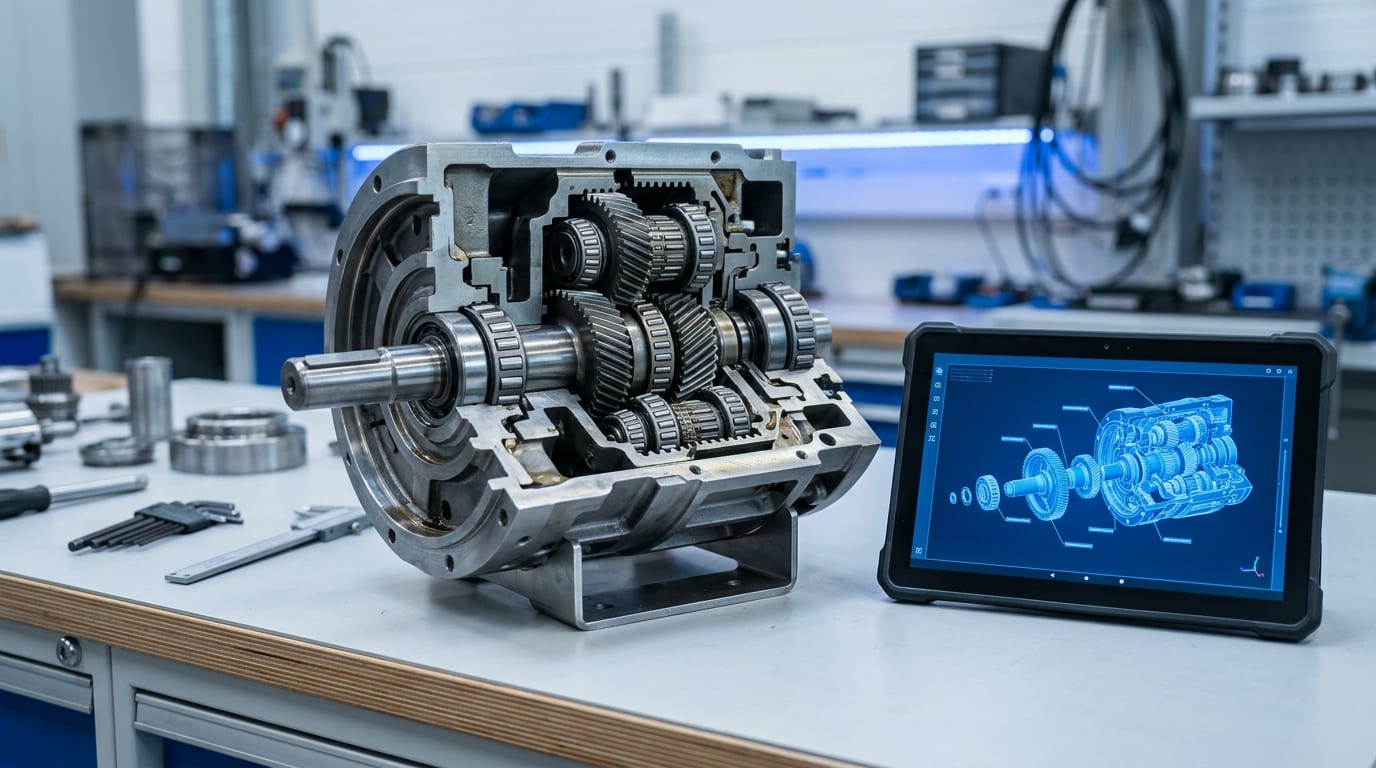
PTC’s software holds the engineering intent behind a product: how it is designed, configured and built.
Figure 1
The combined lifecycle stack
- DesignWho brings it: PTC (CAD)What it gives the combined group: The system of design for products and machines
- Product dataWho brings it: PTC (PLM, ALM, SLM)What it gives the combined group: Engineering data managed across the full product lifecycle
- OperationsWho brings it: Schneider Electric (AVEVA)What it gives the combined group: Software to run and maintain plants and processes
- EnergyWho brings it: Schneider ElectricWhat it gives the combined group: Energy management and electrification expertise
- AI data foundationWho brings it: Cognite (proposed acquisition)What it gives the combined group: Contextualised industrial data for AI agents
Show method and sourcesHide method
Capabilities as described in the 5 October 2026 joint announcement. Effects are Acquiry analysis.
Part II
The logic
Why PTC fits the platform, and what the deal does to the numbers.
Why Schneider Electric wants it
An end-to-end industrial software platform from design to maintenance, a unified digital thread for industrial AI and a threefold larger addressable market.
Schneider frames the deal around what it calls Energy and Industrial Intelligence: as industrial AI moves from digital applications into physical products, machines and energy systems, the companies that hold trusted, contextualised data across the whole lifecycle are best placed to turn it into outcomes. PTC adds "the critical product and engineering data fabric" to Schneider’s existing foundation of process and energy data.
The result, on a pro-forma basis, is one of the largest industrial software portfolios in the market. Software & Services rise to an estimated 24% of group revenue, with more than 15,000 software employees addressing more than 50,000 software customers. Schneider says the deal "closes a portfolio gap in product lifecycle and industrial software while preserving an open-by-design approach across vendors and hardware".
AVEVA knows how a plant runs. PTC knows how a product was designed. Joining the two gives AI agents both halves of the story.
The digital thread
The central idea is a single digital thread running from design and build to operate and maintain. PTC brings the system of design through CAD and enriches the data with PLM, ALM and SLM. Schneider adds operational and energy intelligence through AVEVA, and plans to add Cognite’s AI data capabilities through its proposed acquisition of that company. Connecting engineering intent with real-world operating context is what lets customers "design faster, build right the first time, operate more efficiently and continuously improve the next generation of products and systems".
Schneider Electric already runs operations software through AVEVA. PTC extends that platform upstream into product design.
Market reach and cross-selling
The combination expands Schneider’s total addressable market in industrial software by about 3x, notably in discrete and hybrid manufacturing, without meaningful concentration in any single vertical. In the other direction, Schneider’s scale, global footprint, channel relationships and energy expertise give PTC broader access to end markets. The companies describe "significant bi-directional cross-selling opportunities".
What it does to the numbers
21x 2027 Adj. EBITA before synergies, 13x with them, immediate EPS accretion and returns above the cost of capital by Year 5.
The headline multiple is 21x PTC’s expected 2027 adjusted EBITA. Schneider expects "€250 million of highly executable cost synergies by Year 3 and approximately €800 million of revenue synergies", driven by cross-selling, extended channels, broader geographic reach and AI-enabled joint development of digital thread solutions. Including full run-rate synergies, the multiple falls to 13x.
Figure 2
Equity value against PTC’s earnings and revenue bases
US$23.7bn ÷ 21x, the company-stated EV/Adj. EBITA multiple.
- Implied disclosed equity value / PTC Adj. EBITA 2027E (implied)
- 20.0×
Show method and sourcesHide method
US$22.6bn disclosed equity value divided by each basis. Implied 2027 Adj. EBITA is US$23.7bn enterprise value ÷ the disclosed 21x. CY25 revenue is €2.4bn converted at the US$/€ rate implied by the announcement’s own $22.6bn/€20.1bn figures (about 1.12). The company-stated multiple is 21x on enterprise value; bases are not interchangeable.
Schneider estimates the deal will be accretive across revenue growth, recurring revenue mix, gross margin, adjusted EBITA margin and free cash flow conversion. It expects the deal to be "immediately low single-digit accretive to Adj. EPS (before PPA) in the first year of full consolidation and mid- to high-single-digit accretive to Adj. EPS (before PPA) including full run-rate synergies", with return on capital employed exceeding its cost of capital by Year 5.

Schneider Electric expects the deal to lift its recurring revenue mix, gross margin and free cash flow conversion.
Financing and capital allocation
The total cash consideration of about €22 billion is secured through a fully committed bridge facility from Morgan Stanley and Société Générale. Schneider plans to refinance it with an equity issuance of about €5-6 billion, expected to take the form of an accelerated bookbuild under existing shareholder authorisation, and new debt of about €16-17 billion across several currencies.
Schneider expects to retain Category A credit ratings, subject to agency confirmation, and to continue its progressive dividend, now 16 years running. It will complete €600 million of buybacks in 2026, pause in 2027 and 2028, then accelerate to finish its €2.5-3.5 billion programme by the end of 2030. Its €1.0-1.5 billion revenue disposal programme also continues.

Schneider Electric is headquartered in Rueil-Malmaison, west of Paris. It expects to retain Category A credit ratings after the deal.
Part III
What comes next
Closing, integration and the signals worth tracking.
Closing and what to watch
Closing is anticipated by Q3 2027, after a PTC shareholder vote and regulatory approvals. The equity and debt refinancing come first.
The path to closing has three strands: PTC’s shareholder vote, regulatory approvals and Schneider’s refinancing of the bridge through equity and debt markets. Schneider has already brought forward its third-quarter revenue release to 16 October 2026, giving investors an early update ahead of the equity issuance.
Figure 3
From announcement to closing
5 Oct 2026Schneider Electric and PTC
Agreement announced
$205 per share in cash; $22.6bn equity value, $23.7bn enterprise value.
5 Oct 2026Schneider Electric
Bridge committed
c.€22bn facility from Morgan Stanley and Société Générale.
16 Oct 2026Schneider ElectricExpected
Q3 revenues released
Brought forward as a result of the transaction.
Before closingPTCExpected
PTC special meeting
Approval by holders of a majority of outstanding PTC shares.
By Q3 2027Schneider Electric and PTCExpected
Expected closing
Subject to shareholder and regulatory approvals.
Show method and sourcesHide method
Dates from the 5 October 2026 joint announcement. Expected events reflect company guidance.
What to watch
- Refinancing. The size and timing of the €5-6 billion equity raise and the multi-currency debt set out in the financing section.
- PTC shareholder vote. The special meeting date and the board’s recommendation from the terms.
- Regulatory clearance. Timing against the guided Q3 2027 closing.
- Cognite. Progress on Schneider’s proposed acquisition, which completes the digital thread.
- Synergies. Early cross-selling between PTC’s discrete manufacturing base and Schneider’s process and energy customers, as outlined in market reach.
Frequently asked questions
How much is Schneider Electric paying for PTC?
Schneider Electric agreed to pay $205 per PTC share in cash, valuing PTC’s equity at about $22.6 billion (€20.1 billion) and implying an enterprise value of $23.7 billion (€21.1 billion).
What premium is Schneider Electric paying?
The $205 price is a 42.3% premium to PTC’s last closing price before the announcement and a 46.1% premium to its 30-trading-day volume-weighted average price.
What multiple is Schneider Electric paying for PTC?
21x PTC’s expected 2027 adjusted EBITA, or 13x including full run-rate synergies.
How is Schneider Electric funding the PTC deal?
Through a fully committed bridge facility of about €22 billion from Morgan Stanley and Société Générale, to be refinanced with about €5-6 billion of new equity and €16-17 billion of new debt.
When will the Schneider Electric PTC deal close?
Closing is anticipated by Q3 2027, subject to approval by a majority of PTC’s outstanding shares and the required regulatory approvals.
What synergies does Schneider Electric expect?
€250 million of annual run-rate cost synergies by Year 3 and about €800 million of revenue synergies, driven largely by cross-selling.
What does PTC do?
PTC makes CAD, PLM, ALM and SLM software that helps manufacturers design complex products and manage engineering data across the product lifecycle. It serves more than 30,000 customers.
How does PTC fit with AVEVA?
AVEVA, part of Schneider Electric, focuses on operating and maintaining industrial assets. PTC adds product design and engineering, extending the platform upstream from design and build to operate and maintain.
Methodology and limitations
This report draws on the joint Schneider Electric and PTC announcement of 5 October 2026, "Schneider Electric to Acquire PTC, Creating the Next Level of Energy and Industrial Intelligence", and the companies’ websites, retrieved on 7 October 2026.
Figures are labelled by provenance. Disclosed figures come directly from the announcement. Implied EBITA, the revenue multiple and the equity share of funding are calculated from disclosed figures, with the method shown.
Growth, margin, synergy, accretion and capital allocation guidance are company forward-looking statements and have not been independently verified.
Independence. Acquiry was not engaged by any party. This is independent research from public sources and is not a solicitation, investment advice, or an offer to buy or sell any security. Acquiry holds no disclosed position in Schneider Electric or PTC.
Sources
Numbered to match the superscript citations. Sources marked “not independently retrieved” are cited as reported and were not verified against the original.
- 1Schneider Electric to Acquire PTC, Creating the Next Level of Energy and Industrial Intelligence
PTC and Schneider Electric · · Press release
- 2PTC
PTC · · Company website
- 3Schneider Electric
Schneider Electric · · Company website
Cite this report
Boyton, J. (2026, October 7). Schneider Electric to Acquire PTC for $22.6 Billion: Product Design Meets Energy and Industrial Intelligence. Acquiry Deal Intelligence. https://www.acquiry.com/deal-intelligence/schneider-electric-to-acquire-ptc-for-22-6-billion/
@online{boyton2026schneiderelectricptc, author = {Boyton, Joash}, title = {Schneider Electric to Acquire PTC for $22.6 Billion: Product Design Meets Energy and Industrial Intelligence}, organization = {Acquiry Deal Intelligence}, date = {2026-10-07}, url = {https://www.acquiry.com/deal-intelligence/schneider-electric-to-acquire-ptc-for-22-6-billion/} }
Joash Boyton is a technology sector analyst, publisher, and the founder of Acquiry, where he executes buy-side and sell-side M&A mandates across digital assets, software, and gaming technologies. He is the author of peer-reviewed corporate finance literature indexed across institutional repositories including Google Scholar and the ORCID Registry. Joash publishes Acquiry Deal Intelligence to deliver independent, forensic strategic reviews and valuation benchmarks of global technology acquisitions, compiling primary data directly from corporate disclosures, SEC filings, and regulatory ledgers.
Research support: Acquiry Deal Intelligence.