In this report
OpenAI adds program coordination to its life sciences models
SAN FRANCISCO, California — OpenAI has acquired Orchestra Bio, a four-year-old software company whose platform helps biotech and pharmaceutical teams coordinate the long, many-sided work of developing a new medicine. OpenAI announced the deal on 20 October 2026 and said it is bringing Orchestra’s team and technology together with Rosalind, its family of AI models and tools for life sciences research. The stated goal is direct and ambitious: help scientists make discoveries, then help them manage the work needed to turn those discoveries into treatments that reach patients sooner.
The acquisition gives Rosalind a new layer. GPT-Rosalind already helps scientists reason through questions in biology and chemistry, and Rosalind Workbench connects that reasoning to scientific tools and data so researchers can analyse results and plan experiments. Orchestra adds the operating layer that surrounds those experiments: a platform where people and AI agents work together to run drug programs, track studies and campaigns, and keep internal departments and external partners moving toward the same milestones.
Financial terms of the deal were not disclosed. TechCrunch, which covered the announcement the same day, noted that Orchestra had raised around $20 million as of 2025 from backers including Andreessen Horowitz, Atria and 8VC. For founders and investors in vertical AI software, the transaction is a clear signal that the largest model developers see specialised workflow platforms as valuable building blocks, and that they are choosing to bring proven teams in-house to move faster in the industries they care about most.
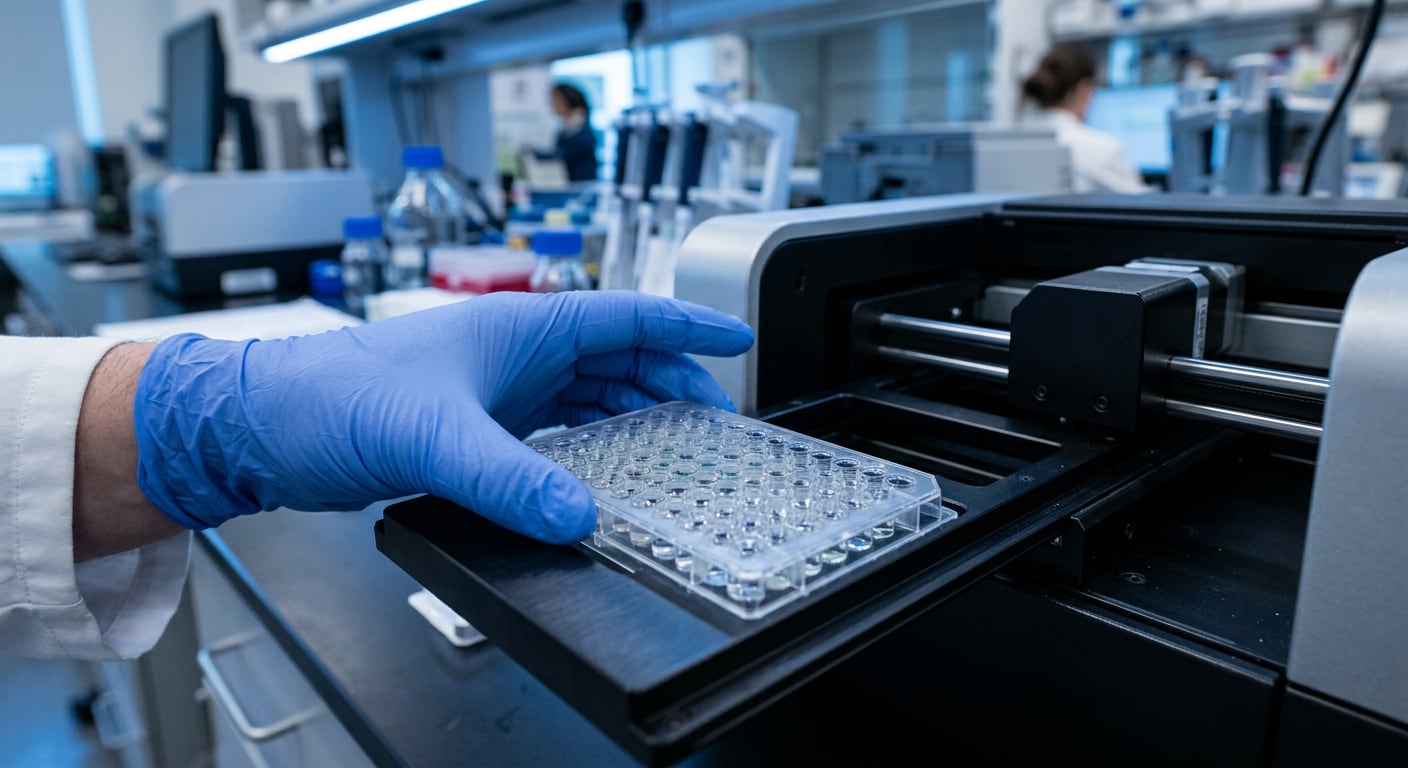
Drug programs run on thousands of experiments like this one. Orchestra’s agents track the studies and campaigns around them so scientists can focus on the decisions.
Orchestra’s team and agents join Rosalind
Key facts
- Deal status Disclosed
- CompletedOpenAI states it has acquired Orchestra Bio, announced 20 October 2026
- Where the team goes Disclosed
- RosalindCombined with GPT-Rosalind and Rosalind Workbench
- Funding raised by Orchestra Reported
- ~$20mAs of 2025, from Andreessen Horowitz, Atria and 8VC, per TechCrunch
- Orchestra founded Disclosed
- Four years agoPer Orchestra Bio’s own announcement
- Average drug development time Disclosed
- 10 to 15 yearsTarget discovery to US regulatory approval, per OpenAI
- Disclosed
- Stated by a party to the transaction
- Reported
- Press or data-provider figure, not company-confirmed
Part I of III
OpenAI brings a drug-program platform into Rosalind
The completed transaction, the team that joins and the product OpenAI has bought.
OpenAI completes its purchase of Orchestra Bio on 20 October 2026
A completed acquisition, announced by both companies on the same day, that moves Orchestra’s team and platform into OpenAI’s Rosalind program.
Orchestra’s team and platform join the Rosalind program
OpenAI described the transaction as finished in its announcement, stating that it has acquired Orchestra Bio. Orchestra confirmed the news on its own website the same day, telling customers, investors and supporters that it is joining OpenAI to continue its mission at an even greater scale. Both announcements describe a completed deal, so attention now turns to integration and to the products the combined team will build for biopharma customers.
Where Orchestra’s people land is spelled out plainly. OpenAI said it is bringing Orchestra’s team and technology together with Rosalind. TechCrunch described the team as joining work on Rosalind, OpenAI’s AI model for life sciences research, and on the related Rosalind Workbench tool, which it characterised as a harness that aims to help researchers plan experiments and analyse results. In practical terms, Orchestra’s program-coordination software becomes part of the same product family as OpenAI’s life sciences model.

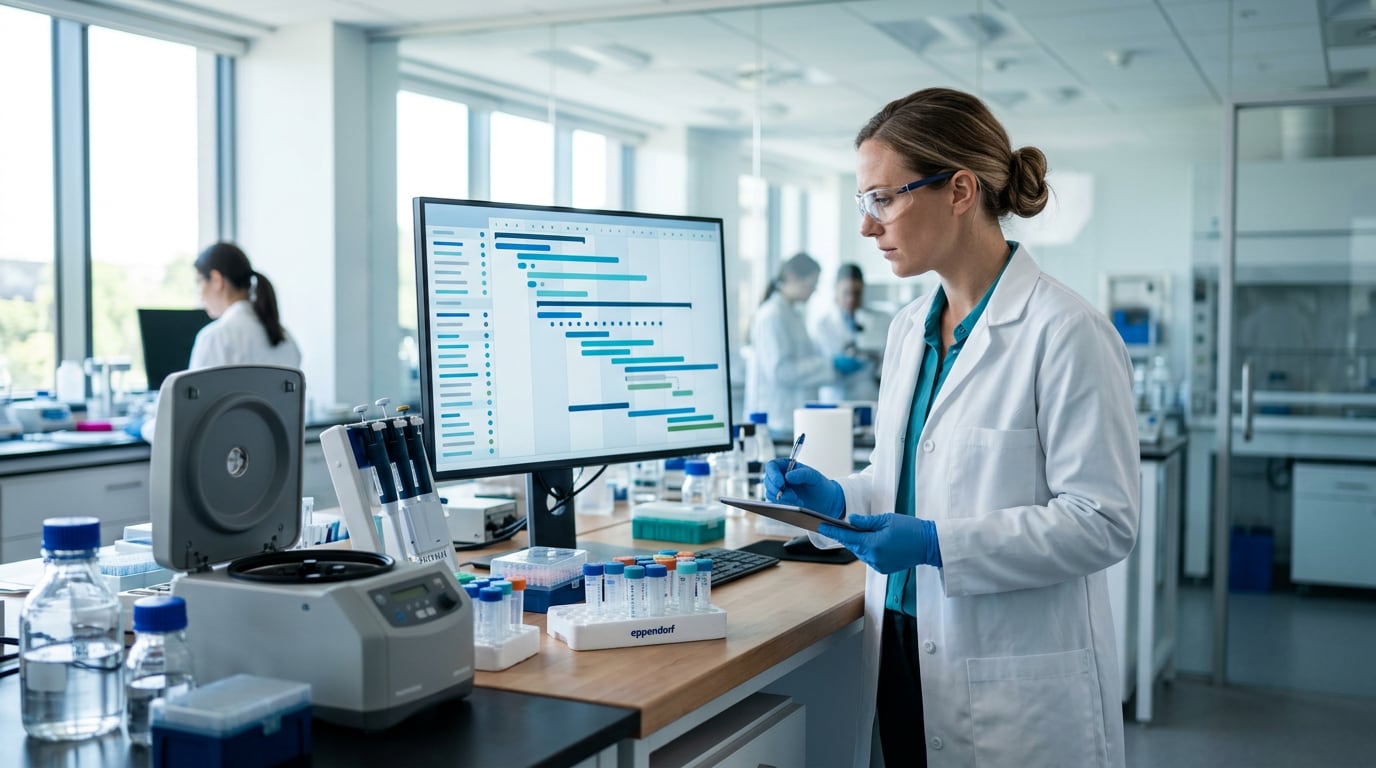
Program teams plan around linked timelines. Orchestra gives them agents that watch those timelines and surface the options when something shifts.
Today, we’re thrilled to share that Orchestra Bio is joining OpenAI to continue our mission at an even greater scale.
Andreessen Horowitz, Atria and 8VC backed Orchestra’s first four years
Orchestra started four years ago, according to the company’s own announcement, with a mission to help biotech and pharma teams advance their drug development programs. The note frames drug development as work that spans thousands of decisions and dependencies across discovery, preclinical, manufacturing and clinical stages. That framing explains the product. Rather than building another discovery model, Orchestra built software to manage the connective work between stages, where one program team hands results and responsibilities to the next.
The company’s backers included Andreessen Horowitz, Atria and 8VC, and it had raised around $20 million as of 2025, according to TechCrunch. Neither OpenAI nor Orchestra published a purchase price, so the funding total is the clearest public marker of the capital behind the business. For Orchestra’s investors, the outcome is a strategic exit to a buyer that is building a full life sciences business on top of its own models, with named pharmaceutical partners already in place.
TechCrunch frames the deal as AI labs building software for pharma
TechCrunch called the acquisition a classic example of how the biggest AI labs are building ever more software for the biggest industries, like pharma. Its reading of the outcome for the startup community was constructive: Orchestra is being absorbed into the platform rather than competing against it. For specialised software founders, that is a useful precedent. A focused team that solves a hard workflow problem in a large, regulated industry has a clear route to a strategic home with a model developer that wants that expertise.
Orchestra’s agents track studies and campaigns so program leaders decide faster
Orchestra hands monitoring, tracking and impact analysis to AI agents, and keeps scientists and program leaders in charge of every decision.
People and AI agents work side by side to advance drug programs
Orchestra Bio describes its product as an intelligent management platform for research and development. OpenAI’s summary is more specific: it is a platform where people and AI agents work together to advance drug programs. Scientists and program leaders delegate the monitoring and tracking of studies and campaigns to agents, which frees their time to guide the work, make decisions and address issues before those issues cause delays.
TechCrunch described the same software in operational terms, saying Orchestra creates AI agents that help biotech companies manage the minutiae of drug-discovery operations, from tracking finances to resolving scheduling issues with clinical trials. That breadth matters. A drug program touches research scientists, manufacturing specialists, clinical operations, finance and external partners, and OpenAI notes that teams often rely on disconnected systems to keep all of that work aligned.
One manufacturing batch can move a clinical trial start date
A problem in one part of a drug program can affect many others. A failed manufacturing batch, for example, can delay the start of a clinical trial.
OpenAI used that example to show how Orchestra’s agents work in practice. When something changes in one part of a program, the agents help teams identify which activities and timelines are affected, gather the relevant information and compare ways to respond. Scientists and program leaders then use that analysis to decide what to do next. The design keeps people in charge of the decision while handing the investigation and the cross-checking to software.
That division of labour mirrors Orchestra’s own description of where AI has arrived. In its announcement the company said agents can now handle planning, orchestration and analysis, while scientists and program leaders focus on the decisions that require their expertise. It is a practical, human-in-the-loop model, and it fits the governance expectations of a regulated industry in which every program decision needs a clear and accountable owner.
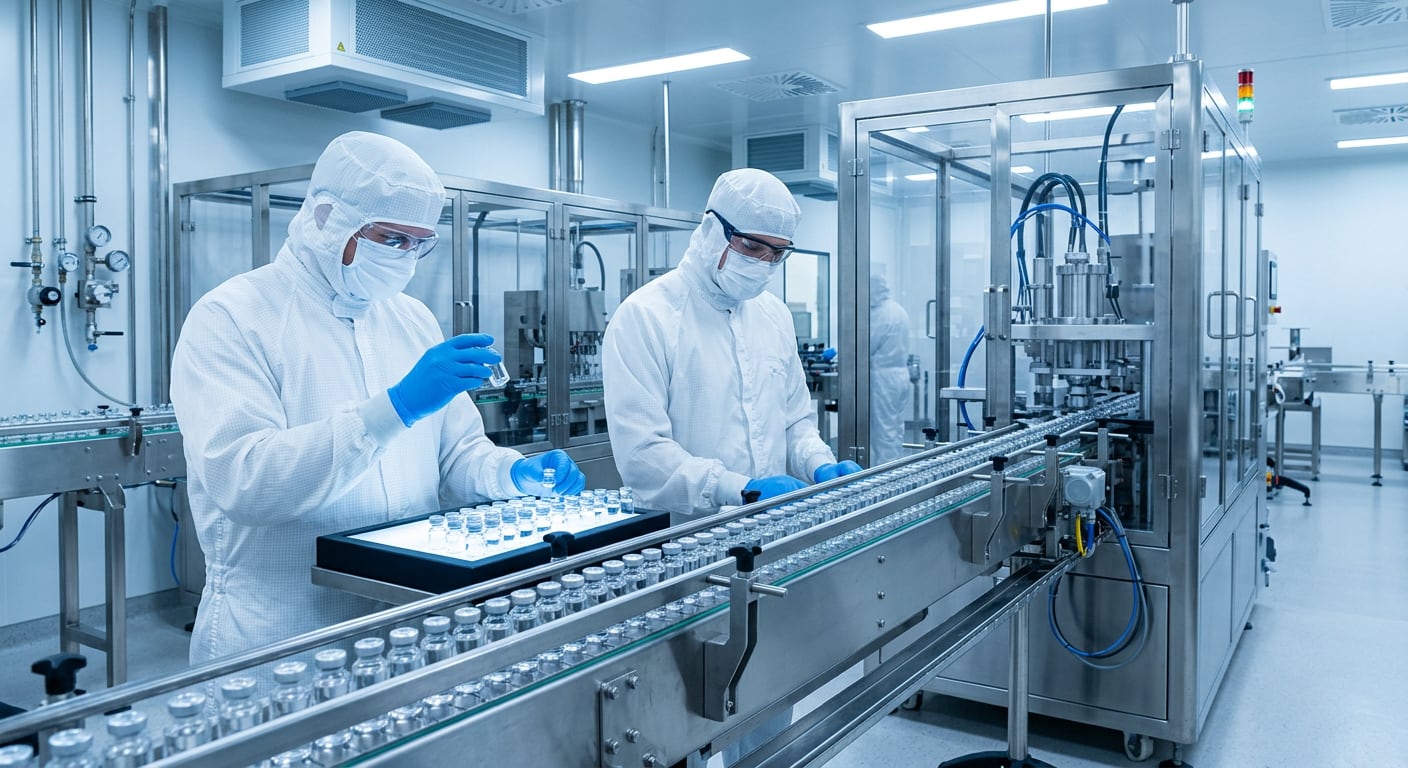
Manufacturing is one of the stages Orchestra coordinates. A change on the line flows through to clinical timelines, which is exactly the dependency its agents are built to map.
A team built across biotech, software and AI
OpenAI highlighted the people as much as the product. It said Orchestra brings a team with experience across biotech, software and AI, along with a platform built to coordinate drug development. Together, the combined group aims to build agents that help teams connect scientific findings with the studies, decisions and next steps needed to advance a potential medicine. That is the bridge between a promising result in the lab and a program that moves through preclinical work, manufacturing and the clinic.
Part II of III
Rosalind grows from a research model into a development stack
How the deal extends the life sciences business OpenAI launched in April 2026.
GPT-Rosalind ranked above the 95th percentile of human experts on RNA prediction
OpenAI launched GPT-Rosalind in April 2026, opened it globally in September and turned on published pricing in October, a few weeks before buying Orchestra.
GPT-Rosalind launched on 16 April 2026 for biology and drug discovery
OpenAI introduced GPT-Rosalind on 16 April 2026 as a frontier reasoning model built to support research across biology, drug discovery and translational medicine. The model is named after Rosalind Franklin, whose research helped reveal the structure of DNA. OpenAI positioned it for scientific workflows, combining improved tool use with deeper understanding across chemistry, protein engineering and genomics, and made it available in ChatGPT, Codex and the API for qualified customers through a trusted-access program.
The launch came with evidence. On LABBench2, a benchmark covering research tasks such as literature retrieval, database access, sequence manipulation and protocol design, OpenAI said GPT-Rosalind outperformed GPT-5.4 on 6 out of 11 tasks. In an evaluation run with Dyno Therapeutics on unpublished RNA sequences, OpenAI compared the model against 57 historical scores from human experts. Best-of-ten submissions ranked above the 95th percentile of those experts on the prediction task and around the 84th percentile on sequence generation.
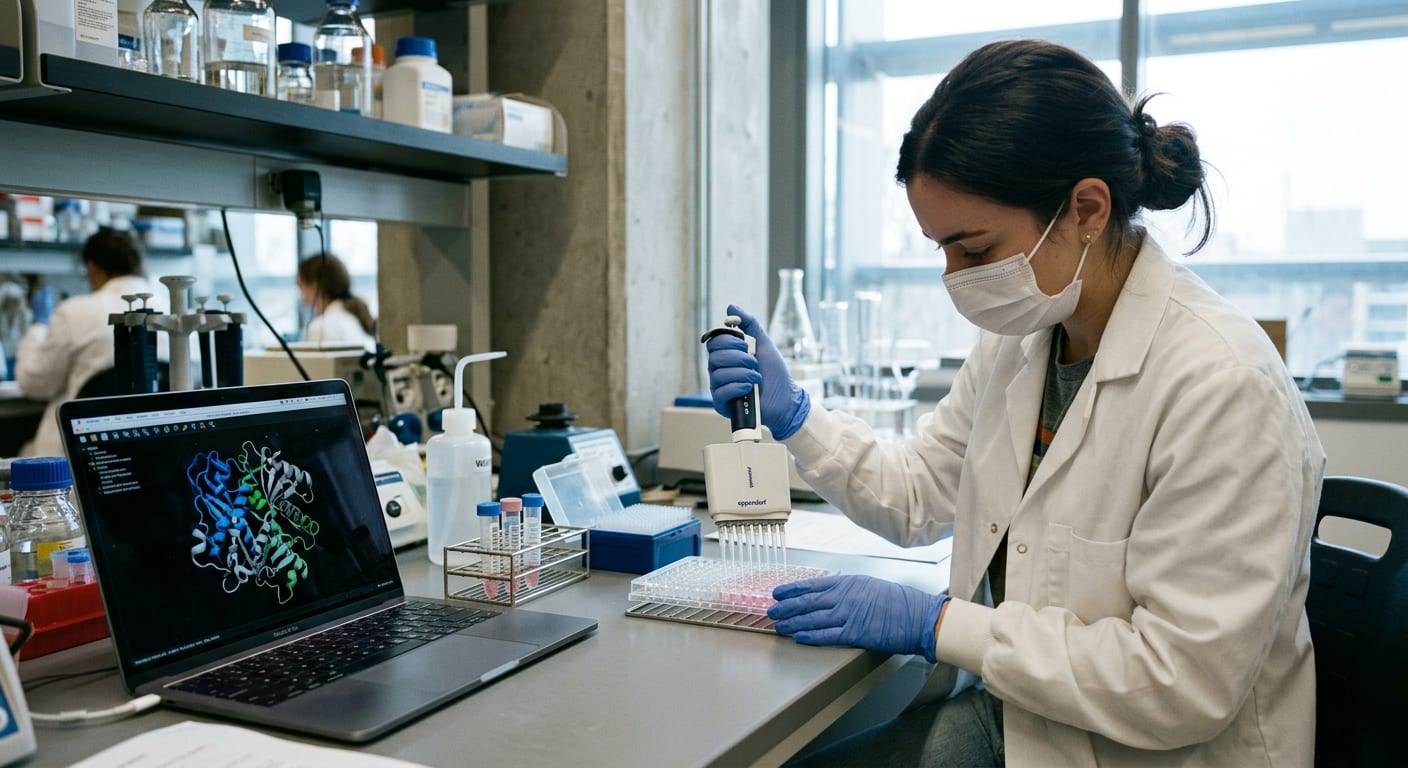
Rosalind was built for bench science such as protein engineering and genomics. Orchestra carries that support into the wider drug program.
A Life Sciences plugin connects Codex to more than 50 scientific tools
Alongside the model, OpenAI released a freely accessible Life Sciences research plugin for Codex that connects models to more than 50 public multi-omics databases, literature sources and biology tools. OpenAI described those skills as an orchestration layer for broad, multi-step research questions, covering repeatable workflows such as protein structure lookup, sequence search, literature review and public dataset discovery. Orchestra extends the same orchestration idea beyond the research bench and into the drug program itself.
On 11 September 2026, OpenAI moved GPT-Rosalind out of research preview and made it available globally to eligible organisations through its trusted-access program, with published pricing taking effect on 5 October 2026. The Orchestra acquisition arrived about two weeks after that pricing date, which places the deal firmly in the commercial phase of OpenAI’s life sciences business, with paying enterprise customers and a product line ready to absorb a new capability.
Figure 1
How Orchestra completes the Rosalind stack
- GPT-RosalindWhat it contributes: Reasoning across biology, chemistry, protein engineering and genomicsEffect for drug programs: Stronger hypotheses and experimental plans
- Rosalind WorkbenchWhat it contributes: Connects the model to scientific tools and dataEffect for drug programs: Researchers analyse results and plan experiments
- Life Sciences research pluginWhat it contributes: Access to more than 50 databases, literature sources and biology toolsEffect for drug programs: Repeatable research workflows inside Codex
- Orchestra Bio platformWhat it contributes: Agents that monitor and track studies and campaignsEffect for drug programs: Program leaders see affected timelines and compare responses
Show method and sourcesHide method
Layer descriptions are taken from OpenAI’s GPT-Rosalind launch of 16 April 2026 and its Orchestra Bio announcement of 20 October 2026.
Trusted access keeps governance at the centre of Rosalind
OpenAI has been deliberate about who uses these capabilities. The life sciences model launched through a trusted-access structure for qualified enterprise customers in the United States to start, with controls around eligibility, access management and organisational governance. OpenAI evaluates access on three principles: beneficial use, strong governance and safety oversight, and controlled access with enterprise-grade security. A coordination platform that sits inside customer drug programs fits naturally into that enterprise, governance-first model.
The company has also built a delivery bench around the product. OpenAI said its dedicated Life Sciences team works with advisory partners including McKinsey & Company, Boston Consulting Group and Bain & Company to help organisations identify high-impact use cases, integrate the model into enterprise environments and drive measurable outcomes. Orchestra’s platform gives those teams a ready-made way to bring agents into day-to-day program management, and not only into research questions.
Novo Nordisk and Moderna already run OpenAI tools across their pipelines
The two partners OpenAI named in its announcement show how far large drugmakers have taken AI, from discovery through manufacturing and clinical work.
Novo Nordisk targets full AI integration by the end of 2026
OpenAI named two partners in its Orchestra announcement, and both show the demand the deal is built to serve. Novo Nordisk, the Danish healthcare company founded in 1923, announced a strategic partnership with OpenAI on 14 April 2026. The partnership applies advanced AI to analyse complex datasets, identify promising drug candidates and reduce the time required to move from research to patient, and it extends into manufacturing, supply chain, distribution and corporate operations.
Novo Nordisk said pilot programmes would launch across research and development, manufacturing and commercial operations, with full integration by the end of 2026. The company employs about 68,800 people in 80 countries and markets its products in around 170 countries, which shows the scale of coordination an AI program-management layer is asked to support. OpenAI said the partnership aims to translate Novo Nordisk’s scale and scientific expertise into faster R&D and commercial execution while maintaining strong governance.
Integrating AI in our everyday work gives us the ability to analyse datasets at a scale that was previously impossible, identify patterns we could not see, and test hypotheses faster than ever.
Moderna built 750 GPTs within two months of adopting ChatGPT Enterprise
Moderna has partnered with OpenAI since early 2023 and set out to reach 100% adoption and proficiency of generative AI among its people with access to digital solutions. OpenAI’s case study states that within two months of adopting ChatGPT Enterprise, Moderna had 750 GPTs across the company, 40% of weekly active users were creating GPTs, and each user averaged 120 conversations per week. An internal forum on AI grew to 2,000 active weekly participants.
The clinical side is where Moderna’s experience connects most closely to Orchestra. One of the tools Moderna built is a GPT pilot called Dose ID, intended as a data-analysis assistant to the clinical study team that helps augment the team’s clinical judgment and decision-making. Moderna is using its mRNA platform to bring up to 15 new products to market in the next 5 years, and its chief executive, Stéphane Bancel, has said the company believes it can maximise its impact on patients with a few thousand people by using technology and AI to scale.

Program leaders coordinate science, manufacturing and clinical work across many teams. Orchestra’s agents prepare the analysis; people make the call.
New medicines still take 10 to 15 years from target to approval
The market context behind all of this is the length of the journey. OpenAI noted that developing a new medicine takes roughly 10 to 15 years on average from target discovery to regulatory approval in the United States. Beyond the science, teams must orchestrate programs across internal departments and external partners, often relying on disconnected systems. OpenAI’s view is that the industry is now at an inflection point where AI can take on these specialised tasks and complex workflows.
OpenAI’s Rosalind launch made a related point: gains made at the earliest stages of discovery compound downstream in better target selection, stronger biological hypotheses and higher-quality experiments. Orchestra applies the same compounding logic to execution. When program teams spend less time chasing status updates and more time on decisions, every stage moves with more confidence. For pharmaceutical and biotech leaders, one supplier now offers agents for both the science and the management of a program.
Part III of III
Agents that carry findings from the lab to the clinic
What the combined team builds next and what it signals for buyers and founders.
OpenAI aims to build agents that carry findings from the lab to the clinic
The combined team will build agents that connect scientific findings with the studies and decisions needed to advance a medicine, as part of OpenAI’s plan to cover the full drug development process.
Agents will link scientific findings to the next study and decision
OpenAI set out the next step clearly. Together with Orchestra, it aims to build agents that help teams connect scientific findings with the studies, decisions and next steps needed to advance a potential medicine. Its broader vision is for AI to help scientists across the full process of discovering and developing new medicines: exploring ideas, designing experiments, interpreting results and coordinating the work needed to advance promising treatments. OpenAI called bringing Orchestra together with Rosalind a step toward that vision.
The Rosalind roadmap points the same way. When it launched the model, OpenAI said it would keep expanding support for tool-heavy and long-horizon research workflows and keep working with leading scientific institutions, including Los Alamos National Laboratory, to evaluate real-world impact. Orchestra’s experience with long-running, multi-stage programs is a natural fit for that long-horizon agenda, and it gives OpenAI a team that already understands how drug programs are planned, tracked and adjusted.
Figure 2
OpenAI’s life sciences build-out in 2026
14 Apr 2026Novo Nordisk
Novo Nordisk partnership
Strategic partnership spanning drug discovery to commercial operations, with full integration by the end of 2026.
16 Apr 2026OpenAI
GPT-Rosalind launched
Frontier reasoning model for biology, drug discovery and translational medicine, plus a Life Sciences plugin for Codex.
11 Sep 2026OpenAI
Out of research preview
GPT-Rosalind available globally to eligible organisations through trusted access.
5 Oct 2026OpenAI
Published pricing begins
GPT-Rosalind published pricing takes effect.
20 Oct 2026OpenAI and Orchestra Bio
Orchestra Bio acquired
Orchestra’s team and technology join Rosalind.
Show method and sourcesHide method
Dates are taken from OpenAI, Novo Nordisk and Orchestra Bio announcements. All events shown are completed.
Orchestra’s customers gain OpenAI’s scale and Rosalind’s tooling
Orchestra thanked its customers, investors and supporters in its announcement and described the move as a way to continue its mission at an even greater scale. For biopharma teams that already rely on Orchestra, the deal connects their program-management tool to the developer behind GPT-Rosalind, Rosalind Workbench and the Life Sciences research plugin. OpenAI also names Amgen, the Allen Institute and Thermo Fisher Scientific among the organisations it is working with to apply GPT-Rosalind across research workflows.
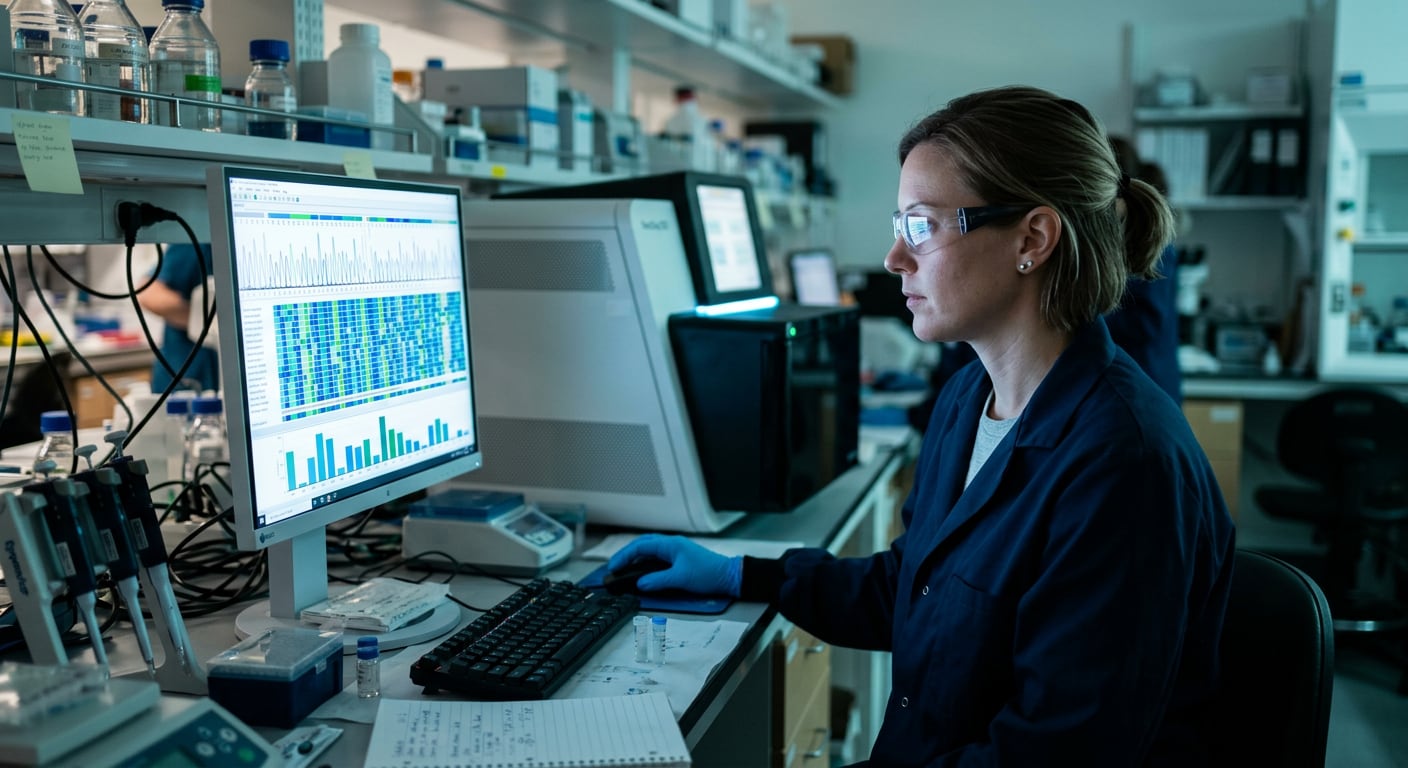
Rosalind already helps researchers interpret data like this. With Orchestra, OpenAI extends that help to the program decisions that follow.
Vertical AI founders gain a clear exit route to model developers
For dealmakers, the Orchestra transaction adds to a clear pattern. Model developers are building industry-specific products on top of their models, and they are acquiring focused teams that already understand an industry’s workflows. Orchestra had a defined niche, a platform with paying biopharma customers and a team spanning biotech, software and AI. Those attributes made it a strong fit for a buyer with a life sciences model, a growing customer list and a stated ambition to cover the full drug development process.
Sellers can take a practical lesson from this. A strategic buyer is most interested when a target fills a specific, well-defined layer in its product stack and brings people who know the customer. Orchestra did not compete with GPT-Rosalind; it completed it. Founders building vertical software for regulated industries can position their companies the same way, by showing exactly which workflow they own and how that workflow connects to the platforms the largest AI developers are building.
Figure 3
What made Orchestra Bio a strong fit for OpenAI
| Factor | Disclosed | Acquiry view | Rating |
|---|---|---|---|
| Product fit | Platform built to coordinate drug development | Adds a program layer to Rosalind’s research tools | Strong |
| Team | Experience across biotech, software and AI | Brings domain knowledge OpenAI needs for agents | Strong |
| Customer pull | Novo Nordisk and Moderna named as partners | Large drugmakers already adopting OpenAI tools | Positive |
| Timing | Rosalind pricing live from 5 October 2026 | Lands in the commercial phase of the product | Positive |
Show method and sourcesHide method
Disclosed facts are from OpenAI and Orchestra Bio announcements and TechCrunch. Ratings are Acquiry’s assessment of strategic fit.
OpenAI ended its announcement with a forward-looking commitment: alongside researchers and its partners, it aims to make more discoveries possible and help new medicines reach patients sooner. With Orchestra’s team now inside the Rosalind program, the company has a research model, scientific tooling and a program-coordination platform under one roof. The next milestones to watch are the first combined products for biopharma teams and further customer announcements across the life sciences sector.
The numbers behind the deal
Each figure has its own permanent link and a ready-made citation. Journalists, analysts and researchers are welcome to quote them with credit and a link to Acquiry.
- Above 95th percentileDisclosed
GPT-Rosalind RNA prediction rank
Best-of-ten submissions vs 57 human expert scores, Dyno Therapeutics evaluation
- 6 of 11Disclosed
LABBench2 tasks ahead of GPT-5.4
OpenAI GPT-Rosalind launch, 16 April 2026
- 50+ tools and data sourcesDisclosed
Life Sciences research plugin coverage
Freely accessible plugin for Codex
- 750Disclosed
Moderna GPTs after two months
OpenAI customer case study
Frequently asked questions
What did OpenAI acquire?
OpenAI acquired Orchestra Bio, a platform where scientists, program leaders and AI agents work together to coordinate drug development programs. The deal was announced on 20 October 2026.
How much did OpenAI pay for Orchestra Bio?
Financial terms of the deal were not disclosed. TechCrunch noted that Orchestra had raised around $20 million as of 2025 from backers including Andreessen Horowitz, Atria and 8VC.
What happens to Orchestra’s team and technology?
OpenAI is bringing Orchestra’s team and technology together with Rosalind, its AI models and tools for life sciences research, including GPT-Rosalind and Rosalind Workbench.
What does Orchestra’s platform do?
Scientists and program leaders delegate the monitoring and tracking of studies and campaigns to agents. When something changes, the agents identify affected activities and timelines, gather information and compare ways to respond, and people decide what to do next.
Which drugmakers already work with OpenAI on life sciences?
OpenAI named Novo Nordisk and Moderna in its announcement, and has also named Amgen, the Allen Institute and Thermo Fisher Scientific among GPT-Rosalind customers and collaborators.
What is GPT-Rosalind?
GPT-Rosalind is a frontier reasoning model OpenAI introduced on 16 April 2026 for biology, drug discovery and translational medicine. It moved out of research preview on 11 September 2026 and is available to eligible organisations through OpenAI’s trusted-access program.
Methodology and limitations
This analysis is built from OpenAI’s announcement of 20 October 2026, Orchestra Bio’s announcement on orchestra.bio, TechCrunch’s same-day coverage, OpenAI’s GPT-Rosalind launch page, the Novo Nordisk partnership release of 14 April 2026 and OpenAI’s Moderna case study, each retrieved at research cutoff.
Every figure is tagged with its provenance. Most are disclosed, meaning stated directly by a company in its own announcement; Orchestra’s prior funding total is attributed to TechCrunch, a named publication.
Ratings in the scorecard are Acquiry’s assessment of strategic fit, based only on the disclosed facts shown alongside each rating.
Independence. Acquiry was not engaged by any party. This is independent research from public sources and is not a solicitation, investment advice, or an offer to buy or sell any security. Acquiry holds no disclosed position in OpenAI or Orchestra Bio.
Sources
Numbered to match the superscript citations. Every source is a primary company announcement, filing or named publication.
- 1OpenAI acquires Orchestra Bio
OpenAI · · Company announcement
- 2Orchestra Bio is joining OpenAI
Orchestra Bio · · Company announcement
- 3OpenAI acquires startup Orchestra Bio to beef up its biotech business
TechCrunch · · News report
- 4Introducing GPT-Rosalind for life sciences research
OpenAI · · Product announcement
- 5Novo Nordisk and OpenAI partner to transform how medicines are discovered and delivered
Novo Nordisk · · Press release
- 6Moderna: Accelerating the development of life-saving treatments
OpenAI · · Case study
Cite this report
Boyton, J. (2026, October 22). OpenAI Acquires Orchestra Bio to Bring AI Agents into Drug Development. Acquiry Deal Intelligence. https://www.acquiry.com/deal-intelligence/openai-acquires-orchestra-bio/
@online{boyton2026openaiorchestrabio, author = {Boyton, Joash}, title = {OpenAI Acquires Orchestra Bio to Bring AI Agents into Drug Development}, organization = {Acquiry Deal Intelligence}, date = {2026-10-22}, url = {https://www.acquiry.com/deal-intelligence/openai-acquires-orchestra-bio/} }
Joash Boyton is a technology sector analyst, publisher, and the founder of Acquiry, where he executes buy-side and sell-side M&A mandates across digital assets, software, and gaming technologies. He is the author of peer-reviewed corporate finance literature indexed across institutional repositories including Google Scholar and the ORCID Registry. Joash publishes Acquiry Deal Intelligence to deliver independent, forensic strategic reviews and valuation benchmarks of global technology acquisitions, compiling primary data directly from corporate disclosures, SEC filings, and regulatory ledgers.
Research support: Acquiry Deal Intelligence.