
Home services M&A guide · Updated October 2026
Selling a home services business to private equity. What buyers pay for, and how to choose the right one.
A practical guide for owners of HVAC, plumbing, electrical, pest control, roofing and other residential service companies: why investors keep buying, what moves your value, who the buyers are, how the money is structured and how the process runs.
The market
Why private equity keeps buying home services.
Homes keep breaking. Furnaces fail in January, water heaters leak and panels need upgrading whatever the economy is doing. That makes residential repair and replacement one of the steadiest cash flows investors can buy.
Essential, non-discretionary demand
Repair and replacement work happens when something fails, so demand holds up through slower economic periods better than most consumer spending.
Fragmented local markets
Most trades are still owned by thousands of independent local operators, which gives a platform room to grow by buying good companies market by market.
Recurring membership revenue
Maintenance plans turn one-off customers into members who book every season and call you first when something breaks, which buyers value highly.
Room to professionalise
Shared dispatch, pricing, purchasing, training and marketing let a larger group lift margins across every business it brings together.
Recent platform deals
- February 2026Blackstone (BXPE)
Champions Group
Agreed acquisition from Odyssey Investment Partners. Champions runs over 1,800 field technicians and 150,000 active members, and Odyssey and management kept a significant minority stake.
Source - November 2024Goldman Sachs Alternatives
Sila Services
Morgan Stanley Capital Partners agreed to sell its majority stake in the HVAC, plumbing and electrical platform, with management continuing to lead and retaining a significant minority stake.
Source - October 2022Rentokil Initial
Terminix
Rentokil completed its acquisition of Terminix, combining two of the largest pest control brands and showing how far strategic buyers will go for route density in recurring services.
Source
In each case the founders or management kept a meaningful stake. Rolling equity into the next owner is the norm, not the exception, at platform scale.
What drives value
What buyers pay for, trade by trade.
Every buyer starts with adjusted EBITDA. What moves the multiple on top of it is how predictable, transferable and scalable those earnings look.
Lifts value
- Large maintenance membership base
- Replacement-led residential mix
- Trained comfort advisors and installers
Holds value back
- Heavy new-construction exposure
- Owner still selling every replacement
- Seasonal cash swings left unmanaged
How buyers see HVAC
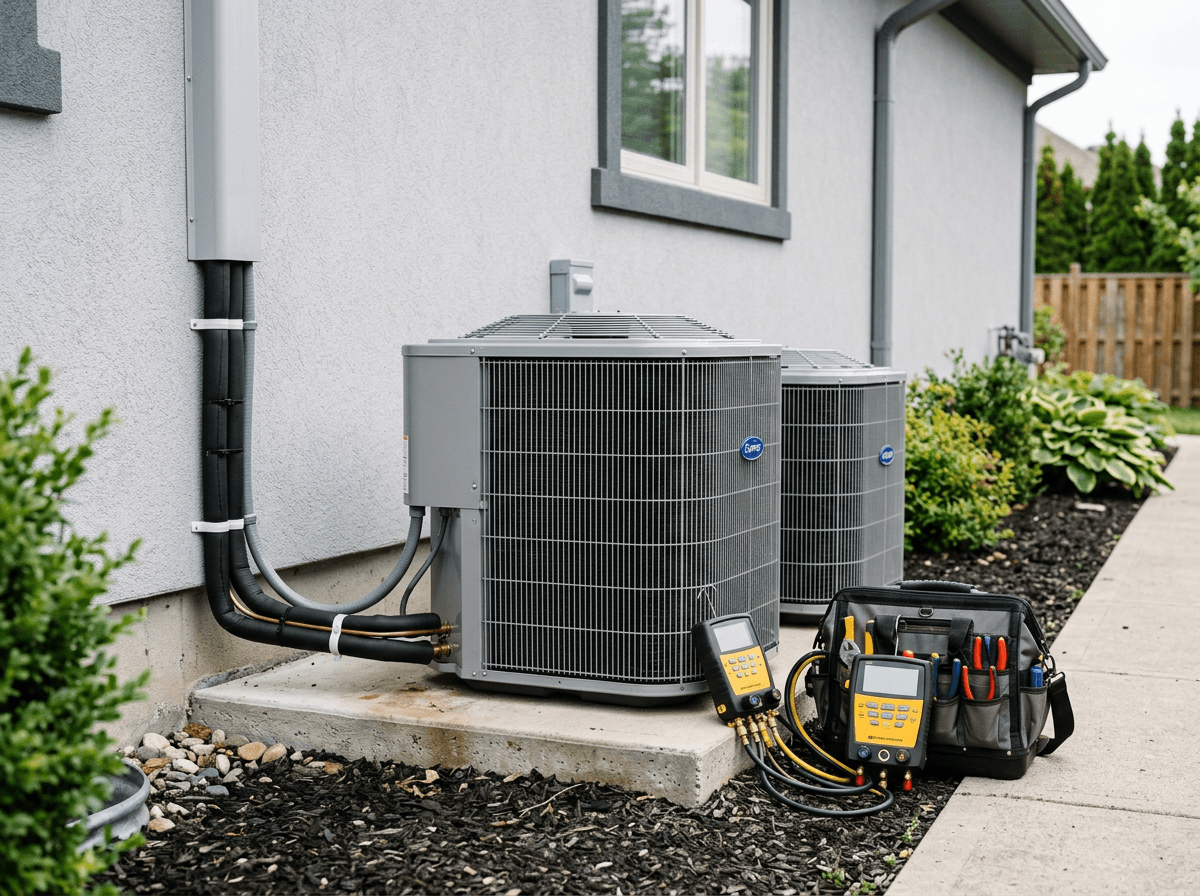
The most active trade for platforms, which usually treat HVAC as the anchor and add plumbing and electrical alongside.
Earnings quality
Clean, monthly accrual books with personal costs separated. Buyers price adjusted EBITDA, so every add-back you claim has to be evidenced.
Recurring revenue
Membership and maintenance plans, renewal rates and the share of revenue from repeat customers show that next year is already partly booked.
Technician bench
Licensed, trained technicians with low turnover, plus a hiring and training system, are often the scarcest asset in the deal.
Management depth
A general manager, service manager and office lead who run the day without you. Owner dependence is the most common reason values fall.
Revenue mix
Residential service and replacement work is valued above new construction and one-off projects, which are harder to predict.
Data and systems
A field service platform with call booking, close rates, average ticket and membership data lets a buyer verify the story quickly.
SDE or EBITDA?
Smaller owner-run companies are often priced on seller discretionary earnings, larger ones on adjusted EBITDA. Knowing which applies changes the number you compare offers against.
Who buys
Five kinds of buyer, five different deals.
The right buyer depends on what you want from the sale. Choose your priorities and see which buyer types usually fit them best.
What matters most to you?
Pick as many as you like. The buyer types re-rank by how well they usually fit.
- What they offer
- Capital, systems and acquisition firepower, usually with a majority recapitalisation and a large equity rollover.
- What they ask of you
- A strong team that can lead a bigger group, and a meaningful stake rolled into the new company.
- Best when
- Your business already has scale, management depth and a brand worth building a region around.
Deal structure
The headline price is not what you take home.
Two offers at the same value can leave you with very different cash on closing day. Move the sliders to see how each part of a typical structure changes what lands in your account.
Model an offer
Enter the headline value and the split from your letter of intent.
- Cash at close$12,000,000In your account on closing day
- Rollover equity$5,000,000Paid when the group is sold
- Earnout$2,000,000Paid only if targets are hit
- Escrow or holdback$1,000,000Released if no claims arise
A simple split of the numbers you enter. Real proceeds also depend on debt, taxes, transaction costs and the working capital adjustment.
Cash at close
Paid on the closing date after debt is repaid and the working capital adjustment is settled.
Rollover equity
Part of your value reinvested into the new company. It shares in future growth and pays out when the group is sold.
Earnout
Paid later only if agreed targets are hit, usually revenue or EBITDA over one to three years after closing.
Escrow or holdback
Held back for a set period to cover claims under the purchase agreement, then released if none arise.
Terms that change your number
- Working capital peg
- The level of working capital the buyer expects at closing. Delivering less reduces your cash, delivering more increases it.Go deeper
- Quality of earnings
- An accounting review that tests your adjusted EBITDA. It is the single most important document in a PE process.Go deeper
- Rollover terms
- Which entity you roll into, your share class and how you can exit decide what the rolled equity is worth.Go deeper
- Earnout definitions
- How targets are measured, who controls the levers and what happens if the business is merged all decide whether it pays.Go deeper
The process
Six stages from first thought to closing day.
Every sale moves through the same stages. What changes is how prepared you are when each one starts.
- 1Prepare
Get the business sale-ready
- You
- Clean up books, document add-backs, lock in key staff and decide what you want from a deal.
- The buyer
- Not involved yet. The work here shapes every conversation that follows.
- 2Position
Build the story and the buyer list
- You
- Agree the confidential profile of the business and which buyer types and named groups fit your goals.
- The buyer
- Platforms and strategics with a reason to want your trade, territory or team are identified.
- 3Approach
Confidential conversations
- You
- Meet interested buyers under NDA, share a teaser and then a fuller information pack.
- The buyer
- Reviews the business, meets management and decides whether to put forward an indication of interest.
- 4Offers
Indications and letter of intent
- You
- Compare offers on structure, not just headline value, and choose one buyer to move forward with.
- The buyer
- Submits a letter of intent setting out value, structure, rollover, exclusivity and key conditions.
- 5Diligence
Confirmatory diligence
- You
- Answer data requests, support the quality of earnings review and keep the business performing.
- The buyer
- Tests financials, legal, licences, insurance, fleet, HR and systems, then finalises financing.
- 6Close
Sign, close and transition
- You
- Agree the purchase agreement, employment and rollover documents, then support the handover.
- The buyer
- Funds the deal, integrates reporting and begins the plan for the next phase of growth.
Readiness check
How ready is your business for a buyer?
Tick what is already in place. Each item is something a private equity buyer will ask for during diligence.
Your readiness
0%
Early. Preparation now will pay for itself in value.
0 of 12 in place
Where Acquiry fits
We bring buyers who already want what you have built.
Acquiry runs proactive buy-side origination for private equity platforms and strategic acquirers building in home services. We turn their strategy into confidential conversations with owners whose business fits, including owners who were not planning to sell yet.
Own a home services business?
Tell us about it in confidence. We will be in touch to discuss it in detail.
Start a conversationBuilding a platform?
Share your criteria and we will start sourcing owners who match them.
Discuss a mandateQuestions owners ask
Frequently asked questions.
How do private equity firms value a home services business?
Most PE buyers value home services companies on a multiple of adjusted EBITDA. The multiple depends on scale, earnings quality, recurring membership revenue, technician depth, revenue mix and how well the business runs without its owner. Smaller owner-operated businesses are often priced on seller discretionary earnings instead.
What is the difference between a platform and an add-on?
A platform is the first company a private equity fund buys in a sector, which it then builds on. An add-on is a business acquired by that platform afterwards. Platforms usually need larger scale and a full management team, while add-ons can be smaller because the platform supplies systems and leadership.
Do I have to roll over equity when selling to private equity?
Not always, but it is common. Many PE buyers ask owners to reinvest part of their value into the new company so interests stay aligned. Rolled equity can be worth more than the cash it replaced if the group grows and is sold again, but it carries risk and is not liquid until that sale.
What is an earnout and should I accept one?
An earnout is part of the price paid later if agreed targets are met. It can bridge a gap between what you believe the business is worth and what a buyer will pay today. The details matter most: how targets are measured, who controls the decisions that affect them and what happens if the business is merged.
How long does it take to sell a home services company?
It depends on how prepared the business is, the size of the deal and how many buyers are involved. Preparation, buyer conversations, a letter of intent, diligence and closing all take time. Businesses with clean books and a strong management team move through the process noticeably faster.
Will my employees and brand be kept after the sale?
Most buyers in home services want to keep technicians and local brands, because customer trust and the technician bench are much of what they are paying for. Some strategics fold acquired companies into their own brand. Discussing this early with each buyer is the best way to protect what matters to you.
What is a quality of earnings report?
A quality of earnings report is an independent accounting review that tests your adjusted EBITDA, add-backs, revenue recognition and working capital. Buyers rely on it to confirm value. Some sellers commission one before going to market so there are no surprises later.
How does Acquiry fit into a home services sale?
Acquiry runs proactive buy-side origination. We work with private equity platforms and strategic acquirers building in home services and introduce them to owners whose businesses fit what they are looking for. For owners that means confidential conversations with buyers who have a specific reason to want the business.