
Summary
Summary
- Valsoft is a Montreal-based acquirer of vertical market software businesses, active since 2015, with more than 130 acquisitions to date and no predefined investment horizon.
- In October 2025 it organised the portfolio into seven operating groups (Aspire, Lighthouse, Helios, Fluent, TAG, Manos and Edelweiss). Each is led by partners responsible for acquisition strategy, operating performance and vertical leadership.
- The groups do the buying as well as the supporting: every 2026 acquisition we documented was announced through a named group, and acquired businesses are described as continuing to operate autonomously.
- Valsoft's stated target profile is mission-critical software with high recurring revenue and low churn, typically US$2m to US$20m in revenue with a sweet spot of US$5m to US$10m.
- Shared capabilities sit above the groups: ValPay integrated payments, AI tooling, legal and M&A teams, and playbooks. The first post-close rule, in Valsoft's words, is to do no harm.
- For founders, the proposition is certainty of close, a cash-led structure with optional earn-outs, and the chance to stay on. About half of founders do, according to Valsoft.
- 130+Software companies acquired by Valsoft to date, as described by its EVP in December 2025.As of 18 Dec 2025 · Source [10]
- 7Operating groups created to oversee the portfolio: Aspire, Lighthouse, Helios, Fluent, TAG, Manos and Edelweiss.As of 6 Oct 2025 · Source [2]
- 25Acquisitions completed in 2023 across 10 countries, 14 of them in Europe and Australia.As of 31 Dec 2023 · Source [9]
- US$150mGrowth equity raised, led by Portage Capital Solutions with PROPELR Growth and Viking Global Investors.As of 24 Dec 2024 · Source [6]
- US$2bn+Valuation milestone Valsoft reported reaching in 2024, which it described as the fastest for a Canadian company.As of Dec 2024 · Source [8]
- C$0.80Per-share cash price in Valsoft's first public-company take-private, Quorum Information Technologies, a 14% premium.As of 10 Dec 2025 · Source [12]
01 · Research
Why study Valsoft now
A new operating structure, a first public take-private and a steady 2026 deal cadence make the model unusually visible.
Valsoft is one of the clearest working examples of a decentralised software holding company outside the Constellation Software family. It acquires vertical market software businesses, the specialist systems that run one type of organisation such as a hotel, a dental practice, a union or a correctional health unit, and it intends to own them indefinitely. [1] [6]
Three recent events make the model easier to study than at any point in its history. On 6 October 2025 Valsoft created seven operating groups to oversee the portfolio. [2] On 10 December 2025 it closed its first take-private of a listed company, Quorum Information Technologies. [12] [10] And through 2026 it has announced a steady run of acquisitions, each one routed through a named operating group, which shows the new structure working in practice. [13] [14] [15] [16]
The question we set out to test
The research brief asked how Valsoft's acquisition strategy, operating groups and ownership model support expansion across specialist software markets, and in particular how decentralised operations, shared capabilities and continued acquisitions relate to one another. We approached it as a mechanism question: what does each layer of Valsoft do, and how does each make the next acquisition easier?
Our reading of the record is that the three layers work as a loop. Permanent ownership lets Valsoft offer founders continuity. Continuity makes the business easier to buy and keep. Operating groups add local market knowledge and turn each acquisition into a platform for the next one in the same vertical. Shared capabilities such as payments and AI give every group something to add after closing that a standalone buyer would struggle to match.
02 · Research
From 2015 to more than 130 companies
Ten years of acquisitions across almost 40 verticals and several continents.
Valsoft describes itself as a Canadian company that has specialised in the acquisition and development of vertical market software businesses since 2015. [6] It is headquartered in Montreal, with a second office in Toronto. [4] It sits within Valsef Group, an investment vehicle whose other businesses include the digital publisher Valnet, the public-markets investor Valsef Capital and a newer industrial software division called Valstone. [10]
The scale of the acquisition record is the first thing that stands out. Valsoft's 2023 review reported more than 25 acquisitions that year in 10 countries: 11 in North America and 14 in Europe and Australia, including its first acquisition in Austria. It said the portfolio spanned almost 40 verticals and that the year added eight new ones, including geographic information systems, supply chain management and marketing automation. [9] Its 2024 review said the portfolio broke the 100 mark in total acquisitions. [8] By December 2025, its Executive Vice President Mo Firouzabadian described more than 130 software companies acquired to date. [10]
- Acquisitions in 2023
- 25
- Countries in 2023
- 10
- Verticals in the portfolio (2023)
- ~40
- Total acquisitions passed in 2024
- 100+
Breadth by design
The 2023 deal record shows the breadth. In one year Valsoft bought Octave, a French retail point-of-sale and omnichannel platform; [20] Kivuto, a North American provider of digital educational content and software distribution; [21] TigerTMS, a developer of hospitality applications and middleware; [22] the assets of Irosoft, a legislative information and document management provider; [23] Nexera, a copier and printer benchmarking data business; [19] GbBIS, its entry into geographic information systems; [24] Protecmedia, a publishing technology provider; [25] DemandBridge, a brand management and marketing automation toolset; [26] and ICL, a transportation and logistics visibility provider. [27]
That spread is deliberate. Vertical market software businesses tend to be small because each serves one niche, so a buyer that wants to deploy capital at scale has to keep entering new niches. Valsoft's EVP put the typical ceiling at US$20m to US$30m in revenue for most VMS companies. [10] The answer to that constraint is a large number of mid-sized acquisitions across many verticals, each one held for the long term.
The 2024 record continued the pattern: Easy Employer in workforce management, [28] Trendex in industrial gases and welding supply distribution, [29] Progitek in dental practice management, [30] Asher Group in mass notification for emergency management, [31] and ACOM Software in document flow and payment process automation. [32]
03 · Research
Permanent ownership as the core proposition
No exit date changes what Valsoft can promise a founder, and how it values a business.
Valsoft's standard company description makes the ownership model explicit: unlike private equity and venture capital firms, it does not have a predefined investment horizon and looks to buy, hold and create value through long-term partnerships with existing management and customers. [6] Its CIO, Joseph Khoubbieh, described the model as prioritising long-term value creation without the constraints of predefined investment horizons. [6]
“Our model is unique in that we prioritize long-term value creation without the constraints of predefined investment horizons. Through building long-term partnerships with existing management and customers that compounds over time, we create enduring value for our portfolio companies while driving Valsoft's sustained growth.”
Permanence matters for three practical reasons. First, it shapes the founder conversation. A founder who has spent 20 or 30 years building a business often wants to protect the team and the customer relationships. Valsoft's EVP described permanent capital as one of its three competitive edges for exactly this reason. [10]
Second, it changes valuation. Because Valsoft intends to hold forever, it says it values businesses as perpetual annuities with growth, looking at the rule of 40 for the growth trajectory and at return on invested capital. [10] A fund with a five-year exit has to underwrite a resale price. A permanent owner underwrites the cash the business will produce for as long as customers keep relying on it.
Third, it makes Valsoft a repeat counterparty. Its EVP noted that funds look to Valsoft when they want to sell assets they need to liquidate, and that Valsoft can provide that liquidity multiple times. [10] A buyer that never sells is a buyer that can keep coming back to the same sellers.
04 · Research
Seven operating groups and why they were created
The October 2025 restructuring split oversight and deal sourcing across seven dedicated teams.
On 6 October 2025 Valsoft announced seven dedicated operating groups to oversee its expanding portfolio: Aspire Software, Lighthouse Software Group, Helios Software Group, Fluent Software Group, TAG Software Group, Manos Software Group and Edelweiss Software Group. Each is responsible for operational support, customer success and long-term strategic guidance for the companies in its domain. [2]
“As our portfolio has grown significantly, we recognized the need for a structure that would give our companies the dedicated attention they deserve, while staying true to our decentralized model. The creation of operating groups will allow us to scale effectively, provide stronger support for our businesses, and ensure we remain focused on sustainable growth.”
The structure answers a real scaling problem. Once a portfolio passes 100 companies, a single central team can't give every business meaningful attention. Splitting the portfolio into groups keeps each group to a size where its leaders can know their companies and markets well. Valsoft says the groups preserve the entrepreneurial DNA of acquired businesses while offering hands-on operational guidance, shared expertise and long-term stability. [3]
Groups buy as well as support
The groups are also acquirers. Valsoft's M&A page says that across corporate and the seven operating groups, teams are empowered to source and execute opportunities within their markets. [5] Its leadership page describes each group as led by managing partners responsible for acquisition strategy, operational performance and vertical leadership. [4] According to the EVP, each group is led by an investment partner with a mandate to deploy capital in different strategies; one focuses on travel and leisure, while others are organised by geography. [10]
Aspire is the oldest example of this approach. Valsoft's 2023 releases already describe Aspire as its operating arm and show it building verticals deliberately. When Aspire bought Nexera in May 2023, Valsoft said it became the third company in Aspire's printing vertical, alongside MPS Monitor and Euroform, and that Nexera could use Aspire's existing presence to grow in North America and globally. [19] When Valsoft bought Octave in January 2023, it said Aspire was continuing its investment in retail point-of-sale and that Octave could use Aspire's presence to strengthen its position in Europe. [20]
| Operating group | Documented activity in our sources |
|---|---|
| Aspire Software | Printing vertical (Nexera, MPS Monitor, Euroform); retail POS (Octave); hospitality (Jazzware, January 2026) |
| TAG Software Group | Automotive dealership software (Quorum take-private); association management (UnionTrack); intelligent document processing (Square 9) |
| Edelweiss Software Group | Correctional and public health (Medicalistics); restaurant intelligence (Mirus) |
| Manos Software Group | Field service software (Dispatch) |
| Lighthouse Software Group | Association and chamber management, per Valsoft's 2026 news |
| Fluent Software Group | Describes itself as an operating group built for the AI era |
| Helios Software Group | Named in the October 2025 announcement |
Fluent's own positioning shows that groups can have distinct identities inside the shared model. Its website describes it as an operating group built for the AI era that acquires proven vertical software companies and partners with founders who want to keep growing. [35]
05 · Research
What Valsoft buys
Mission-critical, recurring, low-churn software, from niche leaders to under-resourced underdogs.
Valsoft's public target profile is consistent across its releases and interviews. It looks for vertical software that delivers mission-critical solutions in its niche. [1] Its EVP set out what makes a target a strong buy: high recurring revenue, low churn, software that customers can't run their operations without, and signs that customers are reinvesting by buying extra modules or making regular configuration changes. [10]
- Market positionIs the business the leader in its core geography or niche, or can it become one? Is it well known within its niche? [10]
- Underdogs with upsideValsoft also looks at smaller-share companies that have done a lot with a small team, for example a bootstrapped business at US$5m in revenue with no salesforce, where a professional sales and marketing operation could scale it much further. [10]
- Where Valsoft's playbooks applyThe EVP said Valsoft wants to understand where its playbooks and assets would let it scale the business, alongside profitability and cash flow. [10]
- SizeMost acquisitions have been between US$2m and US$20m in revenue, with a sweet spot between US$5m and US$10m. [10]
The underdog category is worth noting. Many acquirers pay most for clear leaders. Valsoft says it will also pay for latent upside: a product customers love, with a sales motion that hasn't been built yet. That is a thesis a group with sales and marketing playbooks can act on directly after closing.
Growth it values
Valsoft's EVP was specific about the growth profile it rewards: not 30% to 40% growth, but 15% to 20% sustained over multiple years without buying the revenue. He said the highest prices go to quality of revenue, very low churn, a customer-centric organisation and a repeatable growth engine where customer expectations are met after go-live, with high net promoter scores. [10]
06 · Research
How Valsoft prices and structures a deal
Cash first, earn-outs where the founder stays, and thorough but fast diligence.
Valsoft's description of its deal structures follows from the kind of seller it usually meets. Its EVP said that because many transactions involve a founder seeking retirement or a liquidity event, cash offers prevail. Where a founder believes in the business and wants to stay, Valsoft may structure a cash offer with an earn-out over three years based on the founder's own business plan. [10]
Diligence has three main parts in Valsoft's account. It checks that the financials match what was presented. It reviews the key legal frameworks: customer contracts, employee contracts and contracts with main suppliers. And it checks the technology, including whether the target owns all of its technology and whether the IP is protected. [10]
Certainty of close is the first of the three competitive edges Valsoft's EVP named, and he described the team as thorough but fast in due diligence. [10] Valsoft's in-house legal team supports this. Its January 2026 release for the Jazzware acquisition lists the internal counsel who represented Valsoft on the deal. [13] An acquirer that completes deals regularly, with its own lawyers, can offer sellers a more predictable timetable than one assembling advisers deal by deal.
| Element | Valsoft's stated approach |
|---|---|
| Valuation lens | Perpetual annuity with growth; rule of 40 and return on invested capital |
| Consideration | Cash offers prevail |
| Earn-out | Possible over three years, based on the founder's plan, when the founder stays |
| Diligence focus | Financials versus presentation; customer, employee and supplier contracts; technology and IP ownership |
| Main deal-breaker | Facts presented differently from reality |
| Founder outcome | About half of founders stay with the business |
07 · Research
Case study: the Quorum take-private
Valsoft's first public-company acquisition shows the model at a larger scale.
On 22 September 2025 Valsoft announced a definitive arrangement agreement to acquire Quorum Information Technologies, a TSX Venture Exchange-listed provider of software for automotive dealerships and manufacturers, in an all-cash transaction valuing Quorum at approximately C$60 million. [11] The deal closed on 10 December 2025 through a statutory plan of arrangement under Alberta's Business Corporations Act, with an affiliate of Valsoft acquiring all Quorum shares at C$0.80 per share in cash. [12]
- Transaction value
- ~C$60m
- Cash per share
- C$0.80
- Premium to the 19 Sep 2025 close
- ~14%
- Shares committed to vote in favour
- ~50%
The closing release sets out the features designed to make the offer easy to accept. The price was a premium of approximately 14% to Quorum's closing price on 19 September 2025 and 12% to the 10-day volume-weighted average price. TD Securities gave the board and its special committee a fairness opinion. Officers, directors and certain shareholders holding approximately 50% of the shares agreed to vote in favour. And Valsoft's obligation to complete was not subject to any financing condition. [12]
Every one of those features reflects the certainty-of-close edge Valsoft describes in private deals, applied in a public setting: cash, committed shareholder support, an independent fairness opinion and no financing risk. [10] [12]
Where Quorum went after closing
Quorum did not get absorbed into a central function. It joined TAG Software Group and continues to operate autonomously. Valsoft said the model lets Quorum benefit from shared expertise, operational support and a long-term strategic vision. [12] Quorum's CEO, Maury Marks, described Valsoft as the ideal partner because it invests through long-term partnerships with management. [12]
“Valsoft is the ideal partner for Quorum because they invest through long-term partnerships with management. This empowers our team to continue delivering for customers with the same dedication and expertise they expect.”
The Quorum deal also shows how groups build on each other. TAG now holds a dealership software business, and in September 2026 Valsoft published a feature on Viova, a TAG Software Group product that uses AI to work dealership customer lists outbound and book appointments directly into the dealer management system. [34] Read together, the two show a group taking a vertical position and then adding new AI-led products to it.
09 · Research
After closing: do no harm, then improve
Stability for staff and customers comes first, then a targeted improvement plan.
Valsoft's first post-acquisition rule, in its EVP's words, is do no harm: avoid any disruption for customers and employees. [10] Day one is about communication and stability. Valsoft sits down with employees to reassure them nothing drastic will happen, and contacts customers to tell them the product and the team aren't going anywhere. [10]
Only after that does the improvement work begin. Valsoft sits down with the leadership team, reviews the low-hanging opportunities, works out the best way to make each change and puts the team in touch with experts and playbooks inside the ecosystem. [10]
What the 2026 releases say about continuity
The 2026 releases put this commitment on the record deal by deal. Jazzware, a US hospitality communications platform founded in the early 2000s, will continue to operate autonomously with its leadership team and employees in place, joining Aspire. [13] Square 9 Softworks, an intelligent document processing provider founded in 2005 in New Haven and serving more than 1,000 organisations, kept its CEO Stephen Young and joined TAG. [14] Medicalistics, a Dallas-based correctional and public health platform founded in 2010 and serving more than 430,000 patients, became a wholly owned subsidiary of Edelweiss and keeps its brand. [15] Mirus, a Houston-based restaurant analytics platform serving more than 250 multi-unit brands, also joined Edelweiss to operate autonomously. [16]
Founders also stay. Valsoft's EVP said about half the time founders remain with the business, treating the sale as a monetisation of their investment and then continuing to grow it inside Valsoft. [10] For a seller choosing between buyers, that is a material difference from an integration-led strategic acquirer.
10 · Research
The 2026 deal pattern by group
Each group buys into its own markets, adding new verticals and building existing ones.
The 2026 deal record is the best test of whether the operating-group structure changes how Valsoft acquires. Every 2026 acquisition we documented was announced through a named group, and each one either builds a vertical the group already holds or opens a new one alongside it.
| Date | Target | Group | Market | Disclosed detail |
|---|---|---|---|---|
| 7 Jan 2026 | Jazzware | Aspire | Hospitality communications | Founded early 2000s; leadership and employees remain {13} |
| 10 Jul 2026 | Dispatch | Manos | Field service | Manufacturing, warranty and franchise customers {18} |
| 25 Aug 2026 | UnionTrack | TAG | Association management | Member engagement for 450+ labour affiliates {17} |
| 8 Sep 2026 | Square 9 Softworks | TAG | Intelligent document processing | 1,000+ organisations; CEO stays {14} |
| 10 Sep 2026 | Medicalistics | Edelweiss | Correctional and public health | 430,000+ patients; brand retained {15} |
| 16 Sep 2026 | Mirus | Edelweiss | Restaurant intelligence | 250+ multi-unit restaurant brands {16} |
Two patterns stand out. TAG is building around dealer and association software, adding UnionTrack's labour-union member engagement platform [17] and Square 9's AI-powered document processing [14] to the Quorum base. [12] Edelweiss, by contrast, entered two new US markets within a week, correctional health and restaurant analytics. [15] [16] Same structure, two strategies: TAG deepens existing positions while Edelweiss opens new ones.
This is the operating-group structure doing what Valsoft said it would. Group-level partners own the acquisition strategy for their markets, [4] so the pace of deals no longer depends on one central team's capacity. Seven teams can each run a pipeline at the same time.
11 · Research
The capital behind the model
A US$150m growth round and a reported US$2bn-plus valuation fund continued acquisitions.
On 24 December 2024 Valsoft announced it had raised US$150 million in growth equity. The round was led by Portage Capital Solutions, with participation from PROPELR Growth and existing investor Viking Global Investors. Valsoft said the money would accelerate portfolio expansion, support new products and services, and strengthen its position as a global consolidator in vertical software. [6]
The law firm Goodmans, which acted on the deal, said it valued Valsoft at more than US$2 billion. [7] Valsoft's own 2024 review said it became the fastest Canadian company to reach a US$2 billion valuation. [8] PROPELR's founder Sanjiv Samant described Valsoft as one of the top late-stage growth companies in Canada. [6]
“This new funding will allow us to capitalize on exciting organic and inorganic opportunities, further strengthen our portfolio strategy, and deliver enhanced value for our companies and their customers.”
Growth equity for a permanent owner is a distinctive structure. The investors are backing the compounding of the portfolio rather than a planned exit of the underlying companies, which is consistent with Valsoft's buy-and-hold commitment to sellers. [6]
12 · Research
How the model compares with Constellation Software
The closest reference point, and the source of some of Valsoft's leadership.
The obvious comparison is Constellation Software, the Toronto-listed acquirer that popularised the vertical market software holding company. Constellation also organises itself through operating groups; its website describes eight groups that acquire and grow vertical market software businesses. [33] Valsoft's EVP joined in 2024 after three years at Constellation and said he was very familiar with the VMS compounding model. [10]
| Feature | Valsoft | Constellation Software |
|---|---|---|
| Ownership | Private; part of Valsef Group; no predefined horizon {6} {10} | Publicly listed {33} |
| Operating groups | Seven, created October 2025 {2} | Eight, per its website {33} |
| Who acquires | Corporate and each operating group {5} | Operating groups acquire and grow businesses {33} |
| Shared payments | ValPay payment facilitator {8} {10} | Not assessed in this study |
The shared playbook is decentralised ownership, operating groups that source their own deals, and acquired businesses that keep their identity. Valsoft's differences are its age (ten years against Constellation's decades), its private ownership inside Valsef Group, and the explicit emphasis it places on integrated payments and AI as post-acquisition levers. [10]
For founders, the practical point is that the two are not interchangeable. A permanent private owner backed by growth equity may move differently on structure, speed and founder roles than a public company. Sellers benefit from comparing both on the specific terms they offer rather than on the model in general.
13 · Research
A sale to Valsoft, step by step
The documented sequence from first screen to the first months of ownership.
Putting Valsoft's public statements in order gives a founder a practical picture of what a process looks like. Each step below is drawn from Valsoft's own description of how it works. Timelines and terms vary by deal and are agreed directly between buyer and seller.
- 1. Screening by the relevant teamCorporate M&A or the operating group that covers your market reviews the opportunity. Groups are empowered to source and execute deals in their own markets, so the first conversation is often with people who already know your vertical. [5]
- 2. Fit and upside assessmentValsoft tests recurring revenue, churn, how critical the software is, market position and where its playbooks could help the business grow. A bootstrapped underdog with no salesforce can be as interesting as a niche leader. [10]
- 3. Valuation and offerThe business is valued as a long-term annuity with growth, using the rule of 40 and return on invested capital. Offers are usually cash, with a three-year earn-out where the founder stays and backs a growth plan. [10]
- 4. DiligenceValsoft checks that financials match what was presented, reviews customer, employee and supplier contracts, and confirms technology and IP ownership. It describes the process as thorough but fast, and it has in-house legal counsel on transactions. [10] [13]
- 5. Closing and announcementReleases typically name the group the business joins and state that it will continue to operate autonomously, often with its leadership, employees and brand in place. [13] [14] [15] [16]
- 6. Day oneThe first rule is do no harm. Valsoft meets employees to reassure them and contacts customers to confirm the product and team are staying. [10]
- 7. The first monthsWith the leadership team, Valsoft reviews quick improvement opportunities and connects the business to experts, playbooks and shared capabilities such as ValPay and AI tooling. [8] [10]
Two points in this sequence deserve particular attention from sellers. The first is step 1: because the groups buy within their own markets, the identity of the group matters as much as the identity of Valsoft. A business joining TAG alongside Quorum and Square 9 will have different peers and opportunities from one joining Edelweiss or Aspire. [12] [14] [16] [13]
The second is step 4. Valsoft's EVP was clear that the most common reason deals fail is a gap between what was presented and what diligence finds. [10] Founders who prepare clean customer contracts, a clear split between recurring and non-recurring revenue, and documented IP ownership before going to market remove the most common source of delay. That preparation pays off with any serious buyer, not just Valsoft.
The process is also repeatable for Valsoft, which matters to sellers. A buyer that has completed more than 130 acquisitions has seen most of the issues a founder is likely to raise, from earn-out mechanics to customer communications, and has standard ways of handling them. [10] That experience is part of what Valsoft means by certainty of close.
14 · Research
What this means for founders and boards
How to read Valsoft as a potential buyer of a vertical software business.
For the owner of a vertical software business, Valsoft's public record translates into a clear set of questions to prepare for and points to test in negotiation.
- Which group would own youGroups buy within their own markets. Ask which group would hold your business, what else it owns in your vertical, and what it has done for comparable companies after closing. [4] [5]
- Quality of revenue is the price driverContracted recurring revenue, low churn, module expansion and high customer satisfaction drive Valsoft's valuation. Clean contracts matter as much as the numbers. [10]
- Decide your own role earlyIf you want to stay, a cash offer with a three-year earn-out tied to your plan is a known structure. If you want to retire, cash-led offers prevail. [10]
- Ask about payments and AIValPay and the AI tooling are the clearest shared levers. Ask how they would apply to your product and your customers' workflows. [8] [10]
- Test certainty, not just priceAsk about diligence timetables, internal legal capacity and financing. In the Quorum deal Valsoft offered no financing condition. [12] [13]
15 · Research
Reading the evidence
What the public record supports, and where the useful next questions are.
The public record strongly supports three conclusions. Valsoft's ownership model is genuinely permanent in its stated terms and in its closing commitments. [6] [13] Its operating groups are both supporting and acquiring, with every 2026 deal we documented routed through a group. [2] [5] And its shared capabilities, especially ValPay and AI tooling, are central to its own account of how it adds value after closing. [8] [10]
The useful next questions for any counterparty are financial, and they're best asked directly in a process: purchase prices for individual acquisitions, which Valsoft's releases do not usually disclose; the post-acquisition growth of specific companies; and the share of founders who stay beyond any earn-out period. Valsoft's statement that about half of founders stay is a company-reported figure. [10]
Taken together, Valsoft is best understood as a system rather than a series of deals. Permanence makes it a credible home for founders. Operating groups give that promise local leadership and multiply the number of deals Valsoft can run at once. Shared capabilities give each group something real to add. Each layer makes the next acquisition more likely, which is how a 2015 start-up acquirer reached more than 130 companies in ten years. [10]
Reference
Frequently asked questions
What is Valsoft?
Valsoft Corporation is a Montreal-based company that acquires and develops vertical market software businesses, meaning software built for one industry or niche. It has been acquiring since 2015 and describes itself as a long-term owner without a predefined investment horizon. It is part of Valsef Group.
How many companies has Valsoft acquired?
Valsoft passed 100 acquisitions in 2024, according to its year-in-review, and its Executive Vice President described more than 130 software companies acquired to date in a December 2025 interview.
What are Valsoft's operating groups?
Announced on 6 October 2025, the seven operating groups are Aspire Software, Lighthouse Software Group, Helios Software Group, Fluent Software Group, TAG Software Group, Manos Software Group and Edelweiss Software Group. They provide operational support, customer success and strategic guidance to their companies, and they source and execute acquisitions in their own markets.
What size of company does Valsoft buy?
Most Valsoft acquisitions have been between US$2m and US$20m in revenue, with a sweet spot between US$5m and US$10m, according to its EVP. It has also bought larger companies, including the roughly C$60m take-private of Quorum Information Technologies in 2025.
Does the founder have to leave after selling to Valsoft?
No. Valsoft says about half the time founders stay and keep growing the business inside Valsoft. Releases for 2026 acquisitions describe leadership teams remaining in place and businesses operating autonomously.
How does Valsoft structure its offers?
Valsoft says cash offers prevail because many sellers want retirement or liquidity. Where a founder wants to stay and believes in the plan, it may combine cash with an earn-out over three years based on the founder's business plan.
How is Valsoft different from private equity?
Valsoft states that, unlike private equity and venture capital firms, it does not have a predefined investment horizon and looks to buy, hold and create value through long-term partnerships with management and customers.
Dataset
Valsoft acquisition and milestone record, 2023–2026
Every dated acquisition and corporate milestone used in this study, from Valsoft's own releases, with the group where Valsoft named one.
Showing 25 of 25 records
| Date | Year | Company or event | Group (where named) | Market | Source |
|---|---|---|---|---|---|
| 2023-01-12 | 2023 | Octave | Aspire | Retail POS and omnichannel (France) | Source for 2023-01-12 (opens in a new tab) |
| 2023-02-10 | 2023 | Kivuto Solutions | Not stated | Digital educational content and software distribution | Source for 2023-02-10 (opens in a new tab) |
| 2023-03-23 | 2023 | TigerTMS | Not stated | Hospitality applications and middleware | Source for 2023-03-23 (opens in a new tab) |
| 2023-05-02 | 2023 | Irosoft (assets) | Not stated | Legislative information and document management | Source for 2023-05-02 (opens in a new tab) |
| 2023-05-07 | 2023 | Nexera | Aspire | Copier and printer device data (printing vertical) | Source for 2023-05-07 (opens in a new tab) |
| 2023-08-14 | 2023 | GbBIS | Not stated | Geographic information systems (new vertical) | Source for 2023-08-14 (opens in a new tab) |
| 2023-08-31 | 2023 | Protecmedia | Not stated | Publishing technology | Source for 2023-08-31 (opens in a new tab) |
| 2023-09-11 | 2023 | DemandBridge | Not stated | Marketing automation (new vertical) | Source for 2023-09-11 (opens in a new tab) |
| 2023-09-21 | 2023 | ICL | Not stated | Supply chain visibility (new vertical) | Source for 2023-09-21 (opens in a new tab) |
| 2023-12-31 | 2023 | Milestone: 25 acquisitions in 10 countries | Corporate | Eight new verticals added | Source for 2023-12-31 (opens in a new tab) |
| 2024-01-31 | 2024 | Easy Employer | Not stated | Workforce management | Source for 2024-01-31 (opens in a new tab) |
| 2024-04-19 | 2024 | Trendex Information Systems | Not stated | Industrial ERP for gas and welding distributors | Source for 2024-04-19 (opens in a new tab) |
| 2024-05-28 | 2024 | Progitek | Not stated | Dental practice management | Source for 2024-05-28 (opens in a new tab) |
| 2024-07-02 | 2024 | Asher Group | Not stated | Mass notification (new vertical) | Source for 2024-07-02 (opens in a new tab) |
| 2024-09-09 | 2024 | ACOM Software | Not stated | Document flow and payment automation | Source for 2024-09-09 (opens in a new tab) |
| 2024-12-24 | 2024 | Milestone: US$150m growth equity | Corporate | Led by Portage Capital Solutions | Source for 2024-12-24 (opens in a new tab) |
| 2025-09-22 | 2025 | Quorum Information Technologies (agreement) | TAG | Automotive dealership software (TSX-V take-private) | Source for 2025-09-22 (opens in a new tab) |
| 2025-10-06 | 2025 | Milestone: seven operating groups created | Corporate | Portfolio structure | Source for 2025-10-06 (opens in a new tab) |
| 2025-12-10 | 2025 | Quorum Information Technologies (closing) | TAG | C$0.80 per share in cash; ~C$60m | Source for 2025-12-10 (opens in a new tab) |
| 2026-01-07 | 2026 | Jazzware | Aspire | Hospitality communications (US) | Source for 2026-01-07 (opens in a new tab) |
| 2026-07-10 | 2026 | Dispatch | Manos | Field service | Source for 2026-07-10 (opens in a new tab) |
| 2026-08-25 | 2026 | UnionTrack | TAG | Association management for labour affiliates | Source for 2026-08-25 (opens in a new tab) |
| 2026-09-08 | 2026 | Square 9 Softworks | TAG | Intelligent document processing | Source for 2026-09-08 (opens in a new tab) |
| 2026-09-10 | 2026 | Medicalistics | Edelweiss | Correctional and public health (US) | Source for 2026-09-10 (opens in a new tab) |
| 2026-09-16 | 2026 | Mirus | Edelweiss | Restaurant intelligence (US) | Source for 2026-09-16 (opens in a new tab) |
Valsoft has completed more than 130 acquisitions; this table lists those we could document with a primary Valsoft release. Purchase prices are generally not disclosed, apart from the Quorum take-private.
Definitions used in this dataset
- Group: the Valsoft operating group named in the release. Not stated means the release did not name one; it does not mean the business sits outside a group today.
- Milestone rows record corporate events from Valsoft's own releases, not acquisitions.
- Company-reported figures are published by Valsoft or the acquired company and have not been independently audited by Acquiry.
- This is a selection of documented deals with primary sources, not Valsoft's complete acquisition list.
Methodology
Methodology and sources
Research cutoff: 6 October 2026. Figures are as reported by the named source on the date shown. Acquiry has not independently audited company-reported metrics. No company named here commissioned, reviewed or endorsed this research.
- 01About us (opens in a new tab)Valsoft · Accessed 6 Oct 2026 · Company
- 02
- 03Operating groups (opens in a new tab)Valsoft · Accessed 6 Oct 2026 · Company
- 04Leadership team (opens in a new tab)Valsoft · Accessed 6 Oct 2026 · Company
- 05Mergers and acquisitions (opens in a new tab)Valsoft · Accessed 6 Oct 2026 · Company
- 06Valsoft Corporation Secures $150M to Further Accelerate Growth in Vertical Market Software Sector (opens in a new tab)Valsoft · 24 Dec 2024 · Primary
- 07PROPELR Growth Fund's investment in software portfolio company Valsoft Corporation (opens in a new tab)Goodmans LLP · 24 Dec 2024 · Reported
- 08Valsoft's 2024 Year In Review (opens in a new tab)Valsoft · Dec 2024 · Company
- 092023 Year-End Review (opens in a new tab)Valsoft · Dec 2023 · Company
- 10
- 11
- 12
- 13Valsoft Corporation Acquires Jazzware, Expanding Its Hospitality Technology Portfolio (opens in a new tab)Valsoft · 7 Jan 2026 · Primary
- 14
- 15
- 16
- 17
- 18
- 19Valsoft Corporation Strengthens Printing Vertical With Acquisition of Nexera (opens in a new tab)Valsoft · 7 May 2023 · Primary
- 20Valsoft Strengthens Its Retail Portfolio With Acquisition of France-Based Octave (opens in a new tab)Valsoft · 12 Jan 2023 · Primary
- 21Valsoft Acquires Kivuto Solutions Inc. (opens in a new tab)Valsoft · 10 Feb 2023 · Primary
- 22Valsoft Expands Its Hospitality Portfolio With the Acquisition of TigerTMS (opens in a new tab)Valsoft · 23 Mar 2023 · Primary
- 23
- 24Valsoft Corporation Enters GIS Vertical with Acquisition of GbBIS (opens in a new tab)Valsoft · 14 Aug 2023 · Primary
- 25Valsoft Corporation Strengthens Its Publishing Portfolio With the Acquisition of Protecmedia (opens in a new tab)Valsoft · 31 Aug 2023 · Primary
- 26Valsoft Corporation Enters the Marketing Automation Space With the Acquisition of DemandBridge (opens in a new tab)Valsoft · 11 Sep 2023 · Primary
- 27Valsoft Corporation Enters the Supply Chain Visibility Space With the Acquisition of ICL (opens in a new tab)Valsoft · 21 Sep 2023 · Primary
- 28Valsoft Corporation Strengthens Workplace Management Portfolio With the Acquisition of Easy Employer (opens in a new tab)Valsoft · 31 Jan 2024 · Primary
- 29
- 30Valsoft Corporation Continues its Expansion in the Dental Practice Management Space (Progitek) (opens in a new tab)Valsoft · 28 May 2024 · Primary
- 31Valsoft Enters the Mass Notification Software Space With the Acquisition of Asher Group (opens in a new tab)Valsoft · 2 Jul 2024 · Primary
- 32Valsoft Enters the Document Flow Automation Space With the Acquisition of ACOM Software (opens in a new tab)Valsoft · 9 Sep 2024 · Primary
- 33Operating groups (opens in a new tab)Constellation Software · Accessed 6 Oct 2026 · Company
- 34Car Dealerships Have a Follow-Up Problem. Viova Is Closing It Outbound (opens in a new tab)Valsoft · 24 Sep 2026 · Company
- 35Fluent Software Group (opens in a new tab)Fluent Software Group (Valsoft) · Accessed 6 Oct 2026 · Company
Keep reading
Related analysis

Research · SaaS
team.blue: How a Hosting Roll-Up Became a Founder-Operator SaaS Platform
team.blue started as three hosting companies combined in 2019. Its 2025 and 2026 deals show a group using acquisitions to build a layered SMB software platform on top of that infrastructure base. Here is what the evidence supports, what it does not, and what founders considering a sale should ask.

Research · Venture capital
Bain Capital Ventures and the Enterprise Distribution Advantage: From Early Technical Bets to Strategic Acquisitions
Bain Capital Ventures closed a US$1.6bn Fund XI in September 2026. Its public record shows a firm that backs technical founders early and then works on the hard commercial problems: customers, hiring, narrative and, in several cases, acquisitions. We traced four companies from entry thesis to outcome to see what the evidence supports, and where it stops.
Explore the sector:SaaS acquisitions
About the analyst
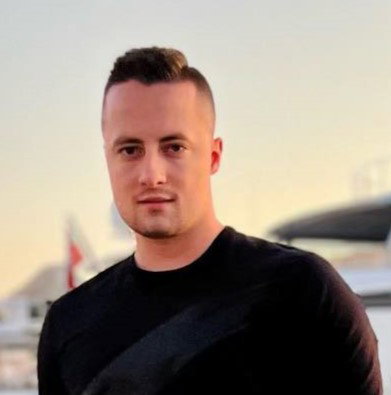
Joash Boyton
Founder and Managing Director, Acquiry · Melbourne, Australia · Global coverage
Joash Boyton is the Founder and Managing Director of Acquiry, a specialist M&A advisory firm focused on the acquisition and sale of businesses. He executes buy-side and sell-side mandates from USD $1M to $500M across technology, SaaS, fintech, payments, gaming, blockchain and emerging verticals, and is not limited to them. Any sector, any market.