In this report
Amazon agrees to buy the technology behind the Decart Optimization Stack and bring its co-founders on board
SEATTLE, Washington — Amazon announced on 23 November 2026 that it has signed an agreement to purchase the proprietary technology behind the Decart Optimization Stack (DOS) and to bring the Decart co-founders, Dean Leitersdorf, Moshe Shalev and Orian Leitersdorf, along with their team of AI researchers and engineers, to Amazon. Amazon says the technology will help it further optimize both its inference and its custom silicon performance, so that more customers can train and run AI models faster and at lower cost. Completion of the transaction is subject to customary closing conditions, including regulatory clearance.
The agreement builds on a collaboration that began in 2025. Amazon states that Decart's team has worked closely with it since 2025 to deliver strong performance results on Trainium, Amazon's custom AI chip, using a full-stack approach that spans software and hardware. Peter DeSantis, Amazon's senior vice president for foundational AI models, custom silicon and quantum computing, describes Decart as a technologically fearless team. Dean Leitersdorf, Decart's co-founder and CEO, says that joining Amazon gives the team the scale, the customers and the infrastructure to pursue its mission faster than it could on its own.
This report sets out what Amazon is buying, how the two companies have worked together, what DOS does and the evidence behind it, how it fits Amazon's chips business and what comes next. Every figure traces to a primary source on Amazon's or Decart's own websites, and the data workbook near the end of the page calculates how those figures relate to one another.
The agreement centres on software that gets more performance out of each chip.
The deal in five points
Key facts
- Announcement Disclosed
- 23 November 2026Amazon signed an agreement to purchase the proprietary technology behind DOS and to bring the Decart team to Amazon.
- What Amazon acquires Disclosed
- Decart Optimization Stack technologyDOS is a vertically integrated inference and training platform for LLM, agentic, video and world model workloads.
- Team joining Amazon Disclosed
- Three co-founders and their researchersDean Leitersdorf, Moshe Shalev and Orian Leitersdorf, with their team of AI researchers and engineers.
- Relationship Disclosed
- Working together since 2025Decart’s team has worked closely with Amazon since 2025 on Trainium performance.
- Decart funding Disclosed
- Over $450 million raisedIncludes a $300 million round led by Radical Ventures announced on 18 May 2026.
- Completion Disclosed
- Customary closing conditionsIncluding regulatory clearance, as stated in Amazon’s announcement.
- Disclosed
- Stated by a party to the transaction
The numbers behind the deal
Each figure has its own permanent link and a ready-made citation. Journalists, analysts and researchers are welcome to quote them with credit and a link to Acquiry.
- Over 1,600 tokens per secondDisclosed
DOS 2.0 agentic inference throughput
Against an industry average of around 200, as stated by Decart on 18 May 2026.
- Over $450 millionDisclosed
Decart capital raised
To date, as stated by Decart.
- $25 billionDisclosed
Amazon custom silicon run rate
Annual revenue run rate, exceeded, as stated by Amazon.
- $184 billionDisclosed
AWS annualized revenue run rate
After AWS net sales increased 39.3% in the third quarter of 2026.
Part I of III
The agreement and the partners
What Amazon buys, how the two companies have worked together and who Decart is.
Amazon buys the technology behind DOS and brings Decart's three co-founders and researchers on board
The agreement covers the proprietary technology behind the Decart Optimization Stack and the hiring of the three co-founders and their team of AI researchers and engineers.
Amazon published the announcement on 23 November 2026 under the headline that it will purchase Decart's AI optimization technology (opens in a new tab) to advance chip and model innovation for customers. The agreement has two parts that Amazon presents together. The first is the proprietary technology behind the Decart Optimization Stack, known as DOS. The second is the team: Amazon brings the Decart AI co-founders, Dean Leitersdorf, Moshe Shalev and Orian Leitersdorf, along with their team of AI researchers and engineers, to Amazon. The key takeaways at the head of the announcement state the purpose plainly: Decart's technology will help Amazon further optimize both its inference and its custom silicon performance, so more customers can train and run AI models faster and at lower cost.
Technology and talent arrive as one package
Amazon says the software and the people belong together. In its words, Decart brings a strong connection between technology and talent that will help further Amazon's investment in custom silicon and optimize AI inference for its customers, and it credits the co-founders with deep expertise in full-stack performance optimization across hardware and software. That description matches how Decart presents itself. Its company page (opens in a new tab) describes a research lab built around one question, how much more AI can do on the hardware that already exists, and names DOS as the answer.

Completion is subject to customary closing conditions, including regulatory clearance.
Every leap forward in AI starts with getting more out of every chip... More efficient compute means better training, better reinforcement learning, faster inference, and better models for customers at a lower cost.
Amazon and Decart have worked together on Trainium since 2025
Amazon began working with Decart in 2025, and the collaboration has covered Trainium performance, a commercial agreement and a joint go-to-market initiative with AWS.
Amazon is not meeting Decart for the first time. Its announcement states that Amazon began working with Decart in 2025, and that the collaboration quickly showed how much the two teams shared, from a full-stack view of performance to an appetite for solving some of the world's most challenging science and engineering problems. Since 2025, Amazon says, Decart's team has worked closely with it to deliver strong performance results on Trainium, using a full-stack approach that spans software and hardware.
A commercial and go-to-market partnership with AWS preceded the agreement
Decart set out the shape of that relationship in its funding announcement of 18 May 2026 (opens in a new tab). It names Amazon as one of Decart's strategic customers and says Amazon anchors the partnership ecosystem around the company. Building on DOS, Decart formed a partnership with Amazon Web Services spanning a commercial agreement and a joint go-to-market initiative to bring real-time world models to AWS customers at scale. As a member of the Amazon Partner Network, Decart offers an API that gives the AWS enterprise customer base a direct on-ramp to build with real-time, interactive AI across media, commerce, advertising and physical AI.
The technical work ran in parallel. Decart states that, through deep collaboration with AWS teams including Annapurna Labs, it became one of the first companies to deploy real-time AI models of its class at scale on Trainium, with its Lucy 2 model running on Trainium3. Decart adapted its model architecture to take full advantage of the chip's design, a co-design approach that, in Decart's words, makes compute-intensive, real-time applications practical at scale.
Decart's Lucy 2 model runs on Trainium3, Amazon's custom AI chip.
Decart is the kind of partner we love working with: technologically fearless, fast-moving, and deeply innovative. They were among the first in the world to optimize on Trainium3 and have embraced our newest software libraries.
The results are specific. Nafea Bshara, a vice president at Amazon's Annapurna Labs, says Lucy 2 exceeds 80% Model FLOPS Utilization, meaning more of the chip's raw power is doing real, productive work. On Decart's own account of its history, Lucy was the first realtime video model on Trainium3, and with DOS the same chip produces 30× more frames per second than it does without it.
Decart raised more than $450 million and built a lab of a little over a hundred people since 2023
Founded in 2023, Decart has raised over $450 million to date and works across Tel Aviv, New York and San Francisco.
Decart's own timeline shows how quickly the company grew. It was established in September 2023, came out of stealth in October 2024 with a $21M seed led by Sequoia with Zeev Ventures, and released Oasis, the first fully playable realtime AI-generated world, in the same month. Oasis reached 1M users in 72 hours and 5M in one week. A $32M Series A led by Benchmark followed in December 2024, and a $100M round came in August 2025. On 18 May 2026 Decart announced a $300 million round led by Radical Ventures, as set out on its company page (opens in a new tab).
Radical Ventures, NVIDIA, Sequoia and Benchmark back the company
The May 2026 round was led by Radical Ventures with participation from NVIDIA, Atreides Management, Valor Equity, Adobe Ventures, Toyota Ventures and eBay Ventures, alongside returning investors Sequoia Capital, Benchmark and Zeev Ventures. Decart adds that Amazon, one of its strategic customers, anchors the partnership ecosystem, and that individual backers include OpenAI co-founder Andrej Karpathy and former Disney CEO Michael Eisner. In its company description, Decart states that it has raised over $450 million to date.

Decart works across Tel Aviv, New York and San Francisco.
The team is compact. Decart describes itself as a little over a hundred people across Tel Aviv, New York and San Francisco who choose the problems most labs call out of reach and take them on with fewer people than anyone expects. Its company page calls it the most efficient AI lab in the world and describes a culture in which everyone owns what they build from first idea to shipped result. Its products fall into three lines: DOS, Lucy, a world model for immersive experiences, and Oasis, a world model for physical AI.
Decart states that it is generating significant revenue through contracts with cloud providers, AI labs and the industry's largest hyperscalers, licensing DOS to accelerate model performance and reduce compute costs at the infrastructure level. That commercial base is the context for the agreement: DOS has been in customer use at scale before Amazon announced its purchase.
Part II of III
The technology
How DOS works and the Trainium results Amazon and Decart have published.
Decart states that DOS delivers over 1,600 tokens per second where the industry average is around 200
DOS is a vertically integrated inference and training platform that runs across NVIDIA GPUs, Google TPUs and Amazon Trainium.
The Decart Optimization Stack is the part of Decart that Amazon is purchasing, so its design is worth setting out in Decart's own words. On its DOS page (opens in a new tab), Decart describes DOS as a vertically integrated inference and training platform for LLM, agentic, video and world model workloads. It sits between the model and the chip, tuning the kernels, compilers and runtime to the hardware so every core stays busy. The result, Decart says, is the same model running faster and at higher utilization on any accelerator, integrated into a customer's existing infrastructure rather than replacing it.
Latency, throughput and cost move together
Decart groups the benefits of DOS under three headings. Higher utilization cuts time to first token and time per frame, which enables real-time experiences. By keeping every core busy, each chip serves more users and requests, so deployments scale without scaling hardware. And when the compute a customer pays for is fully used, Decart says, realtime video generation comes down to $0.01 per second. On the DOS page, Decart lists 8x TPS on a TPU against a baseline, 30x FPS on Trainium against a baseline, 1500 TPS on LLM workloads running gpt-oss 120b, and 100 FPS in live video generation.
Decart states that its Lucy model edits live video in under 40 ms at up to 100 FPS.
At the launch of DOS 2.0 in May 2026, Decart stated that the platform delivers over 1,600 tokens per second for agentic inference, against an industry average of around 200, and full-HD video and world model inference at up to 100 frames per second. It also states more than a 100x improvement in cost efficiency and real-time, live AI performance 8x faster than any comparable system on equivalent hardware. The DOS page adds that, at every level of responsiveness, the stack delivers up to 3× faster responses per user than leading systems.
Built to run on NVIDIA GPUs, Google TPUs and Amazon Trainium
DOS is hardware agnostic by design. Decart states that it runs on NVIDIA GPUs, Google TPUs and Amazon Trainium, tuning each model to every chip it runs on so workloads can move between accelerators. It names four audiences: model developers who train and serve frontier models faster, chip manufacturers who want their silicon's full performance with optimized workloads and benchmarks, inference platforms that serve more users per chip, and enterprises that get more from every token.
Decart uses DOS to power its own models. Lucy, its world model for immersive experiences, edits live video in under 40 ms at up to 100 FPS, and Oasis, its world model for physical AI, generates interactive worlds that respond to every action in under 200 ms.
On Trainium3, Lucy 2 exceeds 80% Model FLOPS Utilization and DOS multiplies frame rates by 30
Evidence from Amazon and Decart shows what optimization on Trainium delivers: higher utilization, higher frame rates and real-time responses for physical AI.
Model FLOPS Utilization measures how much of a chip's raw computing power is doing productive work, and it is the headline figure in the evidence Amazon and Decart have published about their work together. Nafea Bshara, a vice president at Amazon's Annapurna Labs, says Lucy 2 exceeds 80% Model FLOPS Utilization and that, in an industry where most workloads waste a significant share of the hardware they run on, that is real money saved and real time back. Annapurna Labs is the team that designs Amazon's AI chips, and Bshara describes the result as exactly the kind of efficiency Trainium was designed to unlock.
30× more frames per second from the same chip
Decart's company page gives the frame-rate comparison. Lucy was the first realtime video model on Trainium3, and with DOS the same chip produces 30× more frames per second than it does without it. The DOS page repeats the comparison as 30x FPS on Trainium against a baseline, next to 8x TPS on a TPU. The consistent message across Decart's materials is that the same silicon delivers materially more output once its kernels, compilers and runtime are tuned together.
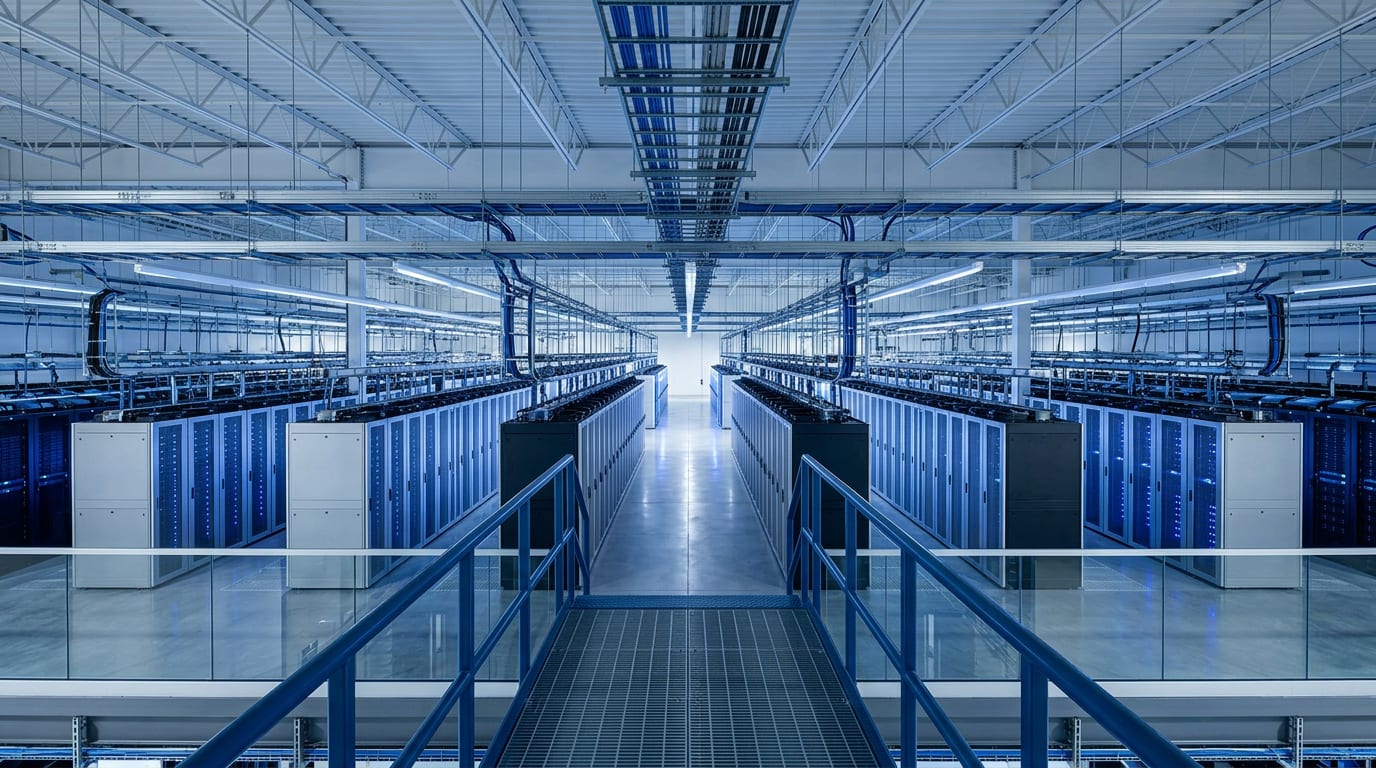
Higher utilization lets each chip in a data hall serve more requests.
Runway cut robot wait time about fivefold on Trainium3
Amazon's own explainer on physical AI (opens in a new tab), published on 23 November 2026, shows why speed at the chip level translates into outcomes. It explains that physical AI must sense, decide and act in fractions of a second, unlike chatbots, and that inference speed, not just training, determines whether a robot can work in real time. Its worked example is Runway, whose robotics engineers worked with Annapurna Labs to run the Praxis-1 world action model on Trainium, with support from AWS Forward Deployed Engineering. Runway and Annapurna Labs tuned both the model and its low-level kernels, and they cut the time the robot waits for its next move to 104 milliseconds on Trainium3, against a real-time target of 150 milliseconds.
Decart's Oasis model addresses the same domain. Decart describes Oasis as its world model for physical AI, generating interactive, physically accurate, real-time simulations, and states that its platform is foundational for robotics and autonomous vehicles, where systems must continuously interpret and react to complex, changing surroundings. The techniques Amazon's engineers apply with customers such as Runway and the techniques Decart has built into DOS answer the same requirement: inference that keeps pace with the world.
Part III of III
The buyer and the path ahead
Amazon’s chips business, the AWS backdrop and the road to completion.
Amazon's custom silicon business has passed a $25 billion annual revenue run rate
Amazon's chips business, AWS growth and Trainium developer tools set the context the Decart technology joins.
Amazon's chips business is the context for the agreement. On its custom chips page (opens in a new tab), Amazon states that its custom silicon business exceeded a $25 billion annual revenue run rate, and that it has invested over a decade in custom silicon, designing chips in lockstep with the teams building frontier AI models. The portfolio ranges from Trainium for AI training and inference to Graviton for general-purpose workloads. Amazon adds that its chips business continues to grow triple-digit percentages year over year, and that revenue commitments for Graviton and Trainium have each increased more than 20x year over year.
AWS is growing at its fastest rate in nearly five years
Amazon published its third-quarter 2026 results (opens in a new tab) on 29 October 2026. Net sales increased 12% to $201.9 billion, and operating income was $28.1 billion, an operating margin of 13.9% that Amazon calls its highest operating margin ever. AWS segment sales increased 39% to $46.0 billion, and AWS segment operating income was $17.8 billion. Amazon says AWS net sales increased 39.3%, its fastest growth in nearly five years, to a $184 billion annualized revenue run rate.
Andy Jassy, Amazon's President and CEO, says the AWS investment in functionality and infrastructure is working, with over 39% year-over-year revenue growth in the third quarter and projected revenue growth rates of over 40% in both 2027 and 2028. The same release records the developer tooling that supports Trainium adoption: TorchNeuron lets developers run existing PyTorch code on Trainium without rewriting anything. It also records continued rapid growth for Amazon Bedrock, AWS's inference service, where Fortune 500 companies spent nearly 7x more year over year and total Bedrock token volume grew nearly 17x.
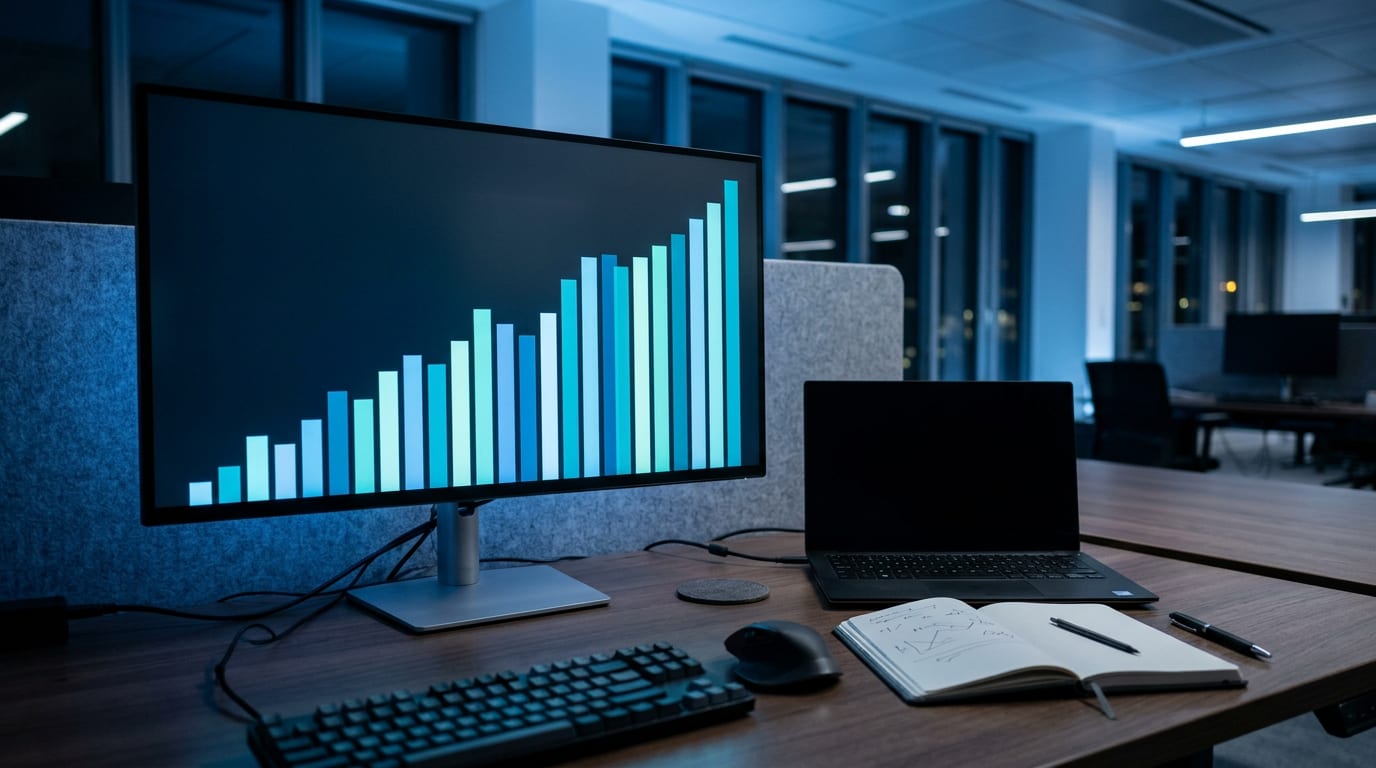
AWS net sales increased 39.3% in the third quarter of 2026.
Amazon anticipates faster, more cost-efficient AI workloads once the transaction completes
Completion is subject to customary closing conditions, including regulatory clearance, and Amazon sets out the improvements it anticipates.
Amazon states that completion of the transaction is subject to customary closing conditions, including regulatory clearance. The announcement did not include financial terms. Within that framework, Amazon sets out the improvements it anticipates: gains in the speed, performance, cost efficiency and capabilities of AI workloads, of Trainium and other Amazon custom silicon, and of Amazon's chips and model offerings. It also anticipates hiring members of the Decart team, so that the people who built the technology continue to work on it.
Figure 1
From Decart's founding to the Amazon agreement
Sep 2023Decart
Decart established
Decart is established and describes itself as a frontier AI research lab.
Oct 2024Decart
Out of stealth with a $21M seed
A $21M seed led by Sequoia with Zeev Ventures, alongside the release of Oasis, which reached 1M users in 72 hours.
Dec 2024Decart
$32M Series A
A $32M Series A led by Benchmark.
2025Amazon and Decart
Amazon begins working with Decart
Amazon and Decart start the collaboration on Trainium performance.
Aug 2025Decart
$100M round
Decart announces a $100M round.
18 May 2026Decart
$300M round, DOS 2.0 and the AWS partnership
A $300 million round led by Radical Ventures, DOS 2.0 across GPU, TPU and Trainium, and a partnership with AWS spanning a commercial agreement and a joint go-to-market initiative.
23 Nov 2026Amazon
Amazon announces the agreement
Amazon signs an agreement to purchase the proprietary technology behind DOS and to bring the Decart co-founders and their team to Amazon.
Before completionAmazonExpected
Customary closing conditions
Completion is subject to customary closing conditions, including regulatory clearance.
On completionAmazonExpected
Technology and team join Amazon
The DOS technology and the Decart co-founders, researchers and engineers become part of Amazon.
Show method and sourcesHide method
Company history is from Decart's about page and its funding announcement of 18 May 2026. The agreement and its closing conditions are from Amazon's announcement of 23 November 2026. Closing steps are shown as expected until completed.
Amazon and Decart share a view that compute efficiency decides what AI can do
The announcement closes its account of the relationship with a point about outlook. Amazon says it has long believed that inference speed and compute efficiency are central to the future of AI, and that this work spans large language models, multimodal and agentic systems, and world models. Decart makes the same point from the other side. On its DOS page it explains that chip production cannot keep up with the demand AI is creating and that securing more compute is not always an option, so getting more out of the hardware already available is the practical route.
Dean Leitersdorf frames the next step in similar terms. Decart's mission, he says, has been to redefine the boundaries of what AI can do and to make it dramatically more efficient along the way, and he says the team is looking forward to exploring what it can build together with Amazon.
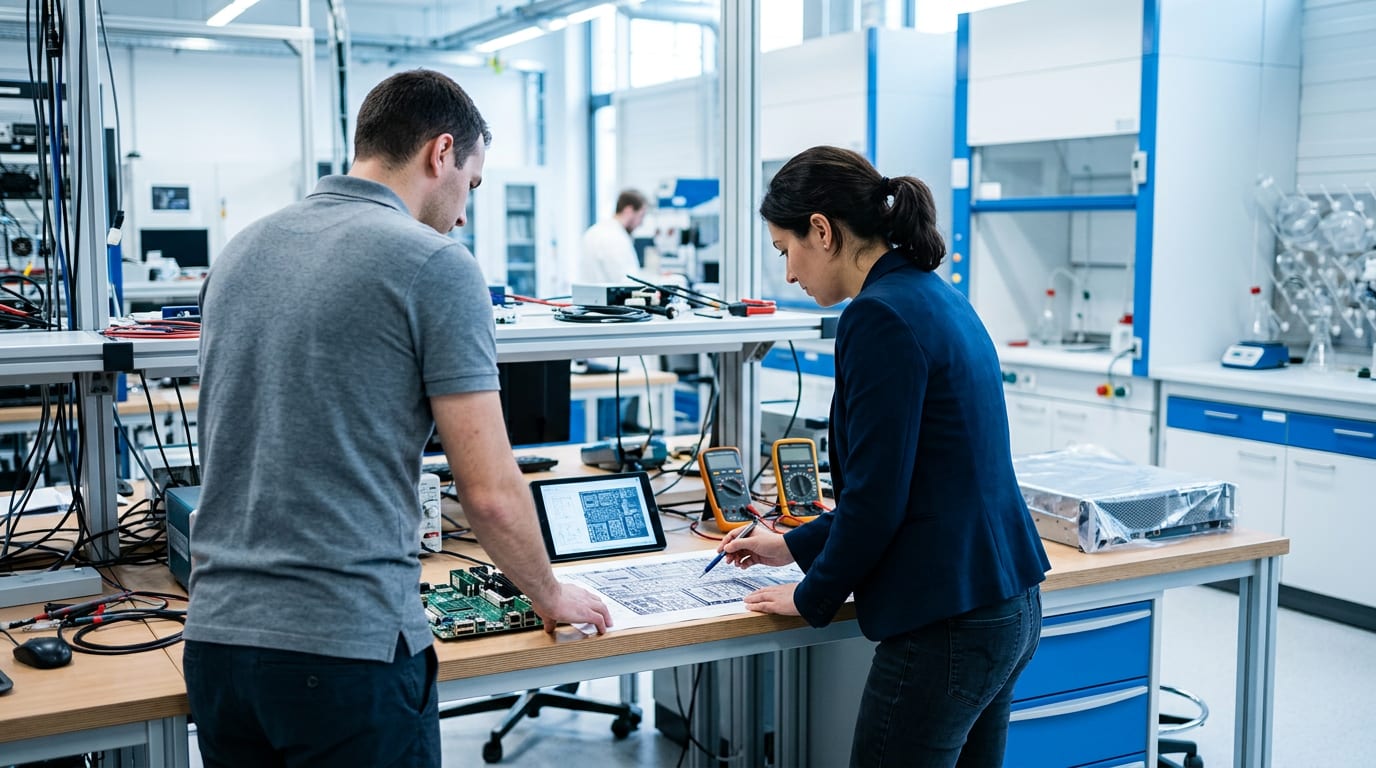
Amazon's announcement describes a shared full-stack view of performance.
The numbers behind the deal
22 sourced figures, each labelled by source type, and 11 calculations built from them. Every calculation shows its formula and inputs.
- Months from last funding round to announcement
- 6
- Years from founding to announcement
- 3 years
- Target team as a share of the acquirer's workforce
- 0.01%
Open the full workbook
Acquiry calculations
| Measure | Result | Formula and why it matters |
|---|---|---|
| Months from last funding round to announcement | 6 | Days between the two dates ÷ 30.44How long the target stayed independent after its last round. |
| Years from founding to announcement | 3 years | Announcement year − founding yearTime to outcome for founders and early investors. |
| Target team as a share of the acquirer's workforce | 0.01% | Target employees ÷ acquirer employees × 100Integration scale in people terms. |
| DOS 2.0 agentic inference throughput divided by the industry average Decart cites | 8x | DOS 2.0 agentic inference throughput (over), tokens per second ÷ Industry average agentic inference throughput cited by Decart, tokens per secondTurns two published figures into one comparison of how much more output DOS delivers per second. |
| Latest round as a share of total capital raised | 66.7% | Decart latest funding round ÷ Decart total funding raised (over) × 100Shows how much of Decart’s capital was committed in the six months before the agreement. |
| Total capital raised per team member | $4.5m | Decart total funding raised (over) ÷ Decart team sizeA capital-intensity measure for a compact research team. |
| Latest round divided by the October 2024 seed round | 14.3x | Decart latest funding round ÷ Decart seed round, October 2024Shows how far the size of Decart’s rounds has grown since it came out of stealth. |
| Oasis users after one week divided by users after 72 hours | 5x | Oasis users within one week ÷ Oasis users within 72 hoursShows how quickly adoption continued to build after the first three days. |
| Custom silicon run rate as a share of the AWS run rate | 13.6% | Amazon custom silicon annual revenue run rate (more than) ÷ AWS annualized revenue run rate × 100Puts the size of Amazon’s chips programme in proportion to the cloud business it serves. |
| AWS operating income as a share of AWS sales, third quarter 2026 | 38.7% | AWS segment operating income, third quarter 2026 ÷ AWS segment sales, third quarter 2026 × 100Shows the profitability of the business that runs Trainium at scale. |
| AWS sales as a share of Amazon net sales, third quarter 2026 | 22.8% | AWS segment sales, third quarter 2026 ÷ Amazon net sales, third quarter 2026 × 100Sizes the cloud segment within the whole of Amazon. |
Sourced inputs
| Figure | Value | Source |
|---|---|---|
| Announcement date | November 23, 2026 | 1. Amazon (aboutamazon.com)Company website |
| Decart founded | 2023 | 2. Decart (decart.ai)Company website |
| Decart team size | A little over 100 | 3. Decart (decart.ai)Company website |
| Decart total funding raised (over) | Over $450 million | 2. Decart (decart.ai)Company website |
| Decart latest funding round | $300 million | 2. Decart (decart.ai)Company website |
| Date of Decart latest funding round | May 18, 2026 | 2. Decart (decart.ai)Company website |
| Amazon employees (full-time and part-time) | 1,638,000 | 5. Amazon.com, Inc. (press.aboutamazon.com)Company website |
| Decart seed round, October 2024 | $21M | 3. Decart (decart.ai)Company website |
| Decart Series A, December 2024 | $32M | 3. Decart (decart.ai)Company website |
| Decart round, August 2025 | $100M | 3. Decart (decart.ai)Company website |
| DOS 2.0 agentic inference throughput (over), tokens per second | 1,600 | 2. Decart (decart.ai)Company website |
| Industry average agentic inference throughput cited by Decart, tokens per second | around 200 | 2. Decart (decart.ai)Company website |
| DOS full-HD video and world model inference, frames per second (up to) | 100 | 2. Decart (decart.ai)Company website |
| Frames per second on Trainium with DOS versus without | 30× | 3. Decart (decart.ai)Company website |
| Lucy 2 Model FLOPS Utilization on Trainium3 (more than) | 80% | 2. Decart (decart.ai)Company website |
| Oasis users within 72 hours | 1M users | 3. Decart (decart.ai)Company website |
| Oasis users within one week | 5M users | 3. Decart (decart.ai)Company website |
| Amazon net sales, third quarter 2026 | $201.9 billion | 5. Amazon.com, Inc. (press.aboutamazon.com)Company website |
| AWS segment sales, third quarter 2026 | $46.0 billion | 5. Amazon.com, Inc. (press.aboutamazon.com)Company website |
| AWS segment operating income, third quarter 2026 | $17.8 billion | 5. Amazon.com, Inc. (press.aboutamazon.com)Company website |
| AWS annualized revenue run rate | $184 billion | 5. Amazon.com, Inc. (press.aboutamazon.com)Company website |
| Amazon custom silicon annual revenue run rate (more than) | $25 billion | 6. Amazon (aboutamazon.com)Company website |
Calculations use only the sourced inputs above, as stated at publication. Cite as Acquiry Deal Intelligence with the article URL.
Frequently asked questions
What is Amazon buying from Decart?
Amazon has signed an agreement to purchase the proprietary technology behind the Decart Optimization Stack (DOS) and to bring Decart's co-founders, Dean Leitersdorf, Moshe Shalev and Orian Leitersdorf, along with their team of AI researchers and engineers, to Amazon.
Why does Amazon want the Decart Optimization Stack?
Amazon says Decart's technology will help it further optimize both its inference and its custom silicon performance, so that more customers can train and run AI models faster and at lower cost.
How long have Amazon and Decart worked together?
Amazon states that it began working with Decart in 2025, and that Decart's team has worked closely with it since 2025 to deliver strong performance results on Trainium.
Which chips does DOS run on?
Decart states that DOS runs on NVIDIA GPUs, Google TPUs and Amazon Trainium, and integrates directly into a customer's existing infrastructure.
What performance has Decart published for DOS?
Decart states that DOS 2.0 delivers over 1,600 tokens per second for agentic inference, against an industry average of around 200, and full-HD video and world model inference at up to 100 frames per second.
How much has Decart raised?
Decart states that it has raised over $450 million to date, including a $300 million round led by Radical Ventures announced on 18 May 2026.
Where does the Decart team work?
Decart states that a little over a hundred people work across Tel Aviv, New York and San Francisco.
When will the transaction complete?
Amazon states that completion of the transaction is subject to customary closing conditions, including regulatory clearance.
Methodology and limitations
This analysis is built from Amazon's announcement of 23 November 2026, Decart's funding announcement of 18 May 2026 and its company and product pages, Amazon's third-quarter 2026 results and Amazon's own pages on its custom chips and on physical AI. Every source is a primary company publication.
Every figure is labelled by basis: company-disclosed (stated directly in a company announcement or page) or calculated (worked out by Acquiry from sourced inputs, with the formula shown in the data workbook). Performance figures for DOS and Lucy are Decart's own statements and are attributed to Decart throughout.
Acquiry’s own interpretation is marked as such throughout and is clearly separated from facts stated by the companies.
Independence. Acquiry was not engaged by any party. This is independent research from public sources and is not a solicitation, investment advice, or an offer to buy or sell any security. Acquiry holds no disclosed position in Amazon.com, Inc. or Decart.
Sources
Numbered to match the superscript citations. Every source is a primary company announcement, filing or named publication.
- 1Amazon to purchase Decart's AI optimization technology to advance chip and model innovation for customers
Amazon (aboutamazon.com) · · Company website
- 2Decart Raises $300M: Tech Leaders Back the Company as Both Customers and Investors
Decart (decart.ai) · · Company website
- 3Decart AI Lab: About our mission and history
Decart (decart.ai) · · Company website
- 4Decart Optimization Stack (DOS)
Decart (decart.ai) · · Company website
- 5Amazon.com Announces Third Quarter Results
Amazon.com, Inc. (press.aboutamazon.com) · · Company website
- 6Amazon's Custom Chips: AI and Cloud Silicon
Amazon (aboutamazon.com) · · Company website
- 7What is physical AI? How Trainium accelerates how robots learn
Amazon (aboutamazon.com) · · Company website
Cite this report
Boyton, J. (2026, November 25). Amazon to Acquire Decart's AI Optimization Technology and Team. Acquiry Deal Intelligence. https://www.acquiry.com/deal-intelligence/amazon-to-acquire-decart-optimization-stack-and-team/
@online{boyton2026amazondecart, author = {Boyton, Joash}, title = {Amazon to Acquire Decart's AI Optimization Technology and Team}, organization = {Acquiry Deal Intelligence}, date = {2026-11-25}, url = {https://www.acquiry.com/deal-intelligence/amazon-to-acquire-decart-optimization-stack-and-team/} }
Joash Boyton is a technology sector analyst, publisher, and the founder of Acquiry, where he executes buy-side and sell-side M&A mandates across digital assets, software, and gaming technologies. He is the author of peer-reviewed corporate finance literature indexed across institutional repositories including Google Scholar and the ORCID Registry. Joash publishes Acquiry Deal Intelligence to deliver independent, forensic strategic reviews and valuation benchmarks of global technology acquisitions, compiling primary data directly from corporate disclosures, SEC filings, and regulatory ledgers.
Research support: Acquiry Deal Intelligence.